Molecular and Cellular Animal Embryology group, Life Sciences Institute, Université catholique de Louvain, Louvain-la-Neuve, Belgium.
PLoS One. 2011;6(11):e27624. doi: 10.1371/journal.pone.0027624. Epub 2011 Nov 16.
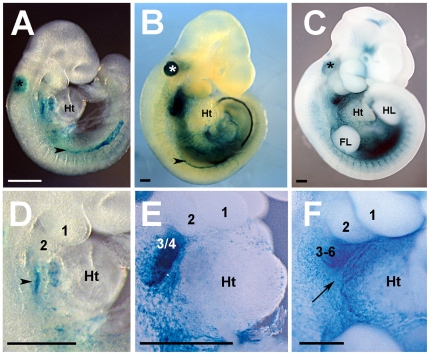
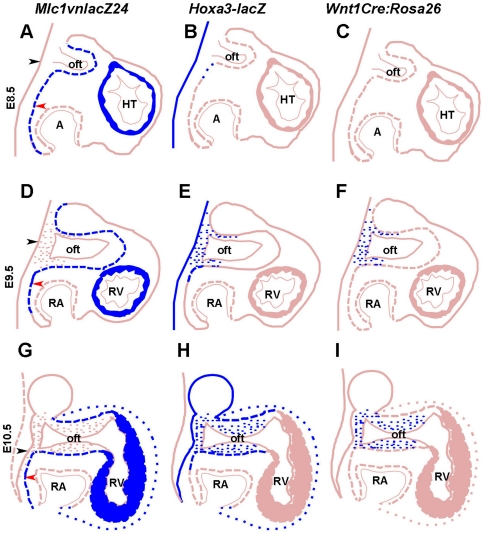
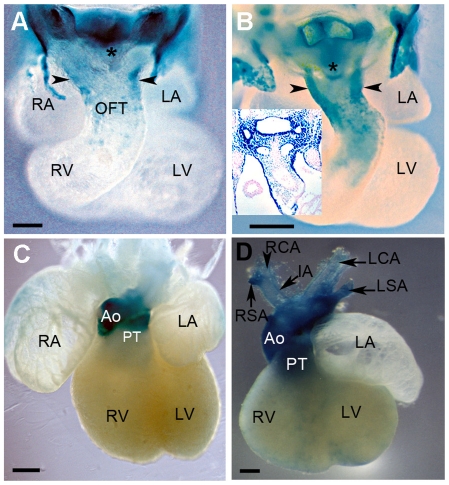
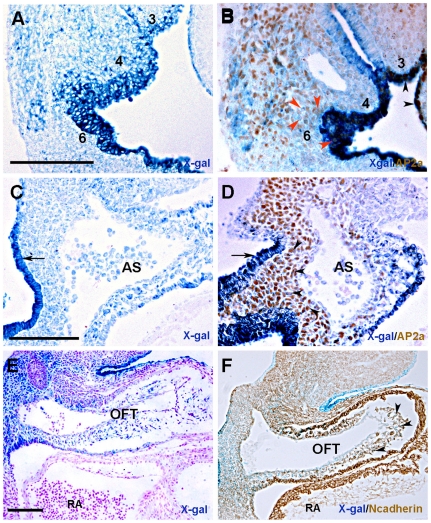
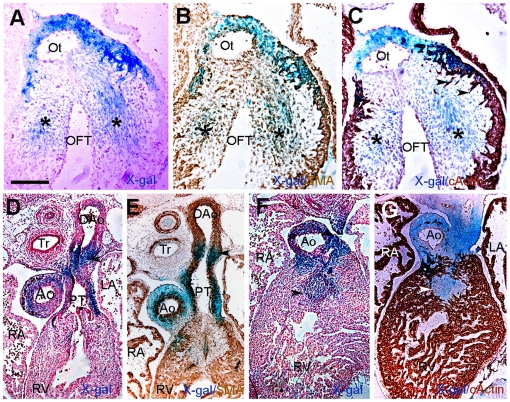
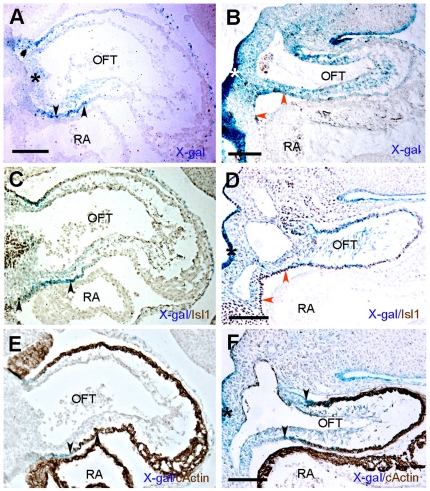
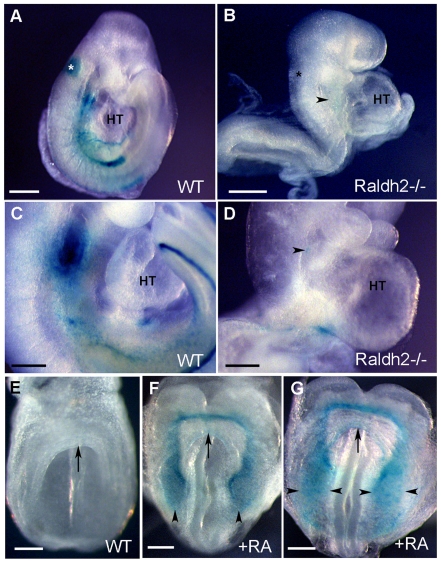
A transgenic mouse line harbouring a β-galacdosidase reporter gene controlled by the proximal 2 kb promoter of Hoxa3 was previously generated to investigate the regulatory cues governing Hoxa3 expression in the mouse. Examination of transgenic embryos from embryonic day (E) 8.0 to E15.5 revealed regionally restricted reporter activity in the developing heart. Indeed, transgene expression specifically delineated cells from three distinct lineages: a subpopulation of the second heart field contributing to outflow tract myocardium, the cardiac neural crest cells and the pharyngeal endoderm. Manipulation of the Retinoic Acid (RA) signaling pathway showed that RA is required for correct expression of the transgene. Therefore, this transgenic line may serve as a cardiosensor line of particular interest for further analysis of outflow tract development.
先前构建了一种携带β-半乳糖苷酶报告基因的转基因小鼠品系,该报告基因由 Hoxa3 的近端 2 kb 启动子控制,用于研究调控 Hoxa3 在小鼠中表达的调控信号。对胚胎期 8.0 天至 15.5 天的转基因胚胎的检查显示,在发育中的心脏中有区域特异性的报告基因活性。事实上,转基因表达特异性地描绘了来自三个不同谱系的细胞:参与流出道心肌的第二心脏场的一个亚群、心脏神经嵴细胞和咽内胚层。对视黄酸(RA)信号通路的操作表明,RA 是正确表达转基因所必需的。因此,这条转基因线可能作为一个心脏传感器线,特别有助于进一步分析流出道的发育。