Stamburski C, Renaudin J, Bove J M
Laboratoire de Biologie Cellulaire et Moléculaire, Institut National de la Recherche Agronomique, Villenave d'Ornon, France.
J Bacteriol. 1990 Oct;172(10):5586-92. doi: 10.1128/jb.172.10.5586-5592.1990.
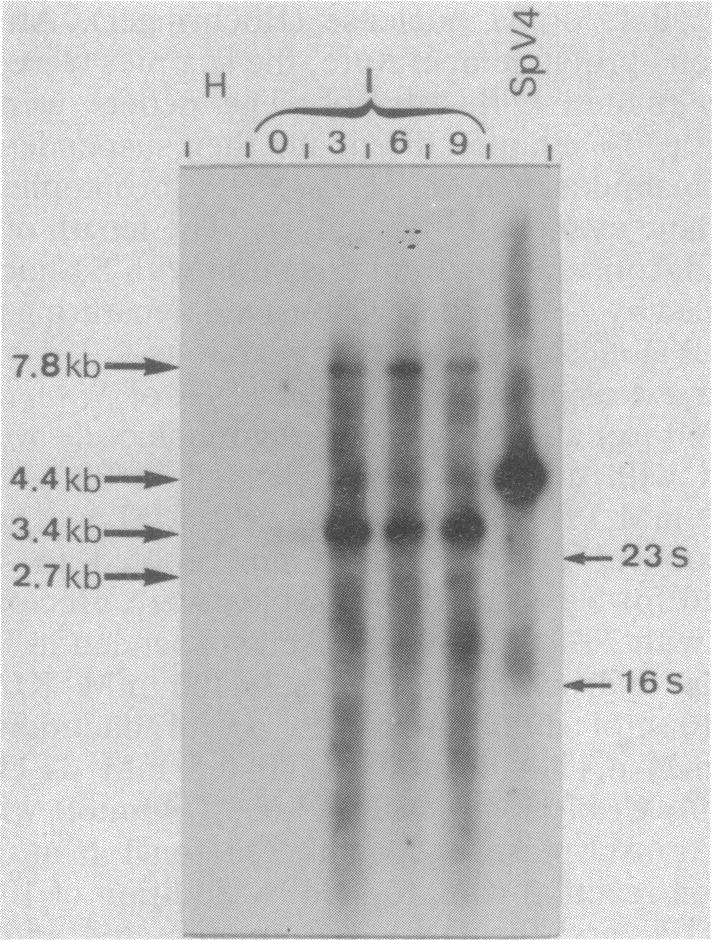
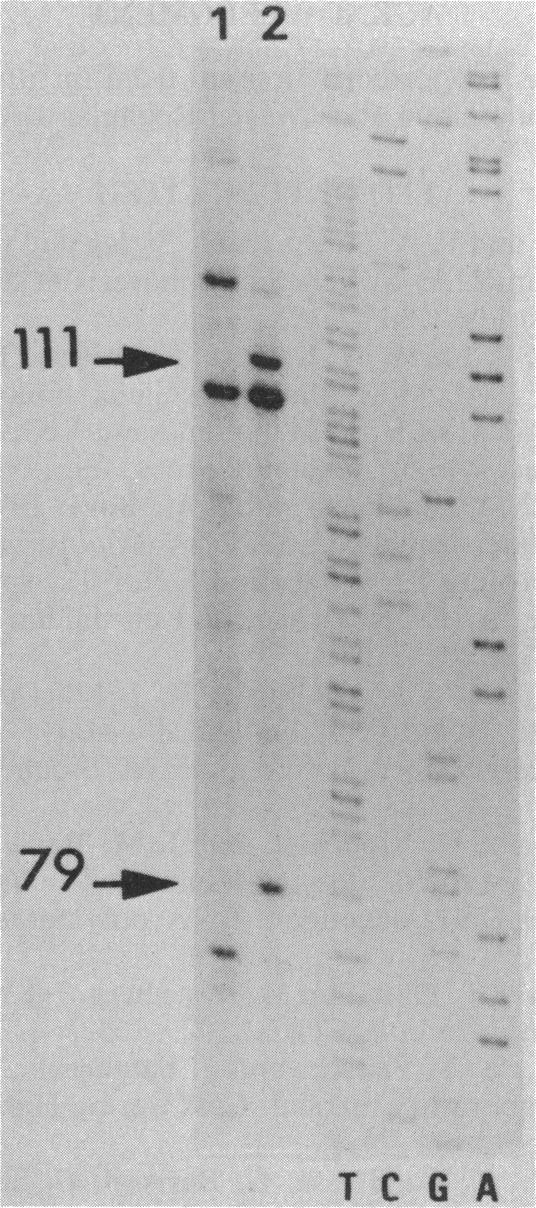
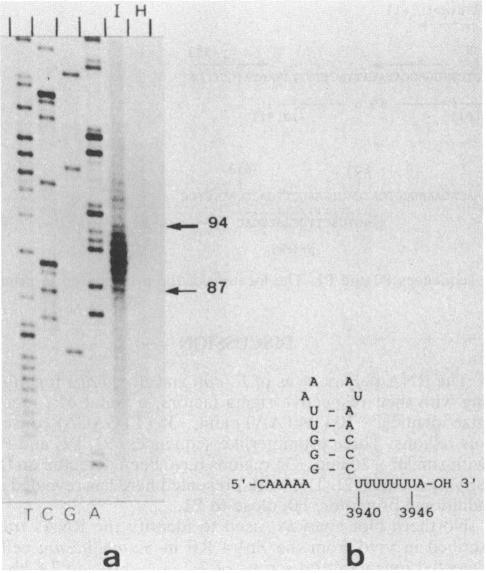
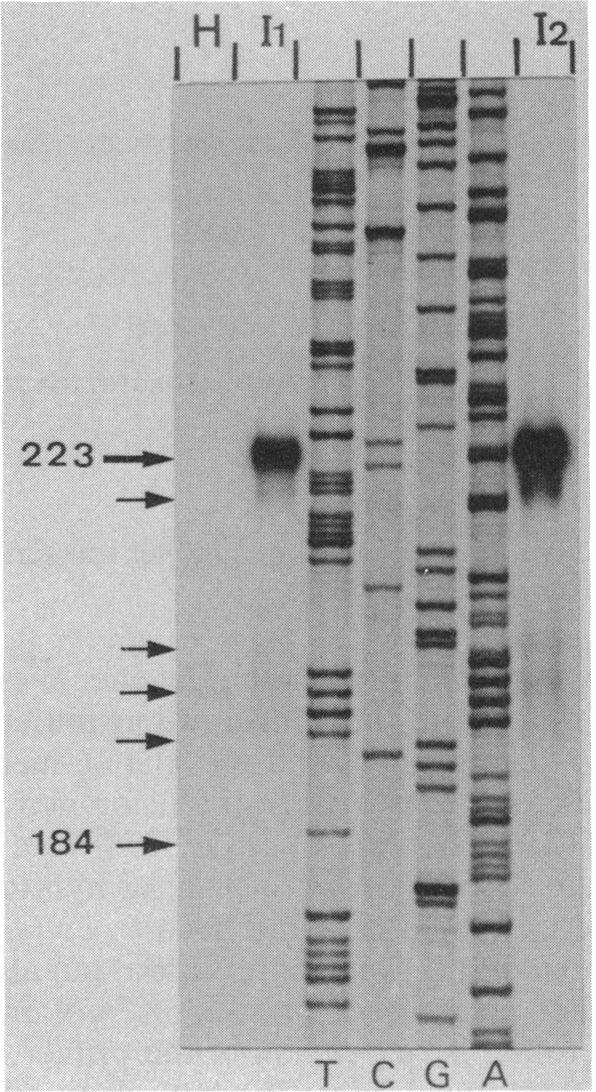
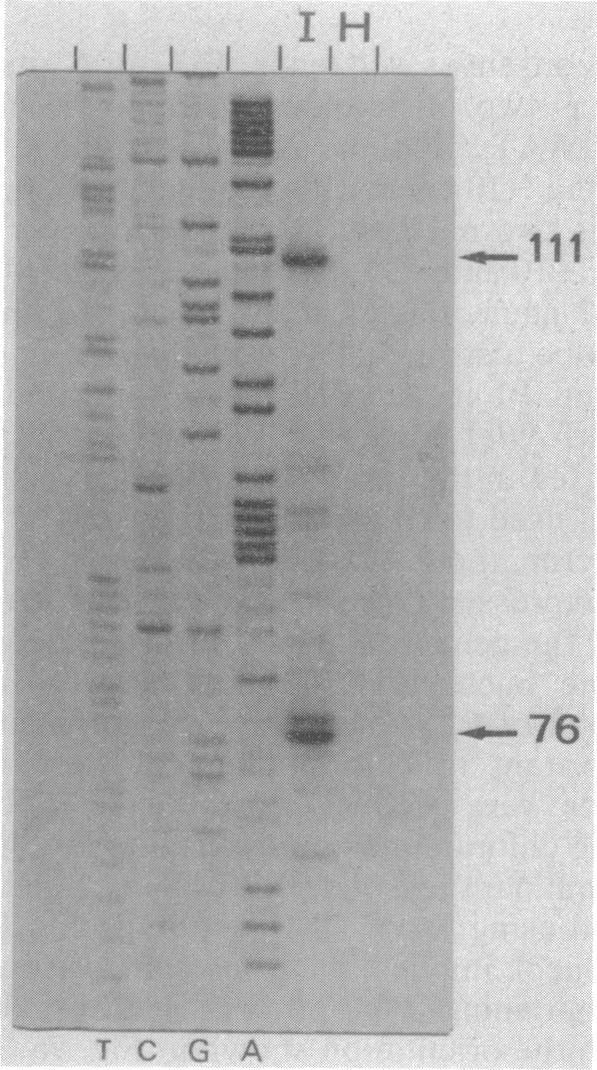
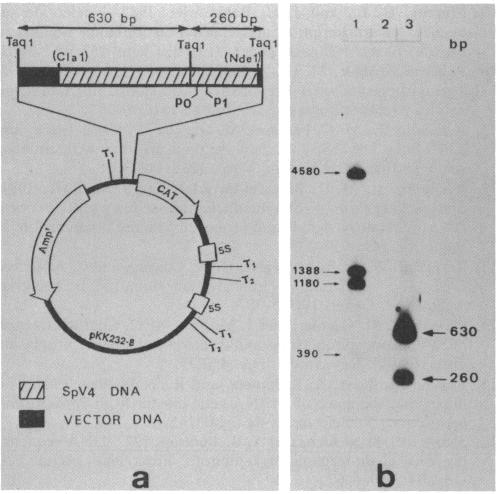
Spiroplasma virus 4 (SpV4) is an isometric virus with single-stranded, circular DNA infecting the helical mollicute Spiroplasma melliferum, a honeybee pathogen. Previous studies in our laboratory led to the determination of the base sequence of the SpV4 DNA. Nine open reading frames and three promoterlike sequences (P1, P2, and P3) were identified. An inverted repeat leading to the formation of a hairpin structure on the transcription product was also found and predicted to be a transcription terminator (T). We have now studied the in vivo transcription of the SpV4 genome by Northern (RNA) blot analysis of the total RNAs extracted from SpV4-infected spiroplasma cells. Transcripts of 7.8, 4.4, 3.4, and 2.7 kilobases (kb) were detected. The 3.4-kb RNA was the major transcript. The 5' and 3' ends of this transcript were determined by S1 mapping and primer extension. Characterization of the 3' end by S1 mapping showed that the 3.4-kb transcript terminates within the stretch of uridine residues following the hairpin structure of terminator T. Characterization of the 5' end by S1 mapping indicated that transcription proceeds from a newly recognized promoter, P0, located 36 nucleotides upstream of P1. Primer extension resulted in two cDNA signals. The short cDNA was probably a primer extension artifact due to the presence of a hairpin structure on the transcript. When reverse transcriptase stopped at this hairpin or read through, the short or the long cDNA, respectively, was obtained. The size of the long cDNA identified P0 as the transcription promoter. Promoter P0 was also shown to be functional in Escherichia coli. Indeed, when inserted upstream of the chloramphenicol acetyltransferase gene of a promoter selection vector, it promoted transcription of this gene. As in the case of S. melliferum, two cDNAs were obtained by primer extension, the longer cDNA identifying P0 as the promoter.
螺原体病毒4(SpV4)是一种等轴病毒,具有单链环状DNA,可感染螺旋形支原体——蜜蜂病原体蜜蜂蜜蜂螺原体。我们实验室之前的研究确定了SpV4 DNA的碱基序列。鉴定出了9个开放阅读框和3个启动子样序列(P1、P2和P3)。还发现了一个反向重复序列,该序列导致转录产物上形成发夹结构,并预测其为转录终止子(T)。我们现在通过对从感染SpV4的螺原体细胞中提取的总RNA进行Northern(RNA)印迹分析,研究了SpV4基因组的体内转录情况。检测到了7.8、4.4、3.4和2.7千碱基(kb)的转录本。3.4 kb的RNA是主要转录本。通过S1作图和引物延伸确定了该转录本的5'和3'末端。通过S1作图对3'末端进行表征表明,3.4 kb的转录本在终止子T的发夹结构之后的尿苷残基区段内终止。通过S1作图对5'末端进行表征表明,转录从一个新识别的启动子P0开始,该启动子位于P1上游36个核苷酸处。引物延伸产生了两个cDNA信号。短cDNA可能是由于转录本上存在发夹结构而产生的引物延伸假象。当逆转录酶在此发夹处停止或通读时,分别获得了短的或长的cDNA。长cDNA的大小确定P0为转录启动子。启动子P0在大肠杆菌中也显示出功能。实际上,当将其插入启动子选择载体的氯霉素乙酰转移酶基因上游时,它促进了该基因的转录。与蜜蜂蜜蜂螺原体的情况一样,通过引物延伸获得了两个cDNA,较长的cDNA将P0鉴定为启动子。