Department of Pharmaceutical Care and Health Sciences, Faculty of Pharmaceutical Sciences, Fukuoka University, Fukuoka, Japan.
J Neuroinflammation. 2011 Nov 30;8:167. doi: 10.1186/1742-2094-8-167.
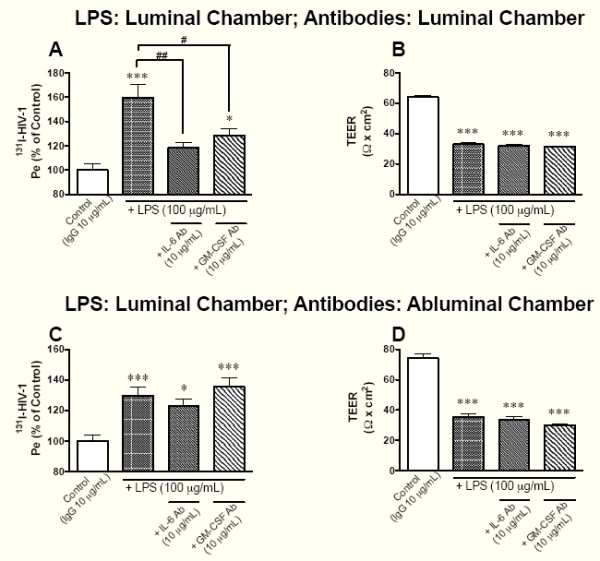
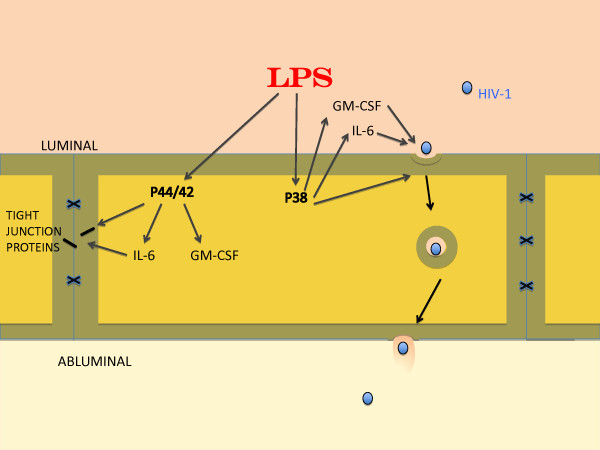
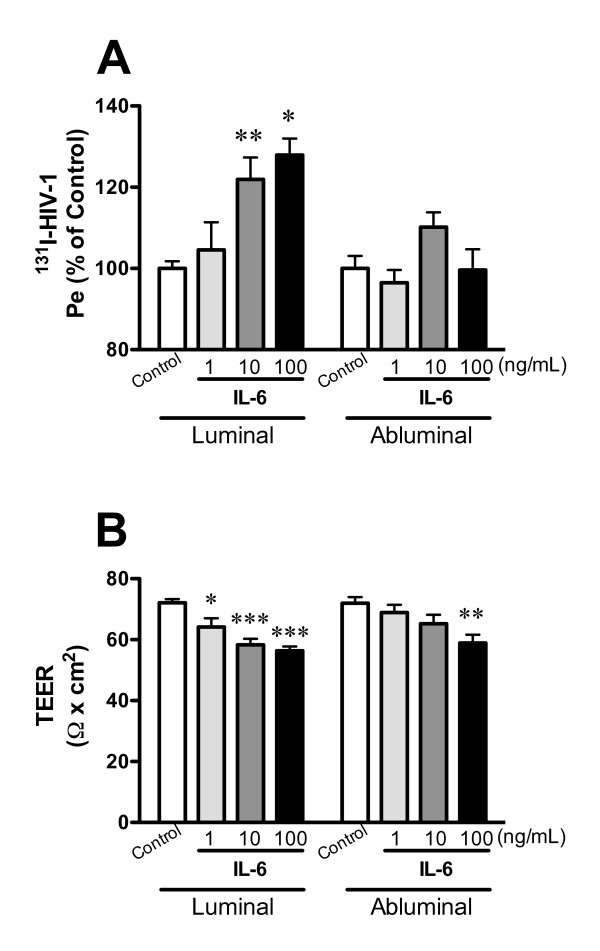
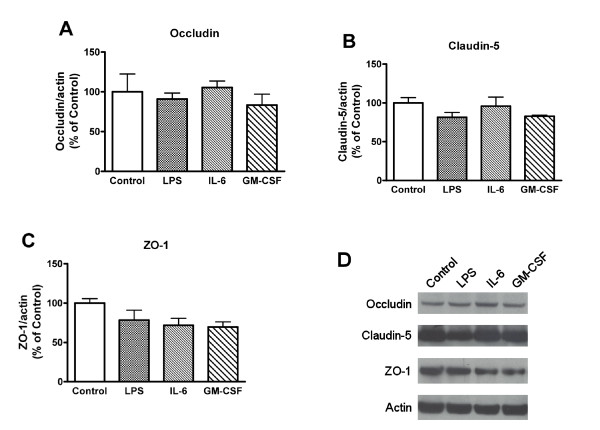
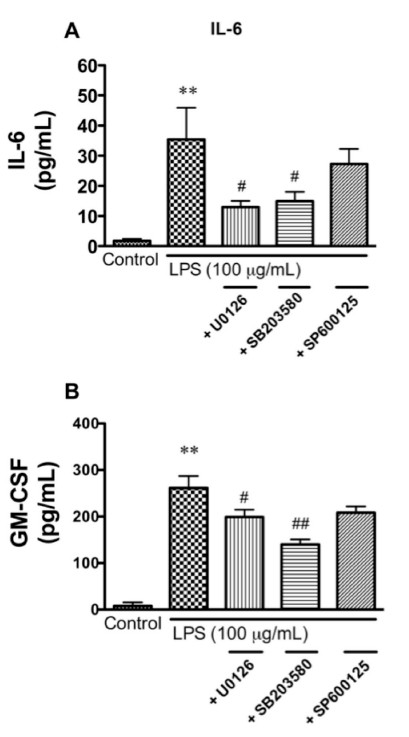
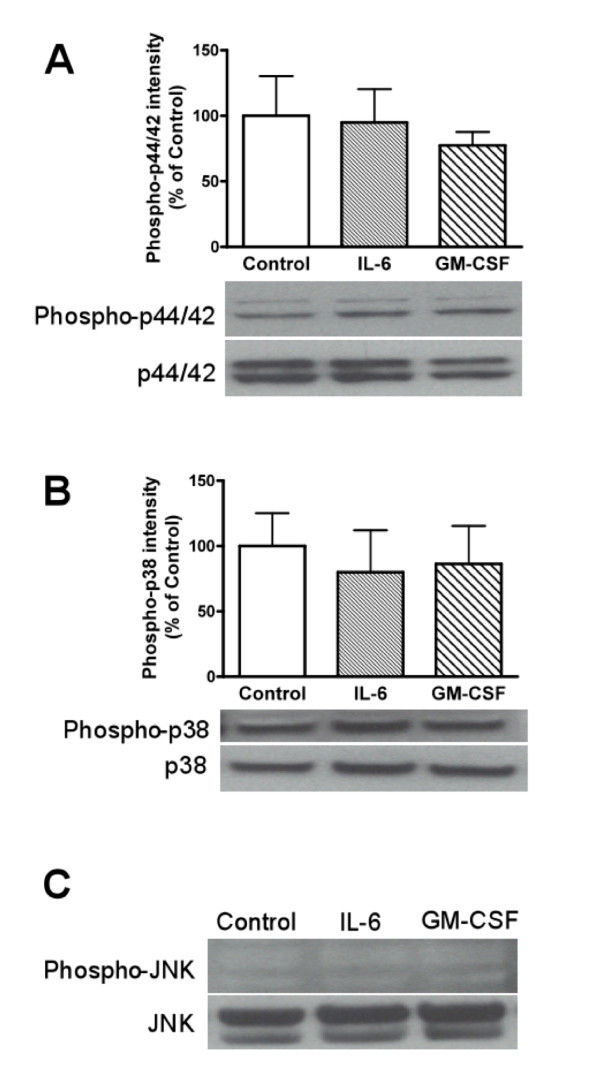
Elevated levels of cytokines/chemokines contribute to increased neuroinvasion of human immunodeficiency virus type 1 (HIV-1). Previous work showed that lipopolysaccharide (LPS), which is present in the plasma of patients with HIV-1, enhanced transcellular transport of HIV-1 across the blood-brain barrier (BBB) through the activation of p38 mitogen-activated protein kinase (MAPK) signaling in brain microvascular endothelial cells (BMECs). Here, we found that LPS (100 μg/mL, 4 hr) selectively increased interleukin (IL)-6 and granulocyte-macrophage colony-stimulating factor (GM-CSF) release from BMECs. The enhancement of HIV-1 transport induced by luminal LPS was neutralized by treatment with luminal, but not with abluminal, antibodies to IL-6 and GM-CSF without affecting paracellular permeability as measured by transendothelial electrical resistance (TEER). Luminal, but not abluminal, IL-6 or GM-CSF also increased HIV-1 transport. U0126 (MAPK kinase (MEK)1/2 inhibitor) and SB203580 (p38 MAPK inhibitor) decreased the LPS-enhanced release of IL-6 and GM-CSF. These results show that p44/42 and p38 MAPK signaling pathways mediate the LPS-enhanced release of IL-6 and GM-CSF. These cytokines, in turn, act at the luminal surface of the BMEC to enhance the transcellular transport of HIV-1 independently of actions on paracellular permeability.
细胞因子/趋化因子水平升高有助于人类免疫缺陷病毒 1 型 (HIV-1) 的神经入侵增加。先前的工作表明,存在于 HIV-1 患者血浆中的脂多糖 (LPS) 通过激活脑微血管内皮细胞 (BMEC) 中的 p38 丝裂原活化蛋白激酶 (MAPK) 信号通路,增强了 HIV-1 穿过血脑屏障 (BBB) 的跨细胞转运。在这里,我们发现 LPS(100μg/ml,4 小时)选择性地增加了 BMEC 中白细胞介素 (IL)-6 和粒细胞-巨噬细胞集落刺激因子 (GM-CSF) 的释放。腔侧 LPS 诱导的 HIV-1 转运增强被腔侧而非基底外侧的针对 IL-6 和 GM-CSF 的抗体中和,而不影响跨内皮电阻 (TEER) 测量的旁通透性。腔侧而非基底外侧的 IL-6 或 GM-CSF 也增加了 HIV-1 的转运。U0126(MAPK 激酶 (MEK)1/2 抑制剂)和 SB203580(p38 MAPK 抑制剂)降低了 LPS 增强的 IL-6 和 GM-CSF 的释放。这些结果表明 p44/42 和 p38 MAPK 信号通路介导了 LPS 增强的 IL-6 和 GM-CSF 的释放。这些细胞因子反过来又在 BMEC 的腔侧表面发挥作用,独立于对旁通透性的作用,增强 HIV-1 的跨细胞转运。