Laboratório de Tecnologia em Bioquímica e Microscopia (LTBM), Colegiado de Ciências Biológicas e da Saúde, Centro Universitário Estadual da Zona Oeste (UEZO), Rio de Janeiro, Brazil.
PLoS One. 2011;6(11):e27867. doi: 10.1371/journal.pone.0027867. Epub 2011 Nov 29.
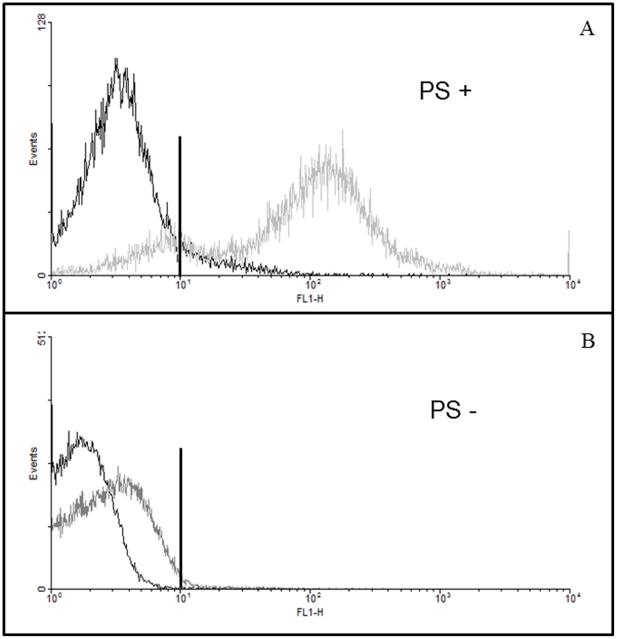
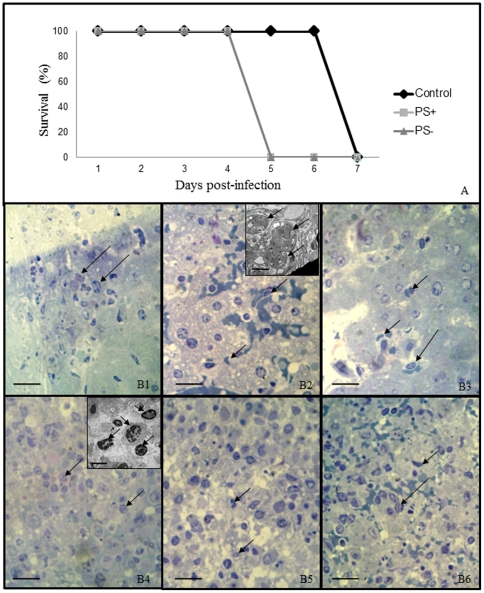
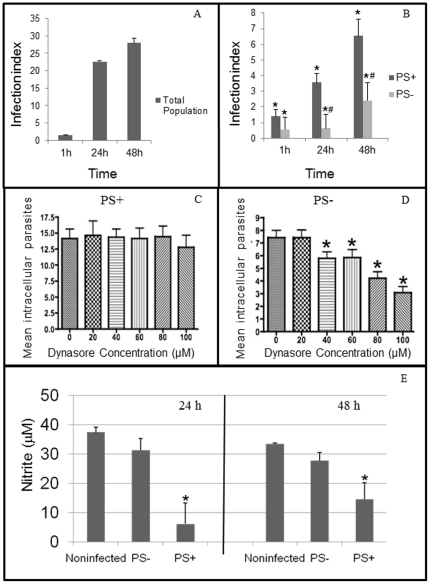
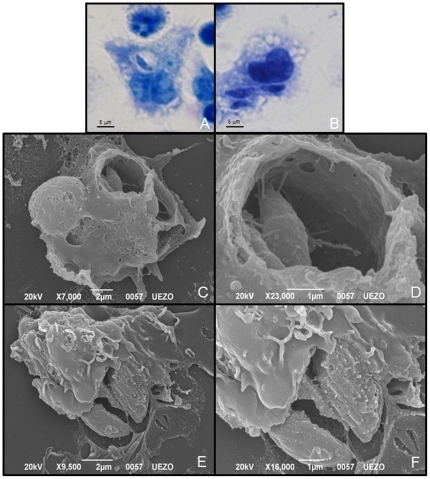
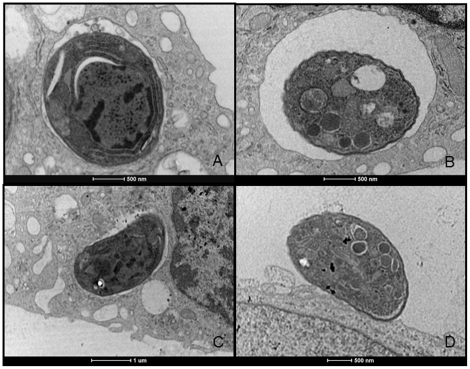
Phosphatidylserine (PS) exposure on the cell surface indicates apoptosis, but has also been related to evasion mechanisms of parasites, a concept known as apoptotic mimicry. Toxoplasma gondii mimics apoptotic cells by exposing PS, inducing secretion of TGF-beta1 by infected activated macrophages leading to degradation of inducible nitric oxide (NO) synthase, NO production inhibition and consequently persisting in these cells. Here PS⁺ and PS⁻ subpopulation of tachyzoites were separated and the entrance mechanism, growth and NO inhibition in murine macrophages, and mice survival and pathology were analyzed. Infection index in resident macrophages was similar for both PS subpopulations but lower when compared to the total T. gondii population. Growth in resident macrophages was higher for the total T. gondii population, intermediate for the PS⁺ and lower for the PS⁻ subpopulation. Production of NO by activated macrophages was inhibited after infection with the PS⁺ subpopulation and the total populations of tachyzoites. However, the PS⁻ subpopulation was not able to inhibit NO production. PS⁺ subpopulation invaded macrophages by active penetration as indicated by tight-fitting vacuoles, but the PS⁻ subpopulation entered macrophages by phagocytosis as suggested by loose-fitting vacuoles containing these tachyzoites. The entrance mechanism of both subpopulations was confirmed in a non-professional phagocytic cell line where only the PS⁺ tachyzoites were found inside these cells in tight-fitting vacuoles. Both subpopulations of T. gondii killed mice faster than the total population. Clear signs of inflammation and no tachyzoites were seen in the peritoneal cavity of mice infected with the PS⁻ subpopulation. Moreover, mice infected with the PS⁺ subpopulation had no sign of inflammation and the parasite burden was intense. These results show that PS⁺ and PS⁻ subpopulations of T. gondii are necessary for a successful toxoplasma infection indicating that both subpopulations are required to maintain the balance between inflammation and parasite growth.
磷脂酰丝氨酸(PS)在细胞表面的暴露表明细胞凋亡,但也与寄生虫的逃避机制有关,这一概念被称为凋亡模拟。刚地弓形虫通过暴露 PS 模拟凋亡细胞,诱导感染的激活巨噬细胞分泌 TGF-β1,导致诱导型一氧化氮合酶(iNOS)降解、NO 产生抑制,从而在这些细胞中持续存在。在这里,分离了速殖子的 PS+和 PS-亚群,并分析了它们在小鼠巨噬细胞中的进入机制、生长和 NO 抑制以及小鼠的存活和病理情况。两种 PS 亚群在常驻巨噬细胞中的感染指数相似,但低于整个刚地弓形虫群体。总刚地弓形虫群体在常驻巨噬细胞中的生长较高,PS+亚群居中,PS-亚群较低。激活巨噬细胞产生的 NO 被 PS+亚群和速殖子的总群体感染后被抑制。然而,PS-亚群不能抑制 NO 的产生。PS+亚群通过紧密贴合的空泡以主动穿透的方式入侵巨噬细胞,但 PS-亚群通过含有这些速殖子的宽松贴合的空泡以吞噬的方式进入巨噬细胞。在非专业吞噬细胞系中证实了两种亚群的进入机制,只有 PS+速殖子在紧密贴合的空泡内被发现。两种亚群的刚地弓形虫比总群体更快地杀死小鼠。感染 PS-亚群的小鼠腹腔内没有明显的炎症和速殖子。此外,感染 PS+亚群的小鼠没有炎症迹象,寄生虫负荷很重。这些结果表明,刚地弓形虫的 PS+和 PS-亚群对于成功的弓形虫感染是必要的,这表明两种亚群都需要维持炎症和寄生虫生长之间的平衡。