Department of Biomedical Sciences, Iowa State University, Ames, IA, USA.
BMC Genomics. 2011 Dec 6;12:596. doi: 10.1186/1471-2164-12-596.
G protein-coupled receptors (GPCRs) constitute one of the largest groupings of eukaryotic proteins, and represent a particularly lucrative set of pharmaceutical targets. They play an important role in eukaryotic signal transduction and physiology, mediating cellular responses to a diverse range of extracellular stimuli. The phylum Platyhelminthes is of considerable medical and biological importance, housing major pathogens as well as established model organisms. The recent availability of genomic data for the human blood fluke Schistosoma mansoni and the model planarian Schmidtea mediterranea paves the way for the first comprehensive effort to identify and analyze GPCRs in this important phylum.
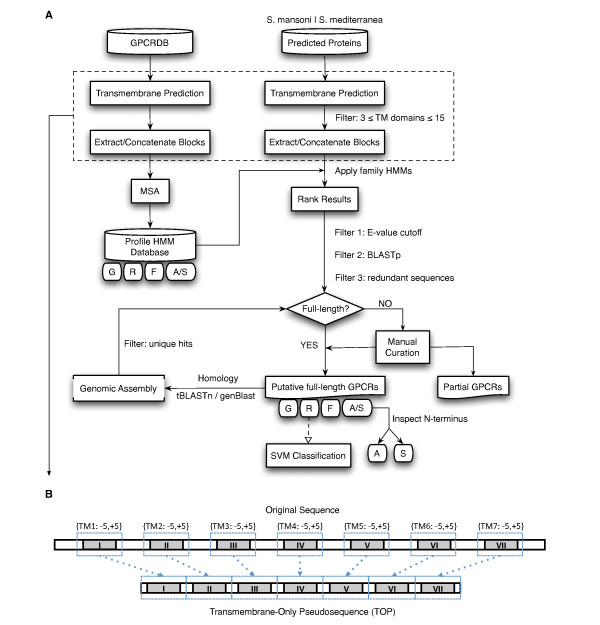
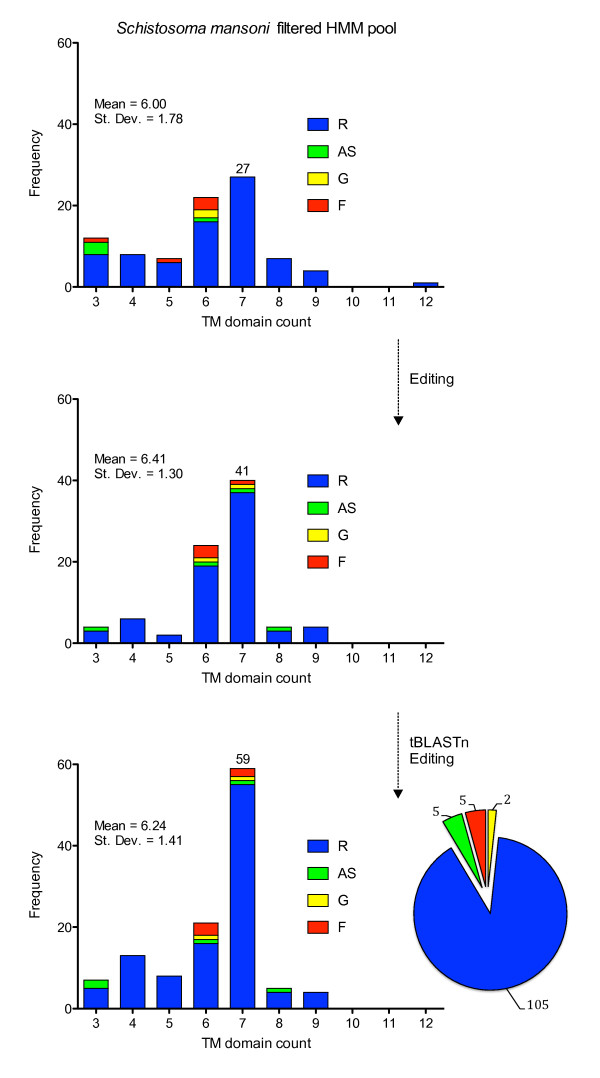
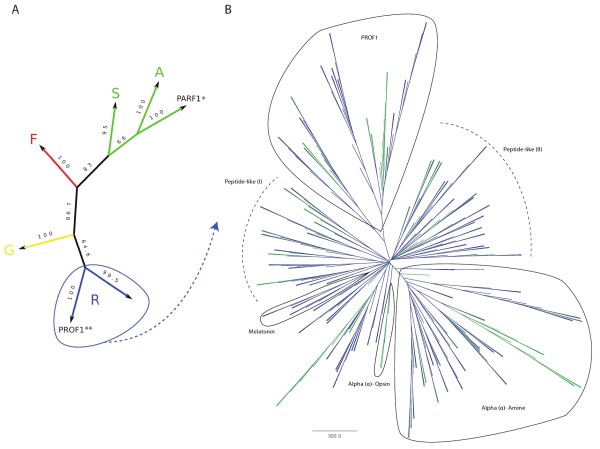
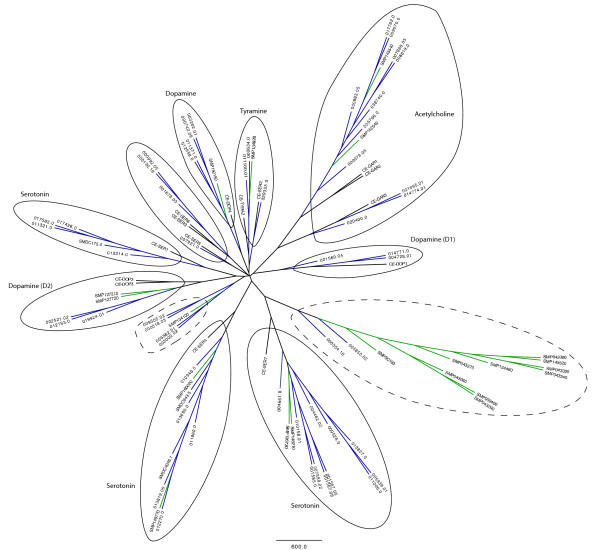
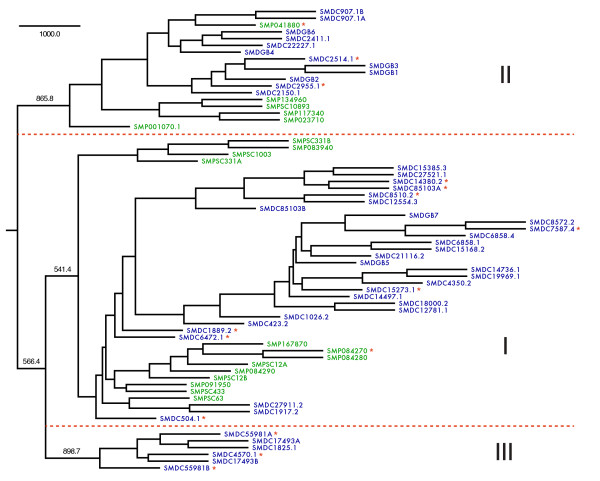
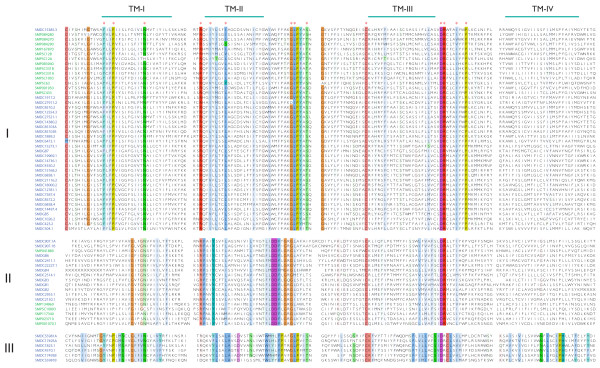
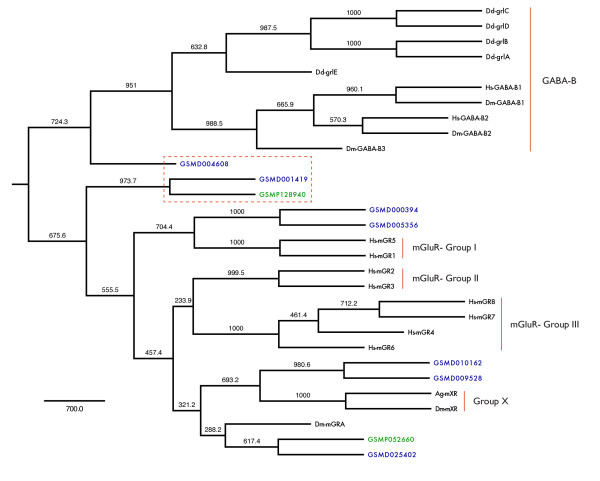
Application of a novel transmembrane-oriented approach to receptor mining led to the discovery of 117 S. mansoni GPCRs, representing all of the major families; 105 Rhodopsin, 2 Glutamate, 3 Adhesion, 2 Secretin and 5 Frizzled. Similarly, 418 Rhodopsin, 9 Glutamate, 21 Adhesion, 1 Secretin and 11 Frizzled S. mediterranea receptors were identified. Among these, we report the identification of novel receptor groupings, including a large and highly-diverged Platyhelminth-specific Rhodopsin subfamily, a planarian-specific Adhesion-like family, and atypical Glutamate-like receptors. Phylogenetic analysis was carried out following extensive gene curation. Support vector machines (SVMs) were trained and used for ligand-based classification of full-length Rhodopsin GPCRs, complementing phylogenetic and homology-based classification.
Genome-wide investigation of GPCRs in two platyhelminth genomes reveals an extensive and complex receptor signaling repertoire with many unique features. This work provides important sequence and functional leads for understanding basic flatworm receptor biology, and sheds light on a lucrative set of anthelmintic drug targets.
G 蛋白偶联受体(GPCRs)是真核蛋白中最大的一组,也是特别有利可图的一组药物靶点。它们在真核生物信号转导和生理学中发挥重要作用,介导细胞对外界刺激的多样化反应。扁形动物门在医学和生物学上具有相当重要的地位,它是主要病原体和已建立的模式生物的家园。人类血吸虫 Schistosoma mansoni 和模式扁形动物 Schmidtea mediterranea 的基因组数据的最新可用性为在这一重要门中首次全面鉴定和分析 GPCR 铺平了道路。
应用一种新颖的跨膜导向方法进行受体挖掘,发现了 117 种 S. mansoni GPCRs,代表了所有主要家族;105 种 Rhodopsin、2 种 Glutamate、3 种 Adhesion、2 种 Secretin 和 5 种 Frizzled。同样,也鉴定出了 418 种 S. mediterranea 的 Rhodopsin、9 种 Glutamate、21 种 Adhesion、1 种 Secretin 和 11 种 Frizzled 受体。在这些受体中,我们报告了新的受体分组的鉴定,包括一个大型且高度分化的扁形动物特异性 Rhodopsin 亚家族、一种扁形动物特异性的粘附样家族和非典型的谷氨酸样受体。进行了广泛的基因整理后,进行了系统发育分析。支持向量机(SVMs)被训练并用于全长 Rhodopsin GPCR 的基于配体的分类,补充了系统发育和基于同源性的分类。
对两种扁形动物基因组中的 GPCR 进行全基因组调查揭示了广泛而复杂的受体信号转导谱,具有许多独特的特征。这项工作为理解基本扁形动物受体生物学提供了重要的序列和功能线索,并为一组有利可图的驱虫药物靶点提供了启示。