Wang Xue, Wang Yong, Lee Seon-Jin, Kim Hong Pyo, Choi Augustine Mk, Ryter Stefan W
Pulmonary and Critical Care Medicine, Brigham and Women's Hospital, Harvard Medical School, 75 Francis Street, Boston, MA, 02115, USA.
Med Gas Res. 2011 May 18;1(1):8. doi: 10.1186/2045-9912-1-8.
The extrinsic apoptotic pathway initiates when a death ligand, such as the Fas ligand, interacts with its cell surface receptor (ie., Fas/CD95), forming a death-inducing signaling complex (DISC). The Fas-dependent apoptotic pathway has been implicated in several models of lung or vascular injury. Carbon monoxide, an enzymatic product of heme oxygenase-1, exerts antiapoptotic effects at low concentration in vitro and in vivo.
Using mouse lung endothelial cells (MLEC), we examined the antiapoptotic potential of carbon monoxide against apoptosis induced by the Fas/CD95-activating antibody (Jo2). Carbon monoxide was applied to cell cultures in vitro. The expression and/or activation of apoptosis-related proteins and signaling intermediates were determined using Western Immunoblot and co-immunoprecipitation assays. Cell death was monitored by lactate dehydrogenase (LDH) release assays. Statistical significance was determined by student T-test and a value of P < 0.05 was considered significant.
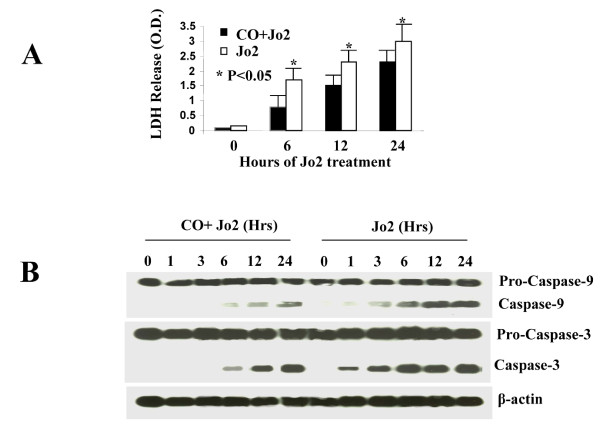
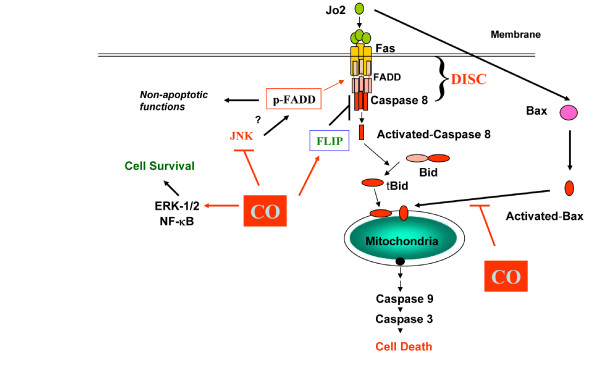
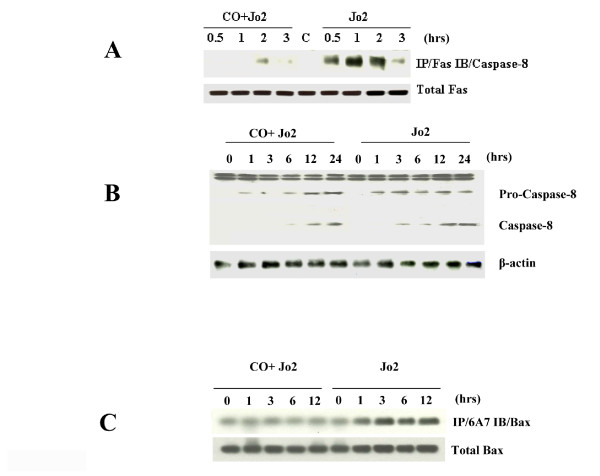
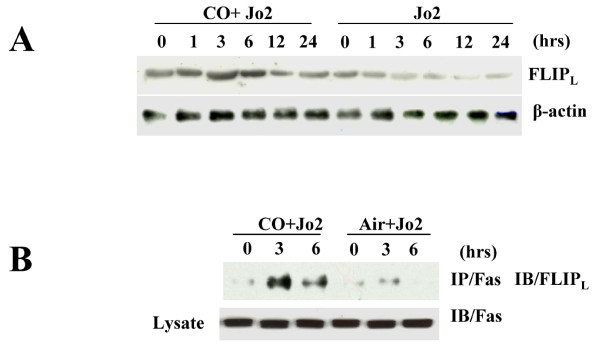
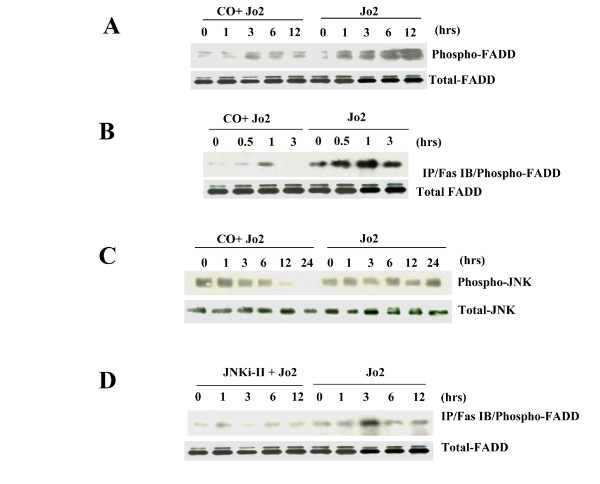
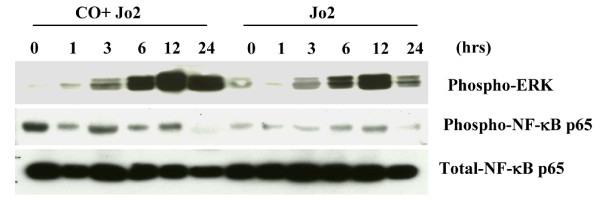
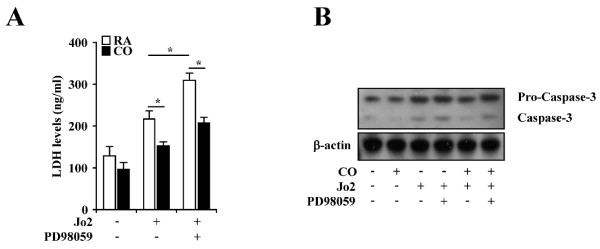
Treatment of MLEC with Fas-activating antibody (Jo2) induced cell death associated with the formation of the DISC, and activation of caspases (-8, -9, and -3), as well as the pro-apoptotic Bcl-2 family protein Bax. Exposure of MLEC to carbon monoxide inhibited Jo2-induced cell death, which correlated with the inhibition of DISC formation, cleavage of caspases-8, -9, and -3, and Bax activation. Carbon monoxide inhibited the phosphorylation of the Fas-associated death domain-containing protein, as well as its association with the DISC. Furthermore, carbon monoxide induced the expression of the antiapoptotic protein FLIP and increased its association with the DISC.CO-dependent cytoprotection against Fas mediated apoptosis in MLEC depended in part on activation of ERK1/2-dependent signaling.
Carbon monoxide has been proposed as a potential therapy for lung and other diseases based in part on its antiapoptotic effects in endothelial cells. In vitro, carbon monoxide may inhibit both Fas/caspase-8 and Bax-dependent apoptotic signaling pathways induced by Fas-activating antibody in endothelial cells. Strategies to block Fas-dependent apoptotic pathways may be useful in development of therapies for lung or vascular disorders.
当死亡配体(如Fas配体)与其细胞表面受体(即Fas/CD95)相互作用时,外源性凋亡途径启动,形成死亡诱导信号复合物(DISC)。Fas依赖的凋亡途径已在多种肺或血管损伤模型中被提及。一氧化碳是血红素加氧酶-1的酶促产物,在体外和体内低浓度时具有抗凋亡作用。
我们使用小鼠肺内皮细胞(MLEC),检测了一氧化碳对Fas/CD95激活抗体(Jo2)诱导的凋亡的抗凋亡潜力。一氧化碳应用于体外细胞培养。使用Western免疫印迹和免疫共沉淀测定法确定凋亡相关蛋白和信号中间体的表达和/或激活情况。通过乳酸脱氢酶(LDH)释放测定法监测细胞死亡。通过学生t检验确定统计学显著性,P值<0.05被认为具有显著性。
用Fas激活抗体(Jo2)处理MLEC可诱导细胞死亡,这与DISC的形成、半胱天冬酶(-8、-9和-3)的激活以及促凋亡Bcl-2家族蛋白Bax有关。将MLEC暴露于一氧化碳可抑制Jo2诱导的细胞死亡,这与DISC形成的抑制、半胱天冬酶-8、-9和-3的裂解以及Bax激活的抑制相关。一氧化碳抑制含Fas相关死亡结构域蛋白的磷酸化及其与DISC的结合。此外,一氧化碳诱导抗凋亡蛋白FLIP的表达并增加其与DISC的结合。一氧化碳对MLEC中Fas介导的凋亡的细胞保护作用部分依赖于ERK1/2依赖性信号的激活。
一氧化碳已被提议作为治疗肺部和其他疾病的潜在疗法,部分基于其在内皮细胞中的抗凋亡作用。在体外,一氧化碳可能抑制Fas激活抗体在内皮细胞中诱导的Fas/半胱天冬酶-8和Bax依赖性凋亡信号通路。阻断Fas依赖性凋亡途径的策略可能有助于开发肺部或血管疾病的治疗方法。