Pulmonary and Critical Care Medicine, Brigham and Women's Hospital, Harvard Medical School, Boston, MA 02115, USA.
Korean J Intern Med. 2013 Mar;28(2):123-40. doi: 10.3904/kjim.2013.28.2.123. Epub 2013 Feb 27.
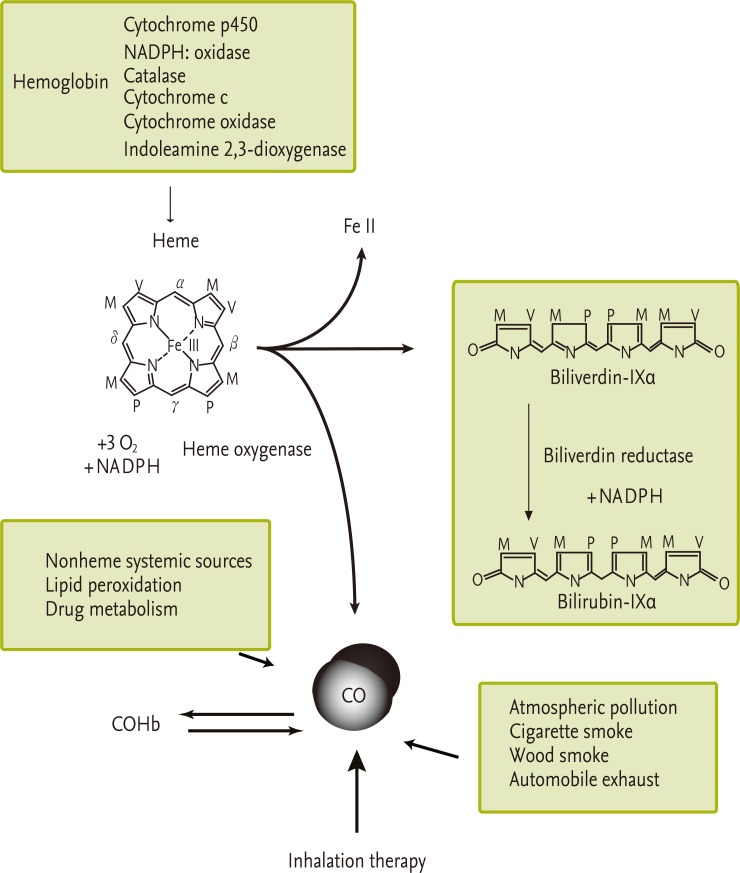
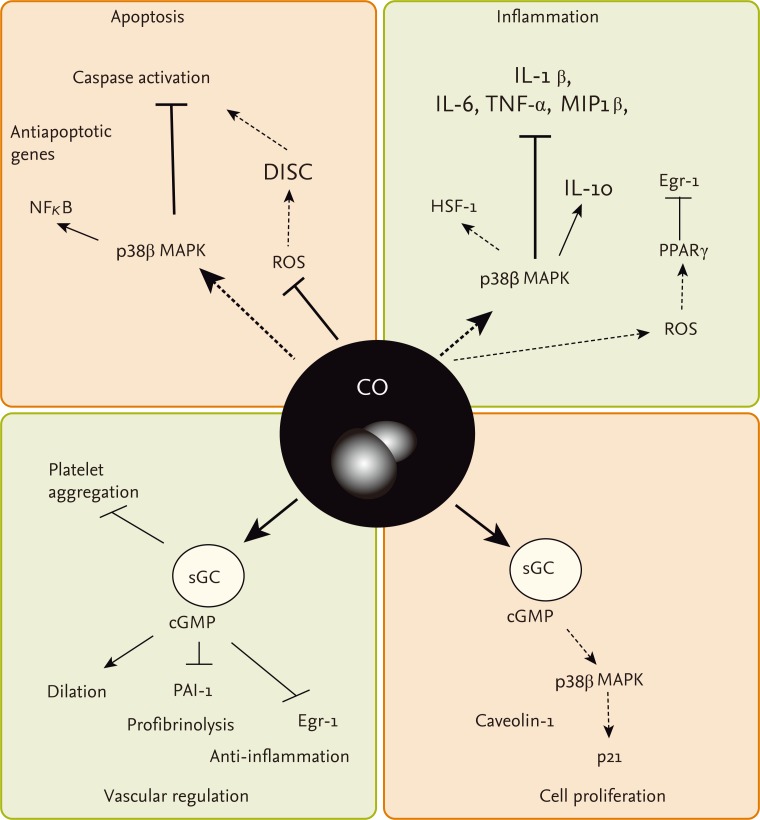
Gaseous molecules continue to hold new promise in molecular medicine as experimental and clinical therapeutics. The low molecular weight gas carbon monoxide (CO), and similar gaseous molecules (e.g., H2S, nitric oxide) have been implicated as potential inhalation therapies in inflammatory diseases. At high concentration, CO represents a toxic inhalation hazard, and is a common component of air pollution. CO is also produced endogenously as a product of heme degradation catalyzed by heme oxygenase enzymes. CO binds avidly to hemoglobin, causing hypoxemia and decreased oxygen delivery to tissues at high concentrations. At physiological concentrations, CO may have endogenous roles as a signal transduction molecule in the regulation of neural and vascular function and cellular homeostasis. CO has been demonstrated to act as an effective anti-inflammatory agent in preclinical animal models of inflammation, acute lung injury, sepsis, ischemia/reperfusion injury, and organ transplantation. Additional experimental indications for this gas include pulmonary fibrosis, pulmonary hypertension, metabolic diseases, and preeclampsia. The development of chemical CO releasing compounds constitutes a novel pharmaceutical approach to CO delivery with demonstrated effectiveness in sepsis models. Current and pending clinical evaluation will determine the usefulness of this gas as a therapeutic in human disease.
气态分子作为实验和临床治疗的分子医学仍然具有新的前景。低分子量气体一氧化碳(CO)和类似的气态分子(例如 H2S、一氧化氮)已被认为是炎症性疾病的潜在吸入治疗方法。在高浓度下,CO 代表着有毒的吸入危害,并且是空气污染的常见成分。CO 也作为血红素氧合酶催化的血红素降解的产物在体内产生。CO 与血红蛋白强烈结合,导致高浓度时组织缺氧和氧输送减少。在生理浓度下,CO 可能作为一种信号转导分子,在调节神经和血管功能以及细胞内稳态方面发挥内源性作用。CO 已被证明在炎症、急性肺损伤、败血症、缺血/再灌注损伤和器官移植的临床前动物模型中作为一种有效的抗炎剂发挥作用。这种气体的其他实验适应症包括肺纤维化、肺动脉高压、代谢疾病和子痫前期。化学 CO 释放化合物的开发构成了一种新型的 CO 输送药物方法,在败血症模型中已证明其有效性。目前和即将进行的临床评估将确定这种气体在人类疾病治疗中的有用性。