Department of Developmental and Regenerative Biology, Mount Sinai School of Medicine, One Gustave L, Levy Place, New York, NY 10029, USA.
Skelet Muscle. 2011 Dec 8;1(1):36. doi: 10.1186/2044-5040-1-36.
Myogenic differentiation involves cell-cycle arrest, activation of the muscle-specific transcriptome, and elongation, alignment and fusion of myoblasts into multinucleated myotubes. This process is controlled by promyogenic transcription factors and regulated by signaling pathways in response to extracellular cues. The p38 mitogen-activated protein kinase (p38 MAPK) pathway promotes the activity of several such transcription factors, including MyoD and MEF2, thereby controlling the muscle-specific transcription program. However, few p38-regulated genes that play a role in the regulation of myogenesis have been identified.
RNA interference (RNAi), chemical inhibition and immunofluorescence approaches were used to assess the role of drebrin in differentiation of primary mouse myoblasts and C2C12 cells.
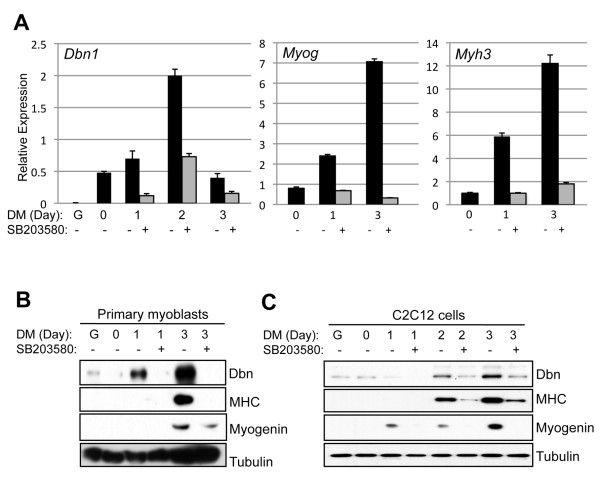
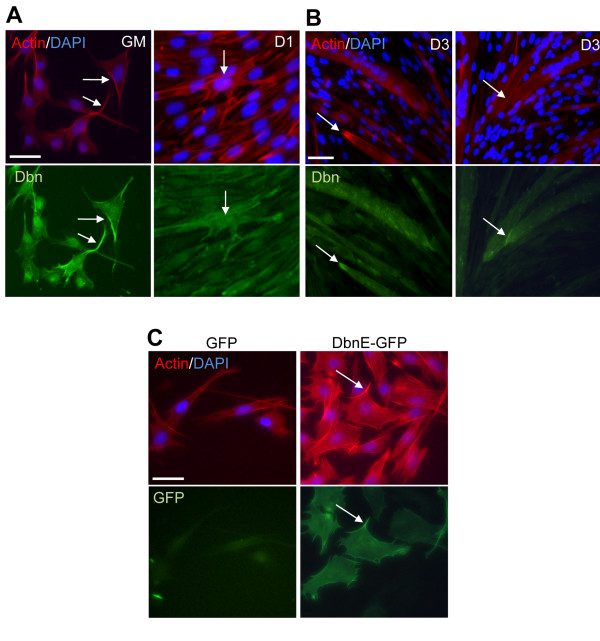
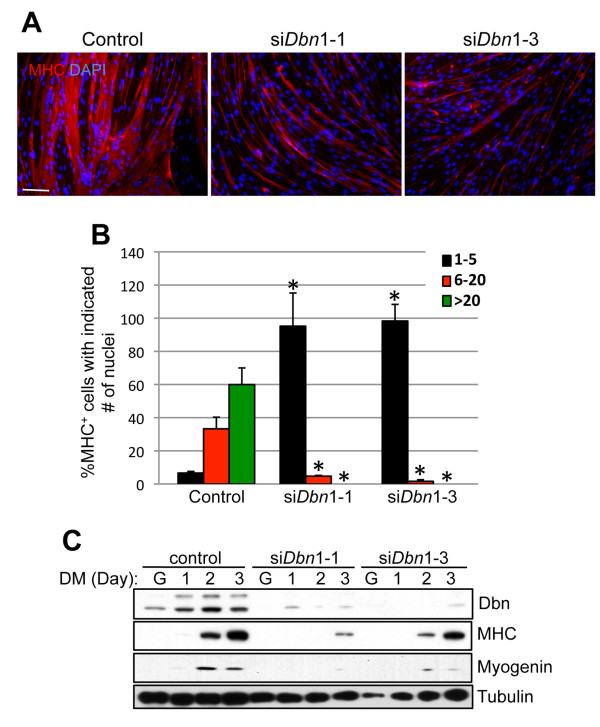
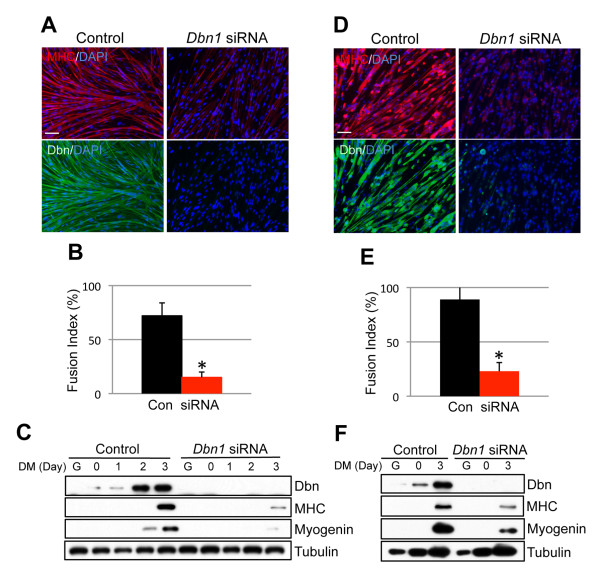
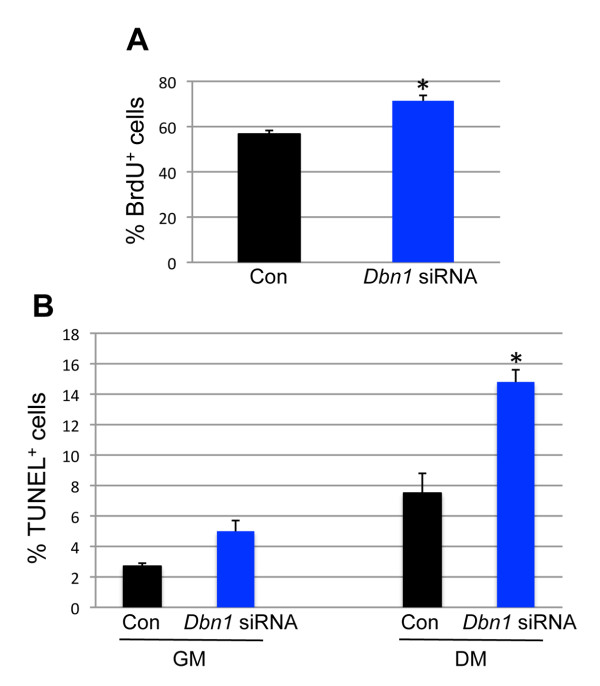
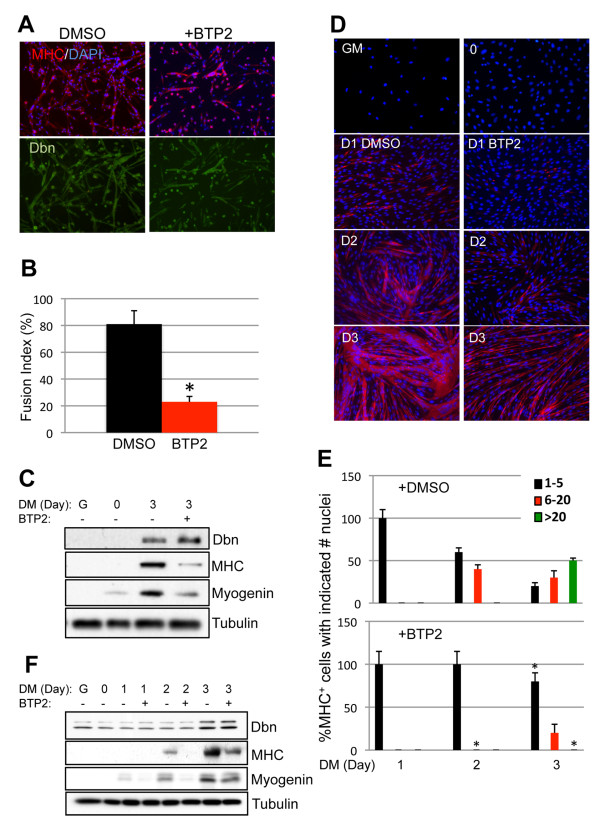
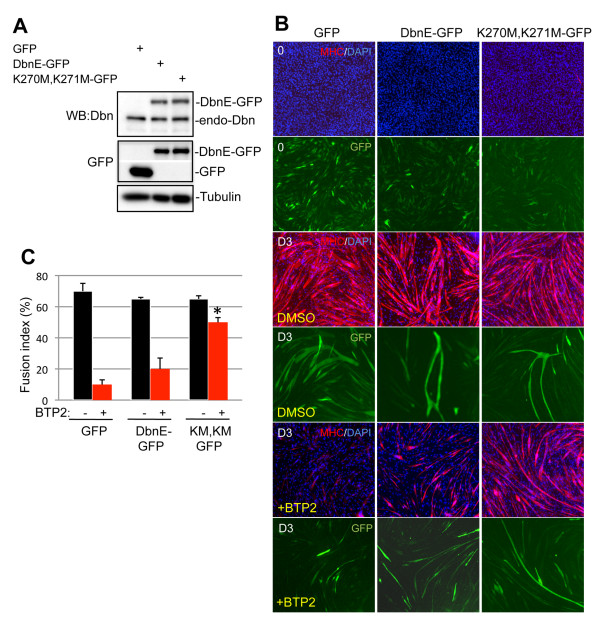
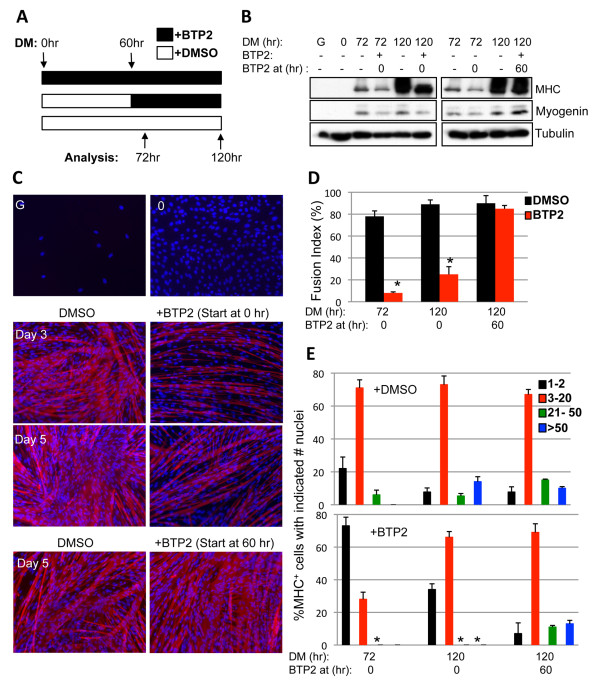
In a search for p38-regulated genes that promote myogenic differentiation, we identified Dbn1, which encodes the actin-binding protein drebrin. Drebrin is an F-actin side-binding protein that remodels actin to facilitate the change of filopodia into dendritic spines during synaptogenesis in developing neurons. Dbn1 mRNA and protein are induced during differentiation of primary mouse and C2C12 myoblasts, and induction is substantially reduced by the p38 MAPK inhibitor SB203580. Primary myoblasts and C2C12 cells depleted of drebrin by RNAi display reduced levels of myogenin and myosin heavy chain and form multinucleated myotubes very inefficiently. Treatment of myoblasts with BTP2, a small-molecule inhibitor of drebrin, produces a phenotype similar to that produced by knockdown of drebrin, and the inhibitory effects of BTP2 are rescued by expression of a mutant form of drebrin that is unable to bind BTP2. Drebrin in myoblasts is enriched in cellular projections and cell cortices and at regions of cell-cell contact, all sites where F-actin, too, was concentrated.
Our findings reveal that Dbn1 expression is a target of p38 MAPK signaling during myogenesis and that drebrin promotes myoblast differentiation.
成肌分化涉及细胞周期停滞、肌肉特异性转录组的激活以及成肌细胞的伸长、排列和融合形成多核肌管。这个过程由原肌生成转录因子控制,并通过信号通路响应细胞外信号进行调节。p38 丝裂原激活蛋白激酶 (p38 MAPK) 途径促进了包括 MyoD 和 MEF2 在内的几种转录因子的活性,从而控制肌肉特异性转录程序。然而,已经鉴定出很少的 p38 调节基因在调节成肌发生中发挥作用。
使用 RNA 干扰 (RNAi)、化学抑制和免疫荧光方法来评估 drebrin 在原代小鼠成肌细胞和 C2C12 细胞分化中的作用。
在寻找促进成肌分化的 p38 调节基因的过程中,我们鉴定出 Dbn1,其编码肌动蛋白结合蛋白 drebrin。Drebrin 是一种 F-actin 侧结合蛋白,在发育神经元中的突触发生过程中,它重塑肌动蛋白以促进丝状伪足向树突棘的转变。Dbn1 mRNA 和蛋白在原代小鼠和 C2C12 成肌细胞的分化过程中被诱导,p38 MAPK 抑制剂 SB203580 显著降低诱导。通过 RNAi 耗尽 drebrin 的原代成肌细胞和 C2C12 细胞显示出肌球蛋白重链和肌球蛋白重链的水平降低,并且形成多核肌管的效率非常低。用小分子抑制剂 BTP2 处理成肌细胞会产生类似于 drebrin 敲低的表型,并且 BTP2 的抑制作用可以通过表达不能结合 BTP2 的突变形式的 drebrin 来挽救。成肌细胞中的 drebrin 在细胞突起和细胞皮质以及细胞-细胞接触部位富集,所有这些部位都是 F-actin 也被浓缩的部位。
我们的发现表明,Dbn1 表达是成肌发生过程中 p38 MAPK 信号的靶标,并且 drebrin 促进成肌细胞分化。