Department of Anesthesiology, Wake Forest University School of Medicine, Winston Salem, North Carolina 27157, USA.
J Pain. 2012 Jan;13(1):49-57. doi: 10.1016/j.jpain.2011.09.009. Epub 2011 Dec 11.
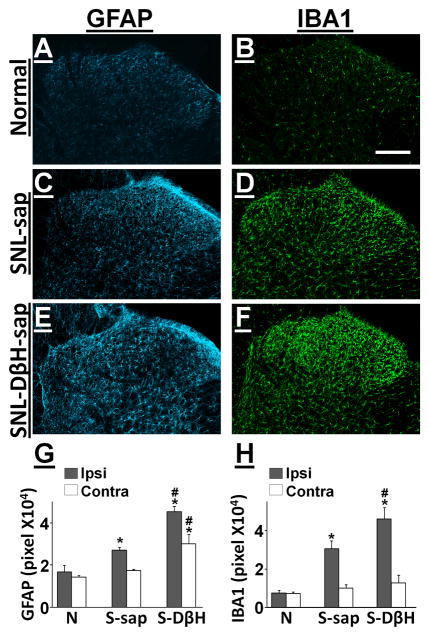
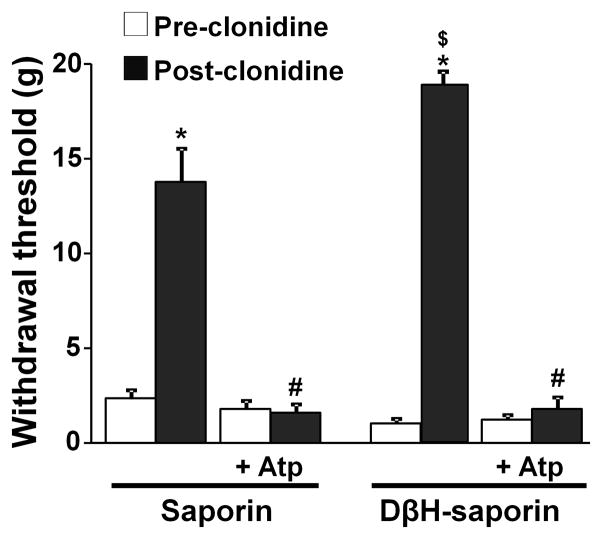
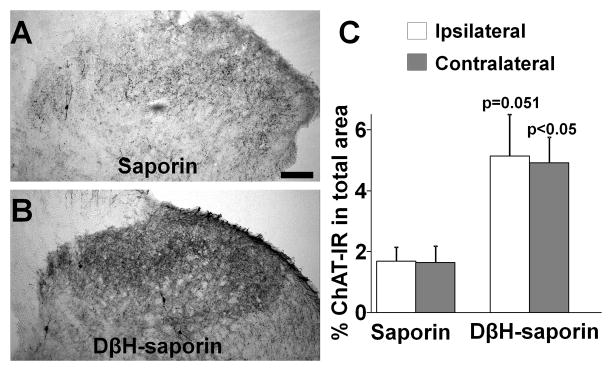
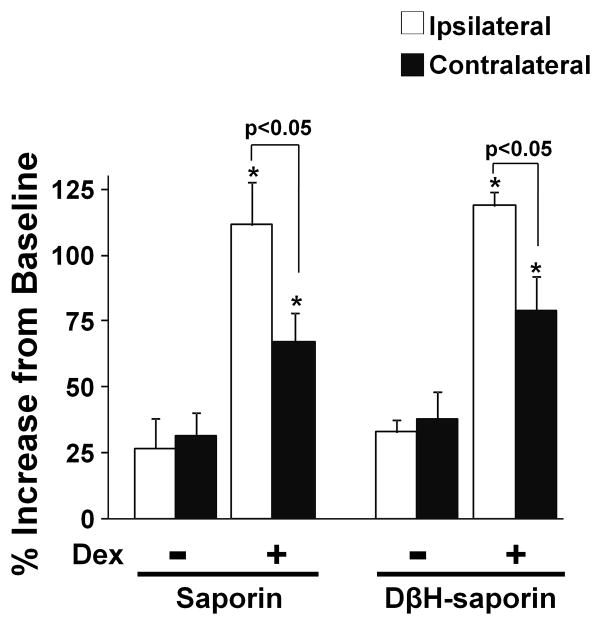
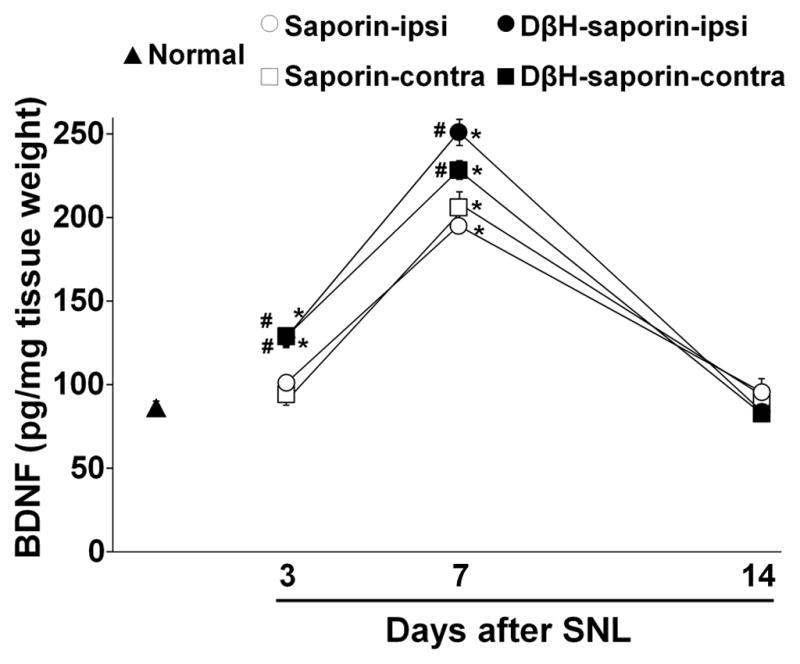
The present study examined the role of endogenous noradrenaline on glial and neuronal plasticity in the spinal cord in rats after peripheral nerve injury. An intrathecal injection of dopamine-β-hydroxylase antibody conjugated to saporin (DβH-saporin) completely depleted noradrenergic axons in the spinal cord and also reduced noradrenergic neurons in the locus coeruleus (A6) and A5 noradrenergic nucleus in the brainstem and noradrenergic axons in the paraventricular nucleus of the hypothalamus. DβH-saporin treatment itself did not alter mechanical withdrawal threshold, but enhanced mechanical hypersensitivity and intrathecal clonidine analgesia after L5-L6 spinal nerve ligation. In the spinal dorsal horn of spinal nerve ligation rats, DβH-saporin treatment increased choline acetyltransferase immunoreactivity as well as immunoreactivity in microglia of ionized calcium binding adaptor molecule 1[IBA1] and in astrocytes of glial fibrillary acidic protein, and brain-derived nerve growth factor content. DβH-saporin treatment did not, however, alter the fractional release of acetylcholine from terminals by dexmedetomidine after nerve injury. These results suggest that endogenous tone of noradrenergic fibers is not necessary for the plasticity of α2-adrenoceptor analgesia and glial activation after nerve injury, but might play an inhibitory role on glial activation.
This study demonstrates that endogenous noradrenaline modulates plasticity of glia and cholinergic neurons in the spinal cord after peripheral nerve injury and hence influences the pathophysiology of spinal cord changes associated with neuropathic pain.
本研究探讨了内源性去甲肾上腺素在周围神经损伤后大鼠脊髓胶质和神经元可塑性中的作用。鞘内注射与相思豆毒素偶联的多巴胺-β-羟化酶抗体(DβH-相思豆毒素)可完全耗尽脊髓中的去甲肾上腺素轴突,并减少蓝斑核(A6)和脑干 A5 去甲肾上腺素核以及下丘脑室旁核中的去甲肾上腺素神经元和去甲肾上腺素轴突。DβH-相思豆毒素处理本身不会改变机械性撤回避退阈值,但会增强 L5-L6 脊神经结扎后的机械性超敏反应和鞘内可乐定镇痛。在脊神经结扎大鼠的脊髓背角中,DβH-相思豆毒素处理增加了胆碱乙酰转移酶免疫反应性以及离子钙结合衔接分子 1[IBA1]的小胶质细胞和胶质纤维酸性蛋白的星形胶质细胞的免疫反应性,以及脑源性神经营养因子含量。然而,DβH-相思豆毒素处理并没有改变神经损伤后去甲肾上腺素对乙酰胆碱的终端释放分数。这些结果表明,内源性去甲肾上腺素纤维的张力对于神经损伤后 α2-肾上腺素能受体镇痛和胶质激活的可塑性不是必需的,但可能对胶质激活起抑制作用。
本研究表明,内源性去甲肾上腺素调节周围神经损伤后脊髓胶质和胆碱能神经元的可塑性,从而影响与神经病理性疼痛相关的脊髓变化的病理生理学。