Rajam Gowrisankar, Hammons Gabrielle M, Carlone George M, Sampson Jacquelyn S, Ades Edwin W
Division of Bacterial Diseases, Centers for Disease Control and Prevention, Atlanta, GA 30333, USA.
Int J Microbiol. 2011;2011:725483. doi: 10.1155/2011/725483. Epub 2011 Nov 16.
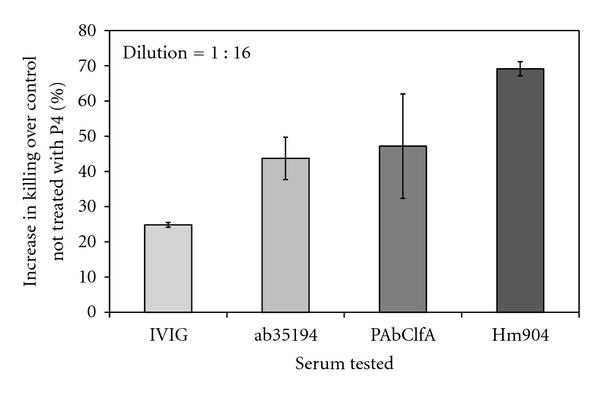
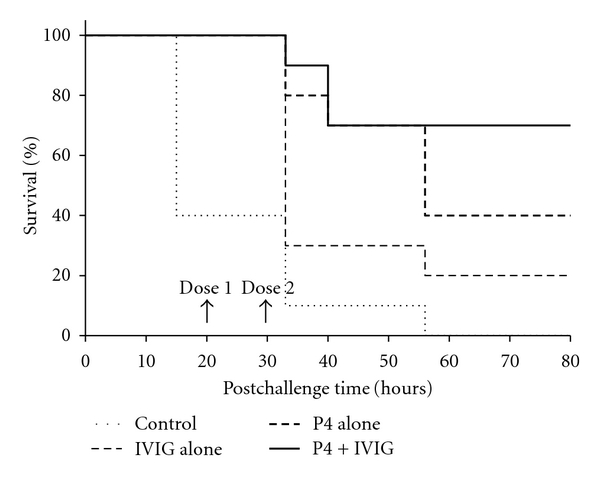
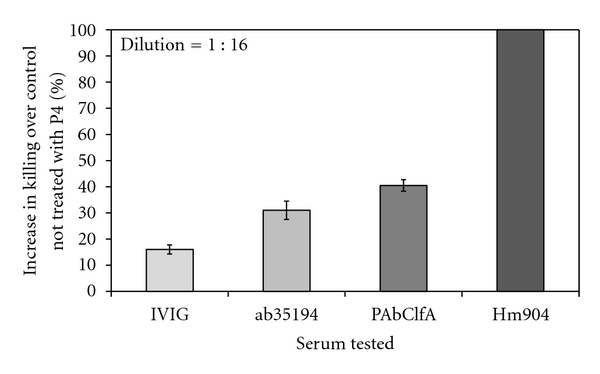
Staphylococcus aureus (SA) is a major community-acquired pathogen. The emergence of drug-resistant strains like, methicillin-resistant SA (MRSA), poses stiff challenges to therapeutic intervention. Passive immune-therapy with specific antibodies is being actively examined to treat fulminant infections with limited success. In this study, we demonstrate that P4, a 28-amino acid peptide, derived from pneumococcal surface adhesin A along with pathogen-specific antibody (IVIG; P4 therapy) is successful in enhancing the opsonophagocytic killing (OPK) of S. aureus in vitro. We questioned if it is possible to expand P4 therapy to treat staphylococcal infections in vivo. P4 therapy in combination with IVIG rescued 7/10 morbidly ill S. aureus-infected mice while only 2/10 survived in the control group.
金黄色葡萄球菌(SA)是一种主要的社区获得性病原体。耐甲氧西林金黄色葡萄球菌(MRSA)等耐药菌株的出现给治疗干预带来了严峻挑战。正在积极研究用特异性抗体进行被动免疫治疗以治疗暴发性感染,但成效有限。在本研究中,我们证明,源自肺炎球菌表面黏附素A的28个氨基酸的肽P4与病原体特异性抗体(静脉注射免疫球蛋白;P4疗法)一起,在体外成功增强了对金黄色葡萄球菌的调理吞噬杀伤作用(OPK)。我们质疑是否有可能扩展P4疗法以在体内治疗葡萄球菌感染。P4疗法联合静脉注射免疫球蛋白使10只患重病的金黄色葡萄球菌感染小鼠中的7只获救,而对照组中只有2只存活。