Dignitas International, 2 Adelaide Street West, Suite 200, Toronto, M5H 1L6, Canada.
BMC Int Health Hum Rights. 2011 Nov 8;11 Suppl 2(Suppl 2):S11. doi: 10.1186/1472-698X-11-S2-S11.
Nearly 3 million people in resource-poor countries receive antiretrovirals for the treatment of HIV/AIDS, yet millions more require treatment. Key barriers to treatment scale up are shortages of trained health care workers, and challenges integrating HIV/AIDS care with primary care.
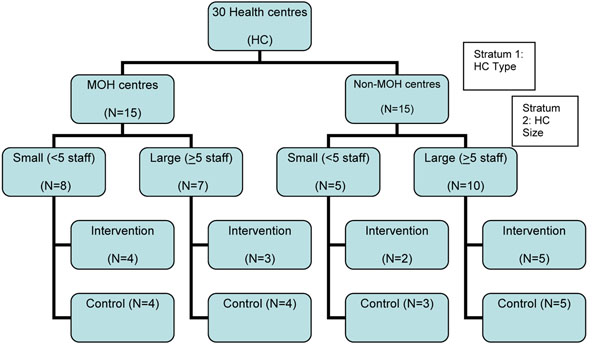
PALM PLUS (Practical Approach to Lung Health and HIV/AIDS in Malawi) is an intervention designed to simplify and integrate existing Malawian national guidelines into a single, simple, user-friendly guideline for mid-level health care workers. Training utilizes a peer-to-peer educational outreach approach. Research is being undertaken to evaluate this intervention to generate evidence that will guide future decision-making for consideration of roll out in Malawi. The research consists of a cluster randomized trial in 30 public health centres in Zomba District that measures the effect of the intervention on staff satisfaction and retention, quality of patient care, and costs through quantitative, qualitative and health economics methods.
In the first phase of qualitative inquiry respondents from intervention sites demonstrated in-depth knowledge of PALM PLUS compared to those from control sites. Participants in intervention sites felt that the PALM PLUS tool empowered them to provide better health services to patients. Interim staff retention data shows that there were, on average, 3 to 4 staff departing from the control and intervention sites per month. Additional qualitative, quantitative and economic analyses are planned.
Dignitas International and the Knowledge Translation Unit at the University of Cape Town Lung Institute have led the adaptation and development of the PALM PLUS intervention, using experience gained through the implementation of the South African precursor, PALSA PLUS. The Malawian partners, REACH Trust and the Research Unit at the Ministry of Health, have led the qualitative and economic evaluations. Dignitas and Ministry of Health have facilitated interaction with implementers and policy-makers.
This initiative is an example of South-South knowledge translation between South Africa and Malawi, mediated by a Canadian academic-NGO hybrid. Our success in developing and rolling out PALM PLUS in Malawi suggests that it is possible to adapt and implement this intervention for use in other resource-limited settings.
在资源匮乏的国家,近 300 万人接受抗逆转录病毒药物治疗艾滋病毒/艾滋病,但仍有数百万人需要治疗。扩大治疗规模的主要障碍是缺乏经过培训的卫生保健工作者,以及在将艾滋病毒/艾滋病护理与初级保健相结合方面存在挑战。
“手掌加”(马拉维实用肺部健康和艾滋病毒/艾滋病方法)是一项干预措施,旨在将现有的马拉维国家指南简化并整合为一个简单易用的中级卫生保健工作者指南。培训采用同侪教育推广方法。目前正在进行研究,以评估这一干预措施,为今后在马拉维推出该措施提供指导决策的依据。该研究包括在赞比西亚区 30 个公共卫生中心进行的一项群组随机试验,通过定量、定性和卫生经济学方法衡量该干预措施对员工满意度和保留率、患者护理质量和成本的影响。
在第一阶段的定性研究中,干预组的受访者与对照组的受访者相比,对“手掌加”有深入的了解。干预组的参与者认为,“手掌加”工具使他们能够为患者提供更好的医疗服务。临时人员保留数据显示,每月平均有 3 至 4 名工作人员离开对照组和干预组。计划进行更多的定性、定量和经济分析。
尊严国际和开普敦大学结核病研究所知识转化股领导了“手掌加”干预措施的适应和制定,利用了在南非前身“手掌加”实施过程中获得的经验。马拉维合作伙伴,REACH 信托基金和卫生部研究股领导了定性和经济评估。尊严国际和卫生部促进了与执行者和决策者的互动。
这一举措是南非和马拉维之间南南知识转让的一个例子,由一个加拿大学术-非政府组织混合体促成。我们在马拉维成功地开发和推出“手掌加”表明,有可能改编和实施这一干预措施,用于其他资源有限的环境。