June C H, Fletcher M C, Ledbetter J A, Schieven G L, Siegel J N, Phillips A F, Samelson L E
Immune Cell Biology Program, Naval Medical Research Institute, Bethesda, MD 20814.
Proc Natl Acad Sci U S A. 1990 Oct;87(19):7722-6. doi: 10.1073/pnas.87.19.7722.
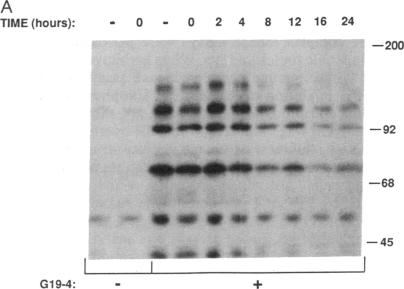
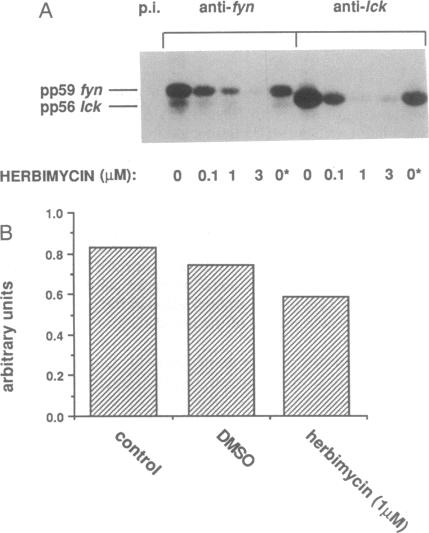
The binding of antigen to the multicomponent T-cell receptor (TCR) activates several signal transduction pathways via coupling mechanisms that are poorly understood. One event that follows antigen receptor engagement is the activation of inositol phospholipid-specific phospholipase C (PLC). TCR activation by antigen, lectins, or anti-TCR monoclonal antibody has also been shown to cause increases in tyrosine phosphorylation of TCR-zeta and other substrates, suggesting stimulation of protein tyrosine kinase (PTK) activity. A critical question is whether these two pathways, PLC and PTK, are independently activated or whether one initiates and/or regulates the other. In the former case, PLC activation could be coupled to the TCR via a GTP-binding protein (G protein). We have reported, however, that tyrosine phosphorylation of intracellular substrates precedes detection of PLC activation and intracellular calcium elevation, suggesting that inositol phospholipid turnover in T cells is initiated by a PTK pathway. In this study, we test this hypothesis by treating T cells with the drug herbimycin A. We demonstrate that this agent inhibits substrate tyrosine phosphorylation, TCR-mediated inositol phospholipid hydrolysis, and calcium elevation. In contrast, under these conditions G-protein-mediated PLC activity, as tested by addition of aluminum fluoride, remains intact. Furthermore, whereas herbimycin treatment prevents TCR-mediated interleukin 2 production and interleukin 2 receptor expression, phorbol ester-induced effects are substantially resistant to herbimycin. The drug thus appears to abrogate TCR-mediated signaling without affecting distal signaling mechanisms.
抗原与多组分T细胞受体(TCR)的结合通过人们了解甚少的偶联机制激活了几条信号转导途径。抗原受体参与后的一个事件是肌醇磷脂特异性磷脂酶C(PLC)的激活。抗原、凝集素或抗TCR单克隆抗体对TCR的激活也已显示会导致TCR-zeta及其他底物的酪氨酸磷酸化增加,提示蛋白酪氨酸激酶(PTK)活性受到刺激。一个关键问题是PLC和PTK这两条途径是独立激活的,还是一条启动和/或调节另一条。在前一种情况下,PLC的激活可能通过一种GTP结合蛋白(G蛋白)与TCR偶联。然而,我们已经报道过,细胞内底物的酪氨酸磷酸化先于PLC激活和细胞内钙升高的检测,提示T细胞中肌醇磷脂的周转是由PTK途径启动的。在本研究中,我们通过用药物赫曲霉素A处理T细胞来检验这一假说。我们证明这种药物抑制底物酪氨酸磷酸化、TCR介导的肌醇磷脂水解和钙升高。相反,在这些条件下,通过添加氟化铝测试的G蛋白介导的PLC活性保持完整。此外,虽然赫曲霉素处理可阻止TCR介导的白细胞介素2产生和白细胞介素2受体表达,但佛波酯诱导的效应基本不受赫曲霉素影响。因此,这种药物似乎消除了TCR介导的信号传导,而不影响远端信号传导机制。