Division of Paediatrics, Department of Clinical and Experimental Medicine, Faculty of Health Sciences, Linköping University, Linköping, Sweden.
PLoS One. 2011;6(12):e29008. doi: 10.1371/journal.pone.0029008. Epub 2011 Dec 12.
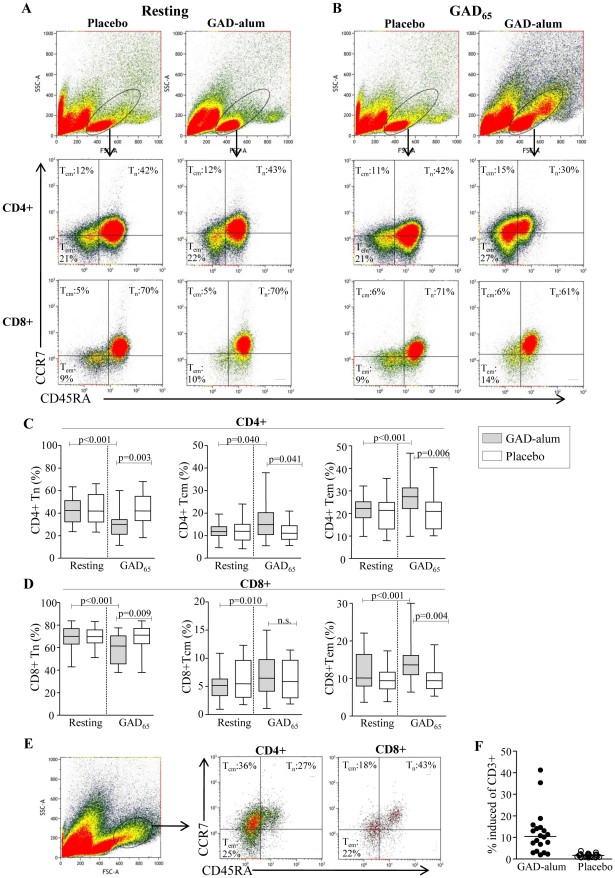
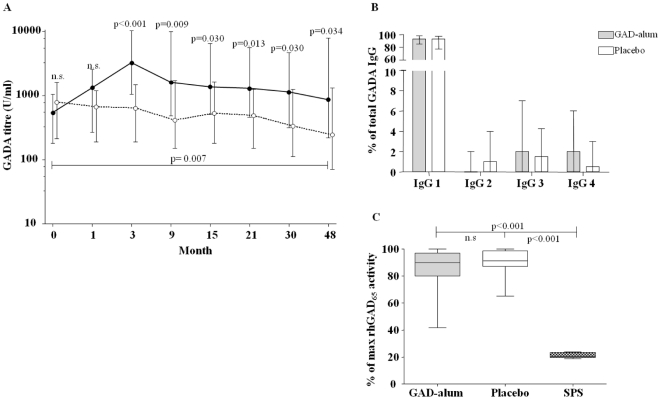
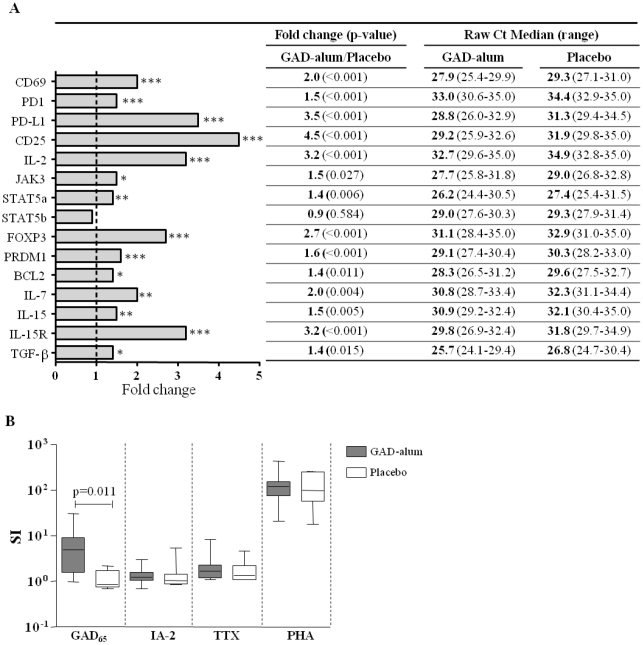
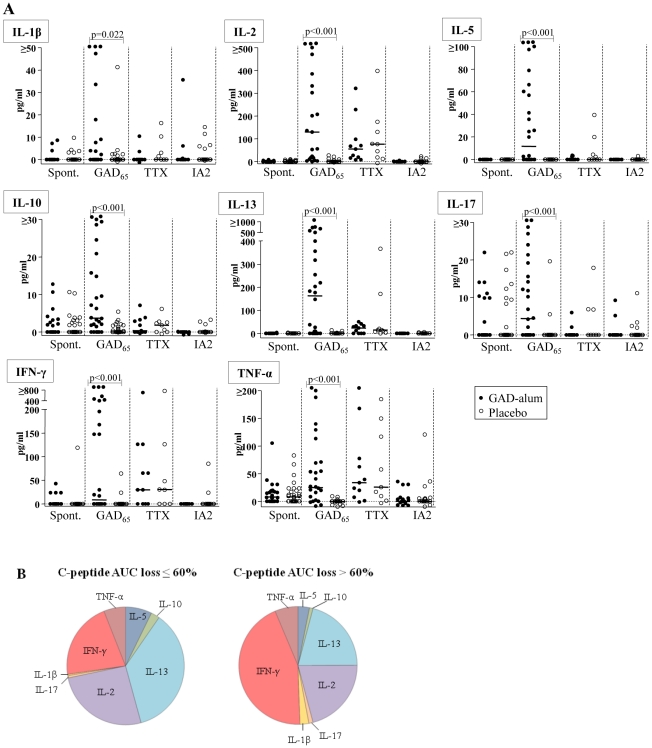
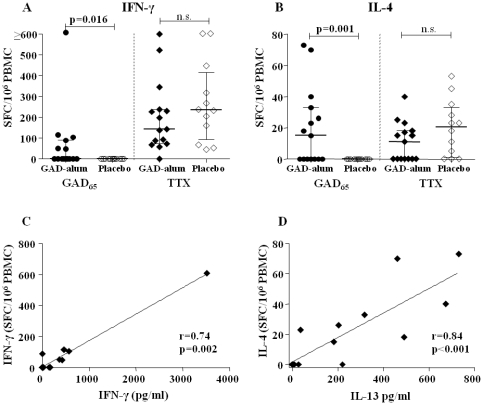
A phase II clinical trial with glutamic acid decarboxylase (GAD) 65 formulated with aluminium hydroxide (GAD-alum) has shown efficacy in preserving residual insulin secretion in children and adolescents with recent-onset type 1 diabetes (T1D). We have performed a 4-year follow-up study of 59 of the original 70 patients to investigate long-term cellular and humoral immune responses after GAD-alum-treatment. Peripheral blood mononuclear cells (PBMC) were stimulated in vitro with GAD(65). Frequencies of naïve, central and effector memory CD4+ and CD8+ T cells were measured, together with cytokine secretion, proliferation, gene expression and serum GAD(65) autoantibody (GADA) levels. We here show that GAD-alum-treated patients display increased memory T-cell frequencies and prompt T-cell activation upon in vitro stimulation with GAD(65), but not with control antigens, compared with placebo subjects. GAD(65)-induced T-cell activation was accompanied by secretion of T helper (Th) 1, Th2 and T regulatory cytokines and by induction of T-cell inhibitory pathways. Moreover, post-treatment serum GADA titres remained persistently increased in the GAD-alum arm, but did not inhibit GAD(65) enzymatic activity. In conclusion, memory T- and B-cell responses persist 4 years after GAD-alum-treatment. In parallel to a GAD(65)-induced T-cell activation, our results show induction of T-cell inhibitory pathways important for regulating the GAD(65) immunity.
一项包含谷氨酸脱羧酶(GAD)65 与氢氧化铝(GAD-alum)的 II 期临床试验已证明在保留近期发病 1 型糖尿病(T1D)儿童和青少年的残余胰岛素分泌方面具有疗效。我们对最初的 70 名患者中的 59 名进行了为期 4 年的随访研究,以调查 GAD-alum 治疗后长期的细胞和体液免疫反应。体外使用 GAD(65)刺激外周血单核细胞(PBMC)。测量了幼稚、中央和效应记忆 CD4+和 CD8+T 细胞的频率,以及细胞因子分泌、增殖、基因表达和血清 GAD(65)自身抗体(GADA)水平。我们在此表明,与安慰剂组相比,GAD-alum 治疗的患者在体外用 GAD(65)刺激时显示出增加的记忆 T 细胞频率和快速的 T 细胞激活,但用对照抗原刺激时则没有。GAD(65)诱导的 T 细胞激活伴随着 Th1、Th2 和 T 调节细胞因子的分泌以及 T 细胞抑制途径的诱导。此外,治疗后 GAD-alum 组的血清 GADA 滴度持续升高,但不抑制 GAD(65)酶活性。总之,在 GAD-alum 治疗后 4 年,记忆 T 细胞和 B 细胞反应仍然存在。与 GAD(65)诱导的 T 细胞激活平行,我们的结果显示诱导了 T 细胞抑制途径,这对于调节 GAD(65)免疫很重要。