Department of Pathology, Northwestern University Feinberg School of Medicine, Chicago, IL 60611, USA.
J Cell Biol. 2011 Dec 26;195(7):1185-203. doi: 10.1083/jcb.201106057. Epub 2011 Dec 19.
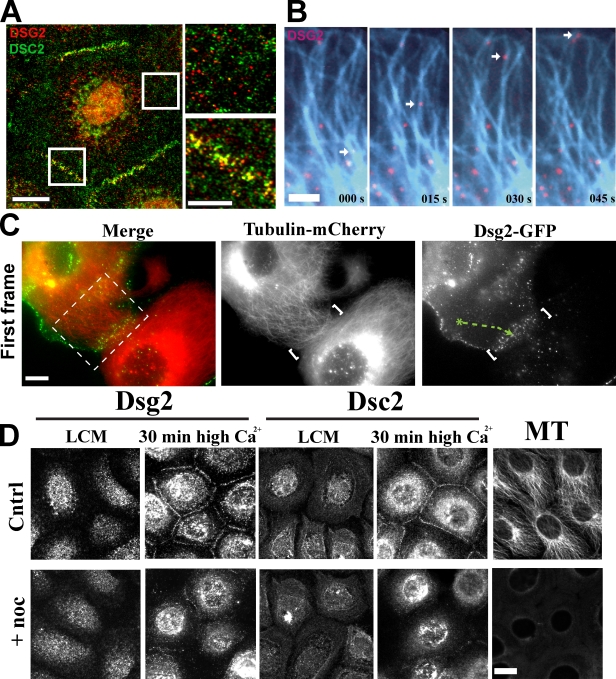
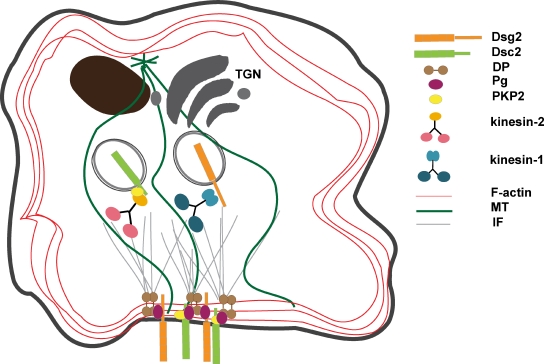
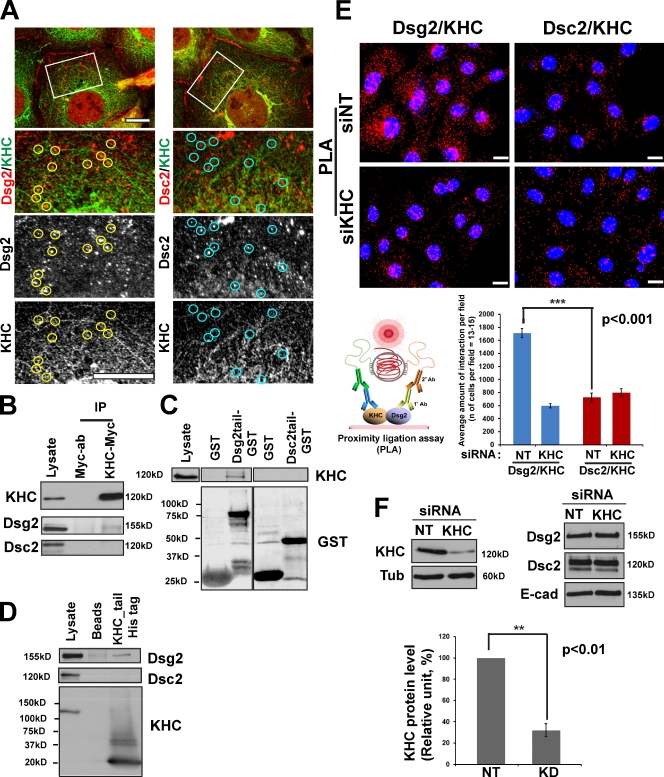
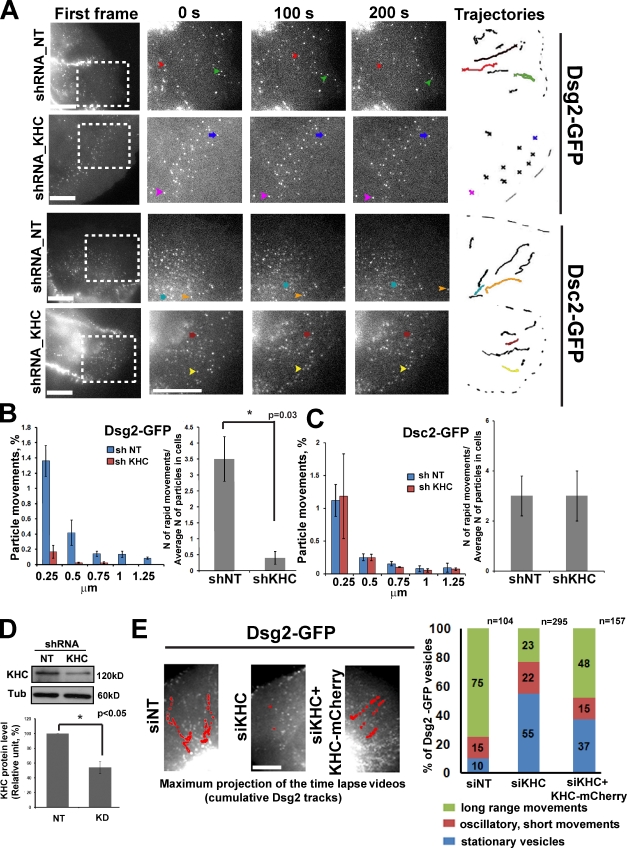
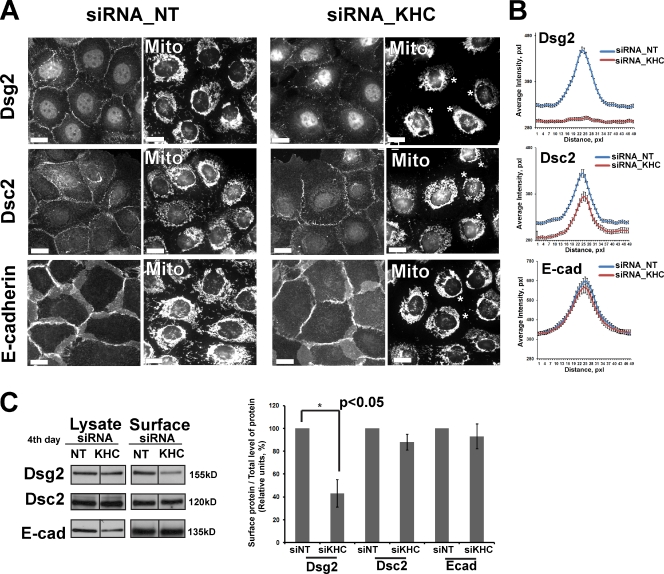
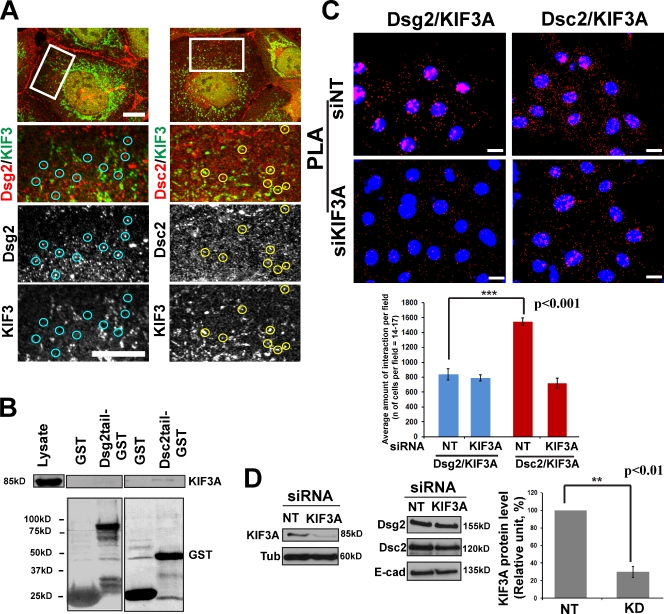
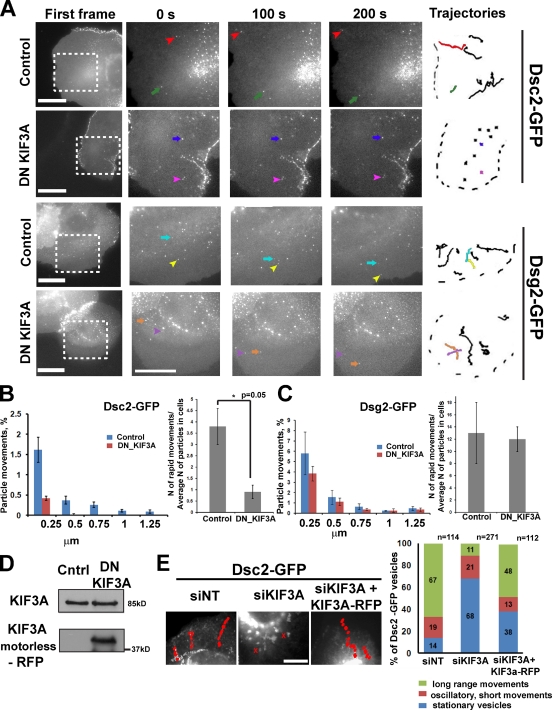
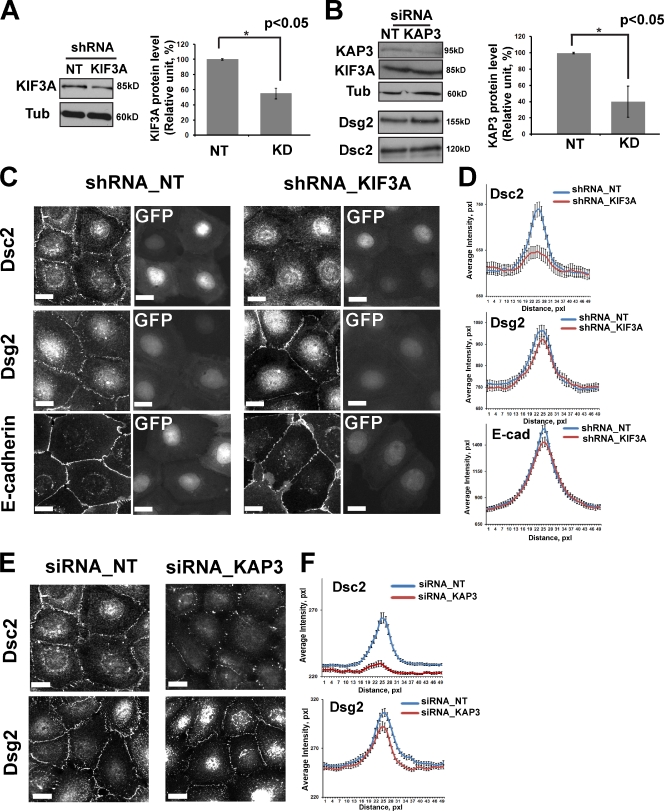
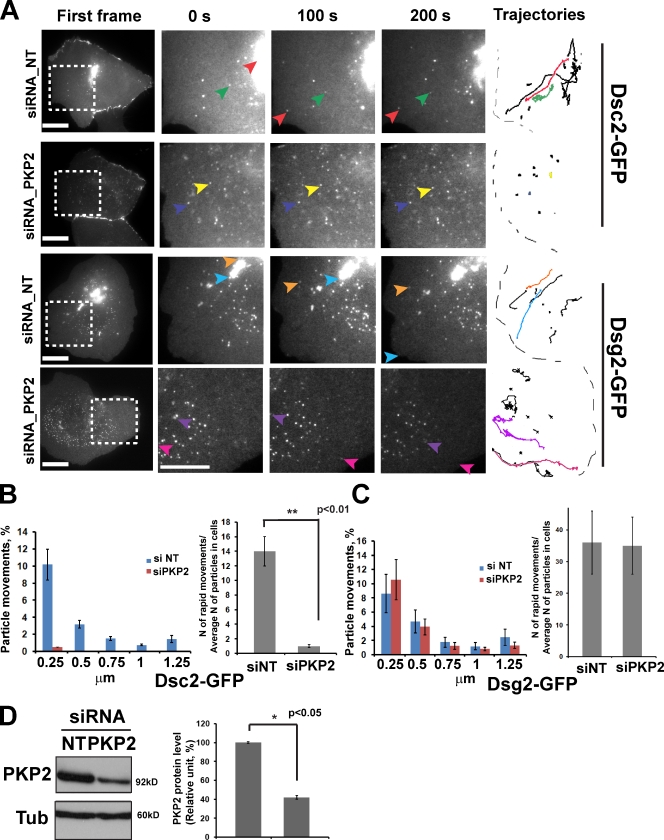
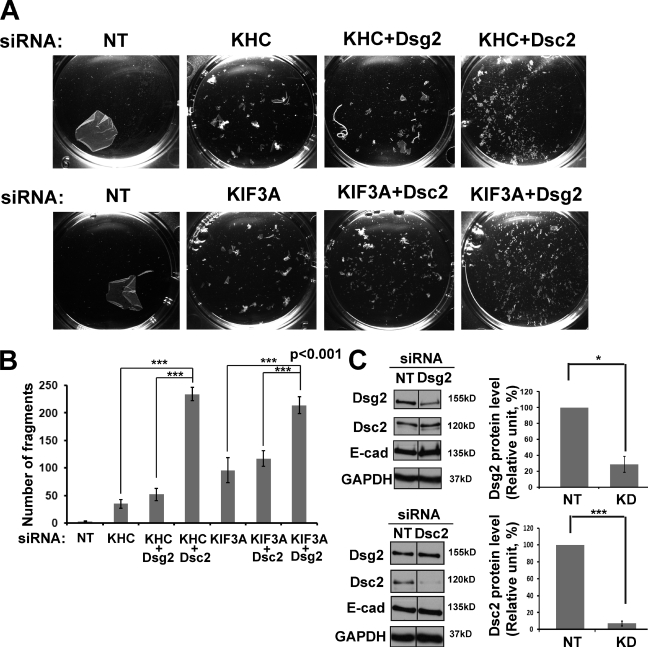
The desmosomal cadherins, desmogleins (Dsgs) and desmocollins (Dscs), comprise the adhesive core of intercellular junctions known as desmosomes. Although these adhesion molecules are known to be critical for tissue integrity, mechanisms that coordinate their trafficking into intercellular junctions to regulate their proper ratio and distribution are unknown. We demonstrate that Dsg2 and Dsc2 both exhibit microtubule-dependent transport in epithelial cells but use distinct motors to traffic to the plasma membrane. Functional interference with kinesin-1 blocked Dsg2 transport, resulting in the assembly of Dsg2-deficient junctions with minimal impact on distribution of Dsc2 or desmosomal plaque components. In contrast, inhibiting kinesin-2 prevented Dsc2 movement and decreased its plasma membrane accumulation without affecting Dsg2 trafficking. Either kinesin-1 or -2 deficiency weakened intercellular adhesion, despite the maintenance of adherens junctions and other desmosome components at the plasma membrane. Differential regulation of desmosomal cadherin transport could provide a mechanism to tailor adhesion strength during tissue morphogenesis and remodeling.
桥粒黏附分子包括桥粒芯蛋白(desmogleins,Dsgs)和桥粒胶蛋白(desmocollins,Dscs),它们构成了细胞间连接的黏附核心结构,即桥粒。虽然这些黏附分子对于组织完整性至关重要,但协调它们向细胞间连接运输以调节其适当比例和分布的机制尚不清楚。我们发现 Dsg2 和 Dsc2 在上皮细胞中均表现出微管依赖性运输,但它们使用不同的分子马达运输至质膜。用驱动蛋白-1 的功能抑制剂阻断 Dsg2 的运输,导致 Dsg2 缺陷连接的组装,对 Dsc2 或桥粒斑成分的分布几乎没有影响。相反,抑制驱动蛋白-2 会阻止 Dsc2 的运动并减少其在质膜上的积累,但不影响 Dsg2 的运输。尽管锚着连接和其他桥粒成分仍保留在质膜上,但是抑制任何一种驱动蛋白都会削弱细胞间黏附。桥粒黏附分子运输的差异调节可能为组织形态发生和重塑过程中调整黏附强度提供了一种机制。