• 文献检索
  • 文档翻译
  • 深度研究
  • 学术资讯
  • Suppr Zotero 插件Zotero 插件
  • 邀请有礼
  • 套餐&价格
  • 历史记录
应用&插件
Suppr Zotero 插件Zotero 插件浏览器插件Mac 客户端Windows 客户端微信小程序
定价
高级版会员购买积分包购买API积分包
服务
文献检索文档翻译深度研究API 文档MCP 服务
关于我们
关于 Suppr公司介绍联系我们用户协议隐私条款
关注我们

Suppr 超能文献

核心技术专利:CN118964589B侵权必究
粤ICP备2023148730 号-1Suppr @ 2026

文献检索

告别复杂PubMed语法,用中文像聊天一样搜索,搜遍4000万医学文献。AI智能推荐,让科研检索更轻松。

立即免费搜索

文件翻译

保留排版,准确专业,支持PDF/Word/PPT等文件格式,支持 12+语言互译。

免费翻译文档

深度研究

AI帮你快速写综述,25分钟生成高质量综述,智能提取关键信息,辅助科研写作。

立即免费体验

生殖生物学及其对体型的影响:哺乳动物、鸟类和恐龙生殖的比较分析。

Reproductive biology and its impact on body size: comparative analysis of mammalian, avian and dinosaurian reproduction.

机构信息

Department of Ecology, Zoological Institute, University of Mainz, Mainz, Germany.

出版信息

PLoS One. 2011;6(12):e28442. doi: 10.1371/journal.pone.0028442. Epub 2011 Dec 14.

DOI:10.1371/journal.pone.0028442
PMID:22194835
原文链接:https://pmc.ncbi.nlm.nih.gov/articles/PMC3237437/
Abstract

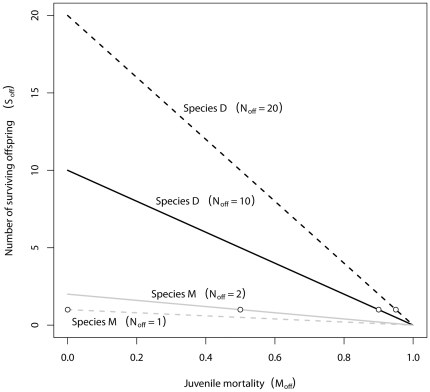
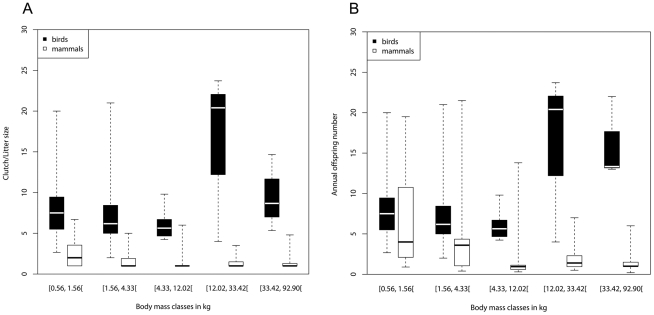
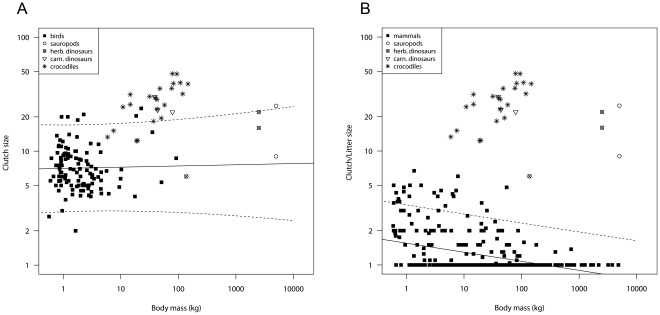
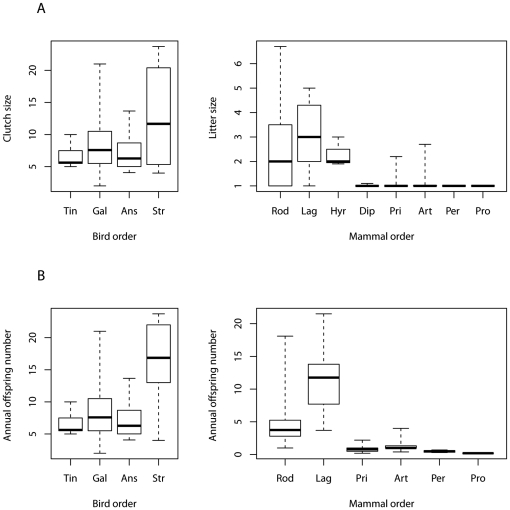
Janis and Carrano (1992) suggested that large dinosaurs might have faced a lower risk of extinction under ecological changes than similar-sized mammals because large dinosaurs had a higher potential reproductive output than similar-sized mammals (JC hypothesis). First, we tested the assumption underlying the JC hypothesis. We therefore analysed the potential reproductive output (reflected in clutch/litter size and annual offspring number) of extant terrestrial mammals and birds (as "dinosaur analogs") and of extinct dinosaurs. With the exception of rodents, the differences in the reproductive output of similar-sized birds and mammals proposed by Janis and Carrano (1992) existed even at the level of single orders. Fossil dinosaur clutches were larger than litters of similar-sized mammals, and dinosaur clutch sizes were comparable to those of similar-sized birds. Because the extinction risk of extant species often correlates with a low reproductive output, the latter difference suggests a lower risk of population extinction in dinosaurs than in mammals. Second, we present a very simple, mathematical model that demonstrates the advantage of a high reproductive output underlying the JC hypothesis. It predicts that a species with a high reproductive output that usually faces very high juvenile mortalities will benefit more strongly in terms of population size from reduced juvenile mortalities (e.g., resulting from a stochastic reduction in population size) than a species with a low reproductive output that usually comprises low juvenile mortalities. Based on our results, we suggest that reproductive strategy could have contributed to the evolution of the exceptional gigantism seen in dinosaurs that does not exist in extant terrestrial mammals. Large dinosaurs, e.g., the sauropods, may have easily sustained populations of very large-bodied species over evolutionary time.

摘要

詹尼斯和卡兰诺(1992)提出,大型恐龙在生态变化中面临的灭绝风险可能比类似大小的哺乳动物低,因为大型恐龙的潜在繁殖产量高于类似大小的哺乳动物(JC 假说)。首先,我们检验了 JC 假说的基本假设。因此,我们分析了现存陆地哺乳动物和鸟类(作为“恐龙模拟物”)和已灭绝恐龙的潜在繁殖产量(反映在卵/窝大小和年后代数量上)。除了啮齿动物,詹尼斯和卡兰诺(1992)提出的类似大小的鸟类和哺乳动物的繁殖产量差异甚至在单一目级也存在。化石恐龙卵窝比类似大小的哺乳动物的窝大,而恐龙卵窝大小与类似大小的鸟类相当。由于现存物种的灭绝风险通常与低繁殖产量相关,后一差异表明恐龙的种群灭绝风险低于哺乳动物。其次,我们提出了一个非常简单的数学模型,该模型证明了 JC 假说中高繁殖产量的优势。它预测,具有高繁殖产量的物种通常面临非常高的幼体死亡率,从减少幼体死亡率(例如,由于种群规模的随机减少)中获益将比繁殖产量低的物种更强,而繁殖产量低的物种通常幼体死亡率低。基于我们的结果,我们认为繁殖策略可能有助于恐龙中异常巨型化的进化,而这种巨型化在现存的陆地哺乳动物中并不存在。例如,蜥脚类恐龙可能很容易维持非常大型物种的种群在进化时间内。
https://cdn.ncbi.nlm.nih.gov/pmc/blobs/1b82/3237437/6548dc4c9781/pone.0028442.g004.jpg
https://cdn.ncbi.nlm.nih.gov/pmc/blobs/1b82/3237437/6a7f7e1245c0/pone.0028442.g001.jpg
https://cdn.ncbi.nlm.nih.gov/pmc/blobs/1b82/3237437/83e34b093cee/pone.0028442.g002.jpg
https://cdn.ncbi.nlm.nih.gov/pmc/blobs/1b82/3237437/80d0d996ab76/pone.0028442.g003.jpg
https://cdn.ncbi.nlm.nih.gov/pmc/blobs/1b82/3237437/6548dc4c9781/pone.0028442.g004.jpg
https://cdn.ncbi.nlm.nih.gov/pmc/blobs/1b82/3237437/6a7f7e1245c0/pone.0028442.g001.jpg
https://cdn.ncbi.nlm.nih.gov/pmc/blobs/1b82/3237437/83e34b093cee/pone.0028442.g002.jpg
https://cdn.ncbi.nlm.nih.gov/pmc/blobs/1b82/3237437/80d0d996ab76/pone.0028442.g003.jpg
https://cdn.ncbi.nlm.nih.gov/pmc/blobs/1b82/3237437/6548dc4c9781/pone.0028442.g004.jpg

相似文献

1
Reproductive biology and its impact on body size: comparative analysis of mammalian, avian and dinosaurian reproduction.生殖生物学及其对体型的影响:哺乳动物、鸟类和恐龙生殖的比较分析。
PLoS One. 2011;6(12):e28442. doi: 10.1371/journal.pone.0028442. Epub 2011 Dec 14.
2
Ecological interactions in dinosaur communities: influences of small offspring and complex ontogenetic life histories.恐龙群落中的生态相互作用:小型后代和复杂个体发育生活史的影响。
PLoS One. 2013 Oct 30;8(10):e77110. doi: 10.1371/journal.pone.0077110. eCollection 2013.
3
New insights into non-avian dinosaur reproduction and their evolutionary and ecological implications: linking fossil evidence to allometries of extant close relatives.深入了解非鸟兽脚类恐龙的繁殖方式及其进化和生态意义:将化石证据与现存近亲的异速生长联系起来。
PLoS One. 2013 Aug 21;8(8):e72862. doi: 10.1371/journal.pone.0072862. eCollection 2013.
4
Rates of dinosaur body mass evolution indicate 170 million years of sustained ecological innovation on the avian stem lineage.恐龙体重的进化速率表明,在鸟类的进化主干上有长达1.7亿年的持续生态创新。
PLoS Biol. 2014 May 6;12(5):e1001853. doi: 10.1371/journal.pbio.1001853. eCollection 2014 May.
5
Ontogenetic niche shifts in dinosaurs influenced size, diversity and extinction in terrestrial vertebrates.恐龙的个体发育生态位转移影响了陆地脊椎动物的体型、多样性和灭绝。
Biol Lett. 2012 Aug 23;8(4):620-3. doi: 10.1098/rsbl.2012.0240. Epub 2012 Apr 18.
6
Biology of the sauropod dinosaurs: the evolution of gigantism.蜥脚类恐龙的生物学:巨型化的进化。
Biol Rev Camb Philos Soc. 2011 Feb;86(1):117-55. doi: 10.1111/j.1469-185X.2010.00137.x.
7
Preservation of ovarian follicles reveals early evolution of avian reproductive behaviour.卵巢滤泡的保存揭示了鸟类生殖行为的早期演化。
Nature. 2013 Mar 28;495(7442):507-11. doi: 10.1038/nature11985. Epub 2013 Mar 17.
8
Nonplantigrade Foot Posture: A Constraint on Dinosaur Body Size.非跖行式足部姿态:对恐龙体型的一种限制
PLoS One. 2016 Jan 20;11(1):e0145716. doi: 10.1371/journal.pone.0145716. eCollection 2016.
9
Anomalously high variation in postnatal development is ancestral for dinosaurs but lost in birds.产后发育中异常高的变异性是恐龙的祖先特征,但在鸟类中消失了。
Proc Natl Acad Sci U S A. 2016 Dec 20;113(51):14757-14762. doi: 10.1073/pnas.1613813113. Epub 2016 Dec 5.
10
Evolution of parental incubation behaviour in dinosaurs cannot be inferred from clutch mass in birds.恐龙亲代孵育行为的演化不能从鸟类的卵质量推断。
Biol Lett. 2013 May 15;9(4):20130036. doi: 10.1098/rsbl.2013.0036. Print 2013 Aug 23.

引用本文的文献

1
Growing with dinosaurs: a review of dinosaur reproduction and ontogeny.与恐龙共同成长:恐龙繁殖与个体发育综述
Biol Lett. 2025 Jan;21(1):20240474. doi: 10.1098/rsbl.2024.0474. Epub 2025 Jan 15.
2
Tetrapod sperm length evolution in relation to body mass is shaped by multiple trade-offs.四足动物精子长度与体重的进化关系受到多种权衡的影响。
Nat Commun. 2024 Jul 22;15(1):6160. doi: 10.1038/s41467-024-50391-0.
3
Molecular basis for the evolved instability of a human G-protein coupled receptor.人类 G 蛋白偶联受体进化不稳定性的分子基础。

本文引用的文献

1
Phylogenetics, biogeography and classification of, and character evolution in, gamebirds (Aves: Galliformes): effects of character exclusion, data partitioning and missing data.猎禽(鸟纲:鸡形目)的系统发育、生物地理学、分类及特征演化:特征排除、数据划分和缺失数据的影响
Cladistics. 2006 Dec;22(6):495-532. doi: 10.1111/j.1096-0031.2006.00120.x.
2
Mammalian reproductive strategies: A generalized relation of litter size to body size.哺乳动物的繁殖策略:窝仔数与体型的一般关系。
Oecologia. 1980 Apr;45(1):39-44. doi: 10.1007/BF00346705.
3
Relationships between body size and some life history parameters.
Cell Rep. 2021 Nov 23;37(8):110046. doi: 10.1016/j.celrep.2021.110046.
4
Evolution of Reproductive Life History in Mammals and the Associated Change of Functional Constraints.哺乳动物生殖生活史的进化及其相关功能约束的变化。
Genes (Basel). 2021 May 14;12(5):740. doi: 10.3390/genes12050740.
5
Hunter-Gatherers in context: Mammal community composition in a northern Tanzania landscape used by Hadza foragers and Datoga pastoralists.语境中的狩猎采集者:坦桑尼亚北部景观中哺乳动物群落的组成,该景观被哈扎觅食者和达戈塔牧民使用。
PLoS One. 2021 May 14;16(5):e0251076. doi: 10.1371/journal.pone.0251076. eCollection 2021.
6
Testing hypotheses of marsupial brain size variation using phylogenetic multiple imputations and a Bayesian comparative framework.使用系统发育多重插补和贝叶斯比较框架检验有袋类动物脑容量变化的假设。
Proc Biol Sci. 2021 Mar 31;288(1947):20210394. doi: 10.1098/rspb.2021.0394.
7
Can Dogs Limbo? Dogs' Perception of Affordances for Negotiating an Opening.狗会玩Limbo游戏吗?狗对通过开口的可及性的感知。
Animals (Basel). 2021 Feb 26;11(3):620. doi: 10.3390/ani11030620.
8
An identification of invariants in life history traits of amphibians and reptiles.两栖动物和爬行动物生活史特征中的不变量识别。
Ecol Evol. 2020 Jan 8;10(3):1233-1251. doi: 10.1002/ece3.5978. eCollection 2020 Feb.
9
An exploration of differences in the scaling of life history traits with body mass within reptiles and between amniotes.对爬行动物内部以及羊膜动物之间生活史特征随体重变化的差异进行的探索。
Ecol Evol. 2018 May 2;8(11):5480-5494. doi: 10.1002/ece3.4069. eCollection 2018 Jun.
10
Was endothermy in amniotes induced by an early stop in growth during ontogeny?羊膜动物的恒温性是由个体发育过程中生长的早期停止所诱导的吗?
Naturwissenschaften. 2017 Oct 11;104(11-12):90. doi: 10.1007/s00114-017-1513-1.
体型与一些生活史参数之间的关系。
Oecologia. 1978 Jan;37(2):257-272. doi: 10.1007/BF00344996.
4
3-D modelling of megaloolithid clutches: insights about nest construction and dinosaur behaviour.巨型蛋化石巢的 3-D 建模:有关巢穴建造和恐龙行为的新见解。
PLoS One. 2010 May 5;5(5):e10362. doi: 10.1371/journal.pone.0010362.
5
Avian paternal care had dinosaur origin.鸟类的父性关怀起源于恐龙。
Science. 2008 Dec 19;322(5909):1826-8. doi: 10.1126/science.1163245.
6
The worldwide variation in avian clutch size across species and space.全球范围内鸟类窝卵数在物种和空间上的差异。
PLoS Biol. 2008 Dec 9;6(12):2650-7. doi: 10.1371/journal.pbio.0060303.
7
The status of the world's land and marine mammals: diversity, threat, and knowledge.世界陆地和海洋哺乳动物的现状:多样性、威胁与认知
Science. 2008 Oct 10;322(5899):225-30. doi: 10.1126/science.1165115.
8
Paleontology. Sauropod gigantism.古生物学。蜥脚类恐龙的巨大化。
Science. 2008 Oct 10;322(5899):200-1. doi: 10.1126/science.1160904.
9
Evidence for avian intrathoracic air sacs in a new predatory dinosaur from Argentina.来自阿根廷的一种新的食肉恐龙体内存在鸟类胸腔气囊的证据。
PLoS One. 2008 Sep 30;3(9):e3303. doi: 10.1371/journal.pone.0003303.
10
Higher-order phylogeny of modern birds (Theropoda, Aves: Neornithes) based on comparative anatomy. II. Analysis and discussion.基于比较解剖学的现代鸟类(兽脚亚目,鸟纲:新鸟亚纲)高阶系统发育。II. 分析与讨论。
Zool J Linn Soc. 2007 Jan 1;149(1):1-95. doi: 10.1111/j.1096-3642.2006.00293.x.