Genome Evolution Laboratory, Department of Biology, National University of Ireland Maynooth, Maynooth, County Kildare, Ireland.
PLoS One. 2011;6(12):e28684. doi: 10.1371/journal.pone.0028684. Epub 2011 Dec 15.
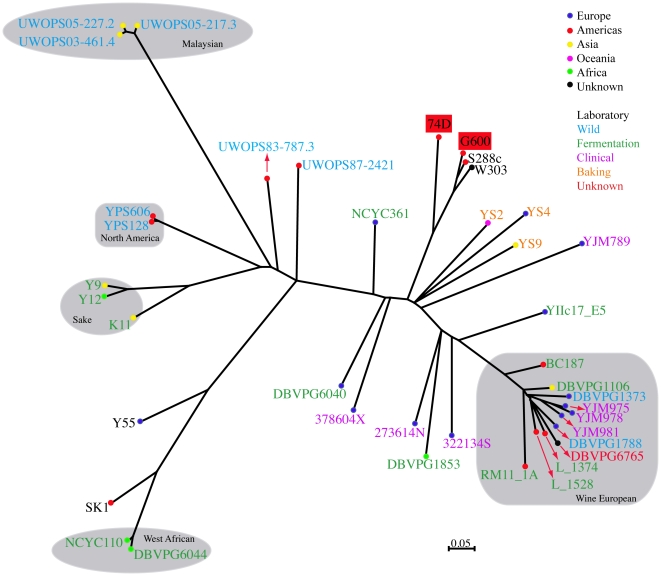
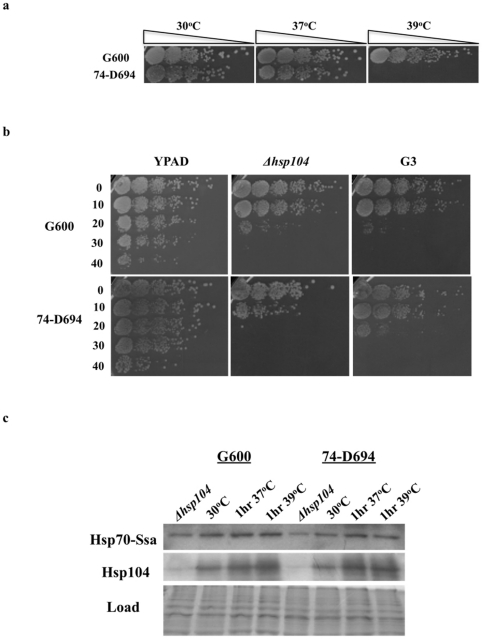
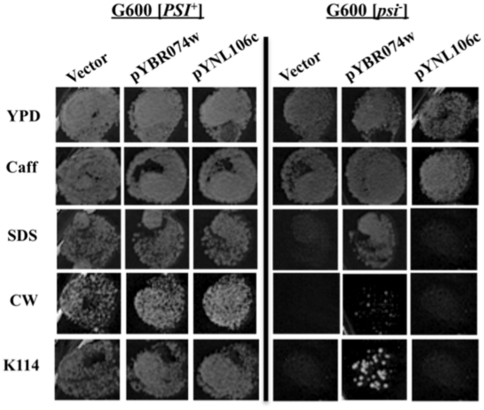
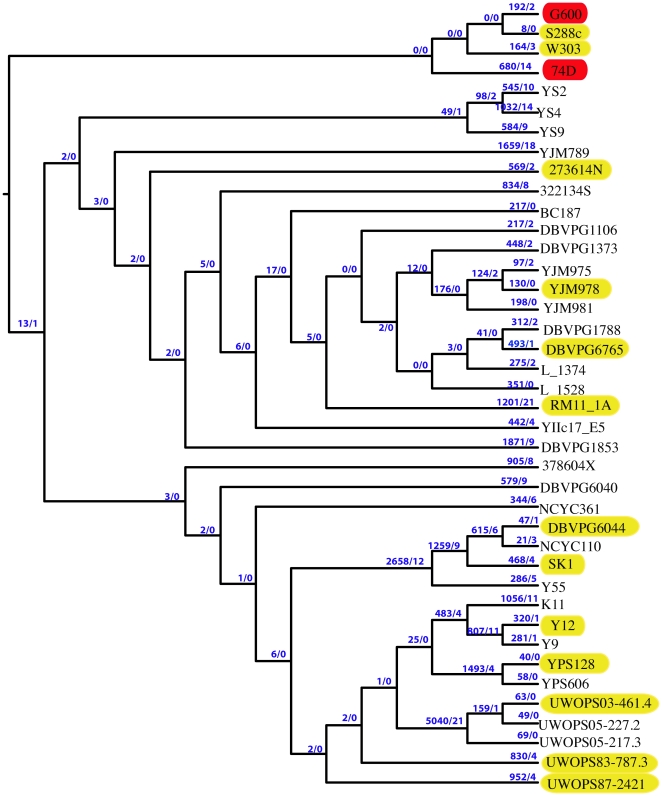
The yeast prion [PSI(+)] has been implicated in the generation of novel phenotypes by a mechanism involving a reduction in translation fidelity causing readthrough of naturally occurring stop codons. Some [PSI(+)] associated phenotypes may also be generated due to readthrough of inactivating stop codon mutations (ISCMs). Using next generation sequencing we have sequenced the genomes of two Saccharomyces cerevisiae strains that are commonly used for the study of the yeast [PSI(+)] prion. We have identified approximately 26,000 and 6,500 single nucleotide polymorphisms (SNPs) in strains 74-D694 and G600 respectively, compared to reference strain S288C. In addition to SNPs that produce non-synonymous amino acid changes we have also identified a number of SNPs that cause potential ISCMs in these strains, one of which we show is associated with a [PSI(+)]-dependent stress resistance phenotype in strain G600. We identified twenty-two potential ISCMs in strain 74-D694, present in genes involved in a variety of cellular processes including nitrogen metabolism, signal transduction and oxidative stress response. The presence of ISCMs in a subset of these genes provides possible explanations for previously identified [PSI(+)]-associated phenotypes in this strain. A comparison of ISCMs in strains G600 and 74-D694 with S. cerevisiae strains sequenced as part of the Saccharomyces Genome Resequencing Project (SGRP) shows much variation in the generation of strain-specific ISCMs and suggests this process is possible under complex genetic control. Additionally we have identified a major difference in the abilities of strains G600 and 74-D694 to grow at elevated temperatures. However, this difference appears unrelated to novel SNPs identified in strain 74-D694 present in proteins involved in the heat shock response, but may be attributed to other SNP differences in genes previously identified as playing a role in high temperature growth.
酵母朊病毒[PSI(+)] 被认为通过一种降低翻译保真度的机制导致自然发生的终止密码子通读,从而产生新的表型。一些[PSI(+)]相关表型也可能是由于失活终止密码子突变(ISCMs)的通读产生的。使用下一代测序,我们对两种常用于研究酵母[PSI(+)]朊病毒的酿酒酵母菌株的基因组进行了测序。与参考菌株 S288C 相比,我们在菌株 74-D694 和 G600 中分别鉴定出了大约 26000 和 6500 个单核苷酸多态性(SNP)。除了产生非同义氨基酸变化的 SNP 外,我们还在这些菌株中鉴定出了一些可能导致 ISCM 的 SNP,其中一个 SNP 我们证明与菌株 G600 中与[PSI(+)] 相关的应激抗性表型有关。我们在菌株 74-D694 中鉴定出了 22 个潜在的 ISCM,这些 SNP 存在于参与各种细胞过程的基因中,包括氮代谢、信号转导和氧化应激反应。这些基因中存在 ISCM 为该菌株中先前鉴定的与[PSI(+)] 相关的表型提供了可能的解释。对菌株 G600 和 74-D694 中的 ISCM 与作为酿酒酵母基因组重测序计划(SGRP)一部分测序的 S. cerevisiae 菌株中的 ISCM 进行比较,表明在菌株特异性 ISCM 的产生中存在很大的差异,并表明该过程可能受到复杂的遗传控制。此外,我们还发现菌株 G600 和 74-D694 在高温下生长的能力存在显著差异。然而,这种差异似乎与菌株 74-D694 中参与热休克反应的蛋白质中存在的新型 SNP 无关,但可能归因于其他 SNP 差异,这些 SNP 差异在先前被鉴定为在高温生长中发挥作用的基因中存在。