Yeast Genetics Laboratory, Department of Biology, National University of Ireland Maynooth, Maynooth, County Kildare, Ireland.
BMC Genomics. 2014 Mar 14;15(1):194. doi: 10.1186/1471-2164-15-194.
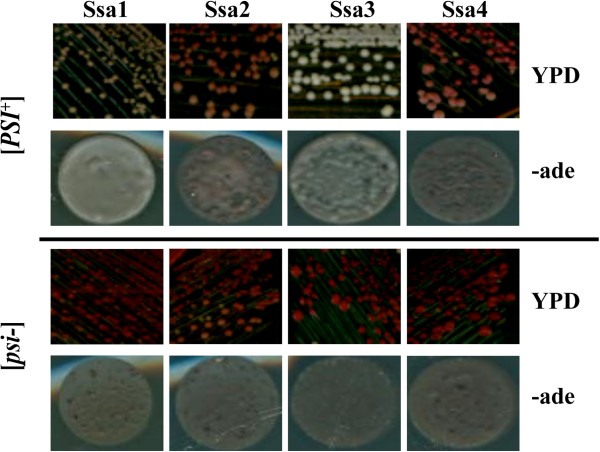
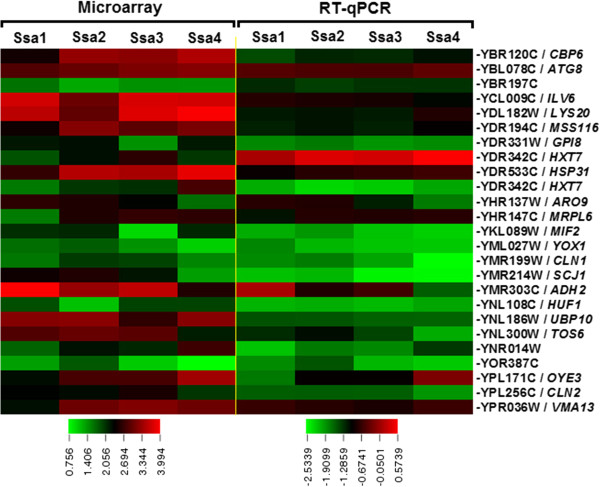
Cytosolic Hsp70 is a ubiquitous molecular chaperone that is involved in responding to a variety of cellular stresses. A major function of Hsp70 is to prevent the aggregation of denatured proteins by binding to exposed hydrophobic regions and preventing the accumulation of amorphous aggregates. To gain further insight into the functional redundancy and specialisation of the highly homologous yeast Hsp70-Ssa family we expressed each of the individual Ssa proteins as the sole source of Hsp70 in the cell and assessed phenotypic differences in prion propagation and stress resistance. Additionally we also analysed the global gene expression patterns in yeast strains expressing individual Ssa proteins, using microarray and RT-qPCR analysis.
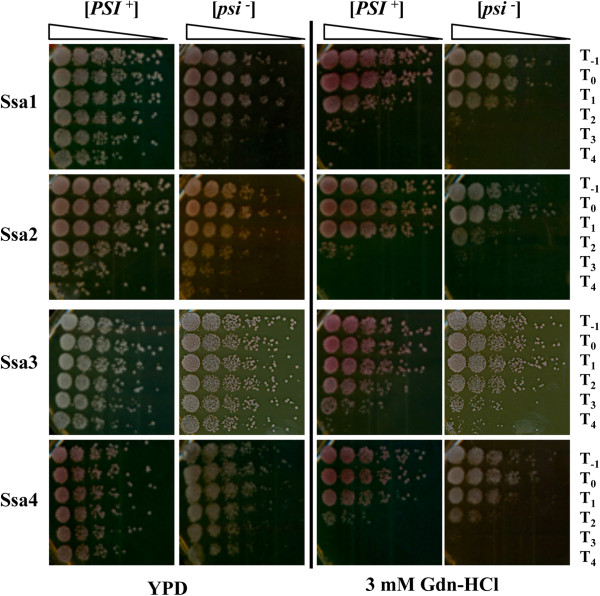
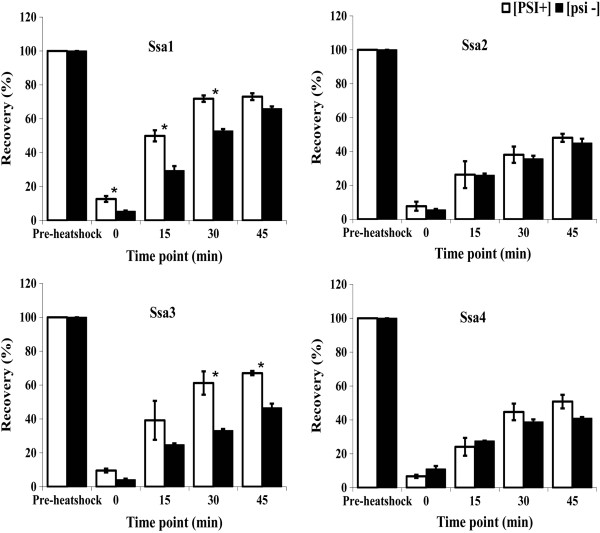
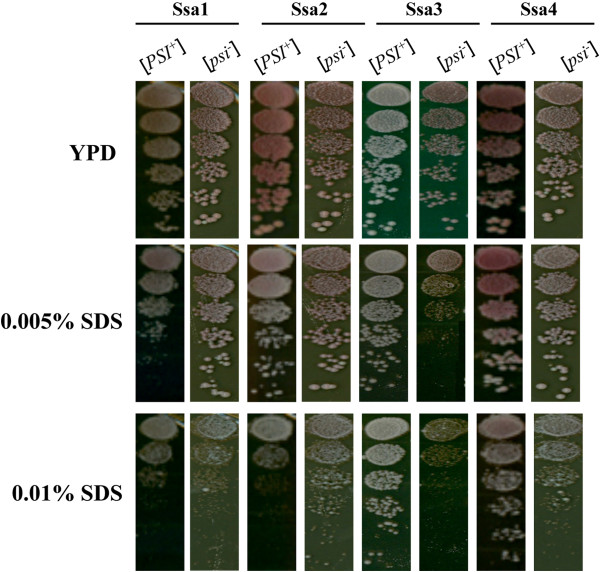
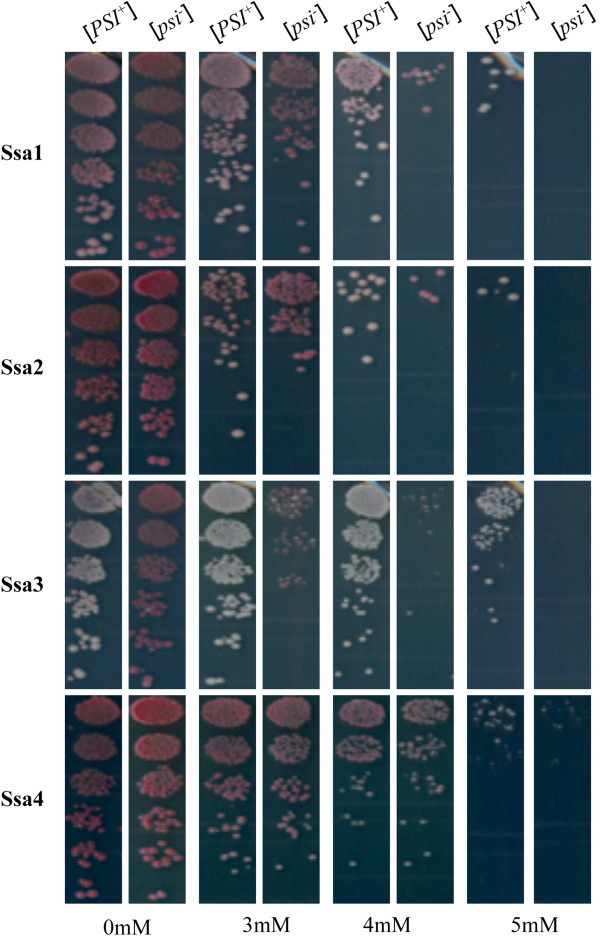
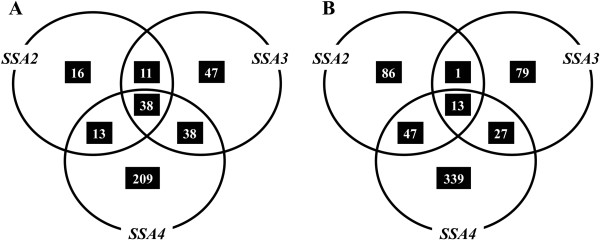
We confirm and extend previous studies demonstrating that cells expressing different Hsp70-Ssa isoforms vary in their ability to propagate the yeast [PSI+] prion, with Ssa3 being the most proficient. Of the four Ssa family members the heat inducible isoforms are more proficient in acquiring thermotolerance and we show a greater requirement than was previously thought, for cellular processes in addition to the traditional Hsp104 protein disaggregase machinery, in acquiring such thermotolerance. Cells expressing different Hsp70-Ssa isoforms also display differences in phenotypic response to exposure to cell wall damaging and oxidative stress agents, again with the heat inducible isoforms providing better protection than constitutive isoforms. We assessed global transcriptome profiles for cells expressing individual Hsp70-Ssa isoforms as the sole source of cytosolic Hsp70, and identified a significant difference in cellular gene expression between these strains. Differences in gene expression profiles provide a rationale for some phenotypic differences we observed in this study. We also demonstrate a high degree of correlation between microarray data and RT-qPCR analysis for a selection of genes.
The Hsp70-Ssa family provide both redundant and variant-specific functions within the yeast cell. Yeast cells expressing individual members of the Hsp70-Ssa family as the sole source of Ssa protein display differences in global gene expression profiles. These changes in global gene expression may contribute significantly to the phenotypic differences observed between the Hsp70-Ssa family members.
细胞质 Hsp70 是一种普遍存在的分子伴侣,参与应对多种细胞应激。Hsp70 的主要功能是通过与暴露的疏水区结合并防止无定形聚集体的积累,防止变性蛋白的聚集。为了更深入地了解高度同源的酵母 Hsp70-Ssa 家族的功能冗余和专业化,我们将每个单独的 Ssa 蛋白作为细胞中 Hsp70 的唯一来源进行表达,并评估在朊病毒传播和应激抗性方面的表型差异。此外,我们还使用微阵列和 RT-qPCR 分析,分析了表达单个 Ssa 蛋白的酵母菌株的全局基因表达模式。
我们证实并扩展了先前的研究,证明表达不同 Hsp70-Ssa 同工型的细胞在其传播酵母 [PSI+] 朊病毒的能力上有所不同,其中 Ssa3 最为有效。在四个 Ssa 家族成员中,热诱导同工型在获得耐热性方面更为有效,我们发现除了传统的 Hsp104 蛋白去聚集酶机制外,还需要更多的细胞过程来获得这种耐热性。表达不同 Hsp70-Ssa 同工型的细胞在暴露于细胞壁损伤和氧化应激剂时的表型反应也存在差异,再次表明热诱导同工型比组成型同工型提供更好的保护。我们评估了表达单个 Hsp70-Ssa 同工型作为细胞质 Hsp70 唯一来源的细胞的全局转录组谱,并在这些菌株之间鉴定出细胞基因表达的显著差异。基因表达谱的差异为我们在这项研究中观察到的一些表型差异提供了合理依据。我们还证明了微阵列数据和 RT-qPCR 分析选定基因之间的高度相关性。
Hsp70-Ssa 家族在酵母细胞内提供了冗余和变体特异性的功能。表达单个 Hsp70-Ssa 家族成员作为 Ssa 蛋白唯一来源的酵母细胞显示出全局基因表达谱的差异。这些全局基因表达的变化可能对 Hsp70-Ssa 家族成员之间观察到的表型差异有重要贡献。