Department of Biomedical Engineering and Environmental Sciences, National Tsing Hua University, Hsinchu, Taiwan.
PLoS One. 2011;6(12):e29241. doi: 10.1371/journal.pone.0029241. Epub 2011 Dec 15.
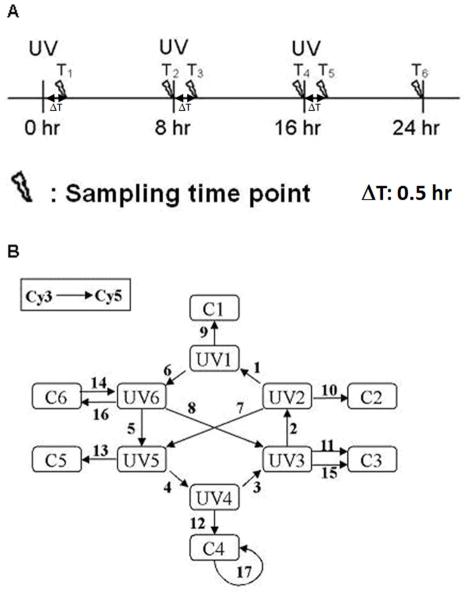
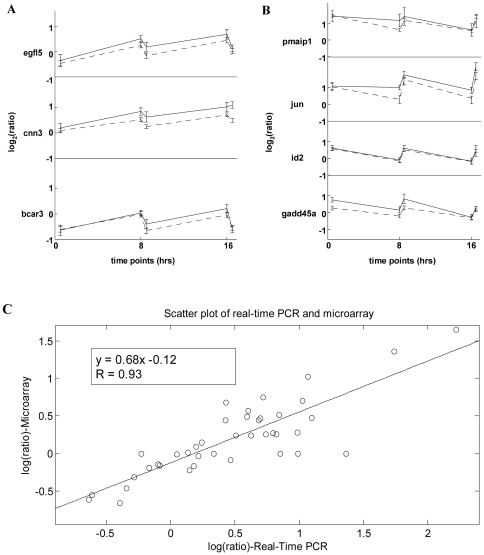
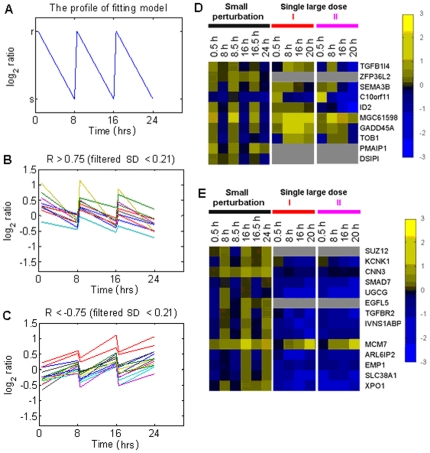
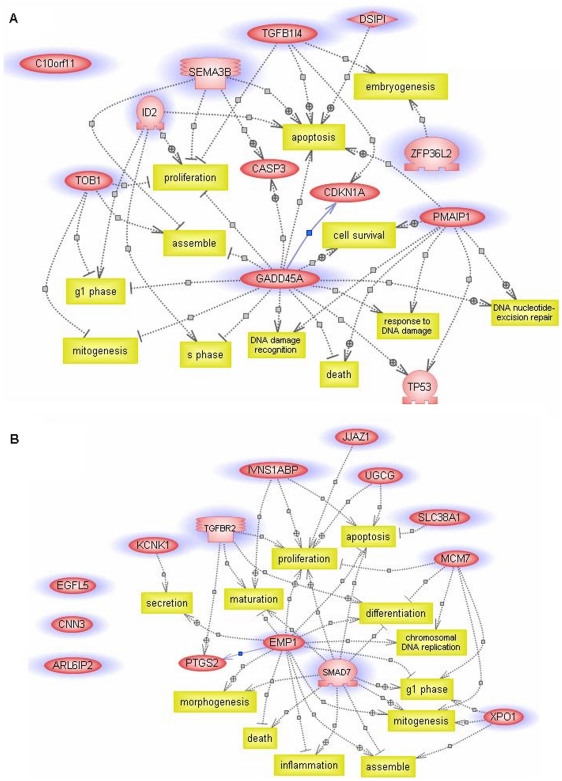
The study of biological systems dynamics requires elucidation of the transitions of steady states. A "small perturbation" approach can provide important information on the "steady state" of a biological system. In our experiments, small perturbations were generated by applying a series of repeating small doses of ultraviolet radiation to a human keratinocyte cell line, HaCaT. The biological response was assessed by monitoring the gene expression profiles using cDNA microarrays. Repeated small doses (10 J/m2) of ultraviolet B (UVB) exposure modulated the expression profiles of two groups of genes in opposite directions. The genes that were up-regulated have functions mainly associated with anti-proliferation/anti-mitogenesis/apoptosis, and the genes that were down-regulated were mainly related to proliferation/mitogenesis/anti-apoptosis. For both groups of genes, repetition of the small doses of UVB caused an immediate response followed by relaxation between successive small perturbations. This cyclic pattern was suppressed when large doses (233 or 582.5 J/m2) of UVB were applied. Our method and results contribute to a foundation for computational systems biology, which implicitly uses the concept of steady state.
生物系统动力学的研究需要阐明稳态的转变。“小扰动”方法可以为生物系统的“稳态”提供重要信息。在我们的实验中,通过对人角质形成细胞系 HaCaT 施加一系列重复的小剂量紫外线辐射来产生小扰动。通过使用 cDNA 微阵列监测基因表达谱来评估生物反应。重复的小剂量(10 J/m2)紫外线 B(UVB)暴露以相反的方向调节两组基因的表达谱。上调的基因主要与抗增殖/抗有丝分裂/凋亡有关,而下调的基因主要与增殖/有丝分裂/抗凋亡有关。对于这两组基因,重复小剂量 UVB 照射会立即引起反应,然后在连续的小扰动之间放松。当应用大剂量(233 或 582.5 J/m2)UVB 时,这种循环模式被抑制。我们的方法和结果为计算系统生物学奠定了基础,该学科隐含地使用了稳态的概念。