Chemistry Institute, University of Campinas - UNICAMP, POB 6154, 13084-971 Campinas, SP, Brazil.
AMB Express. 2011 Dec 23;1:47. doi: 10.1186/2191-0855-1-47.
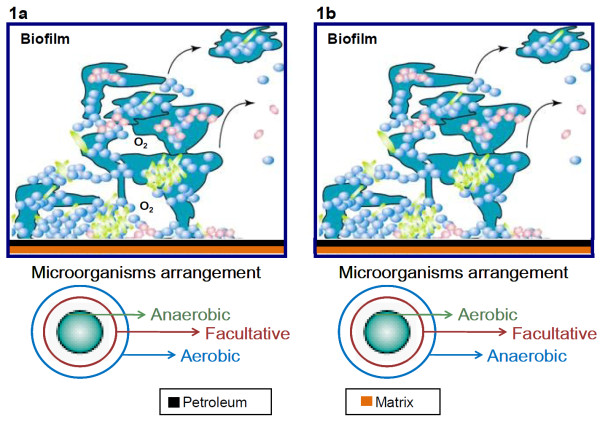
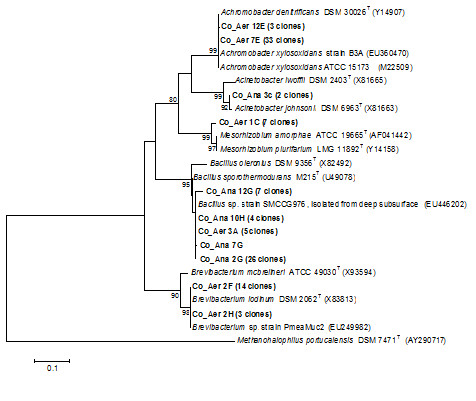
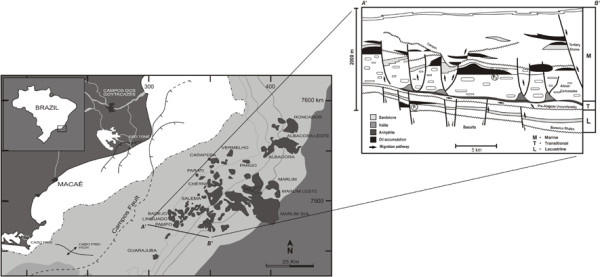
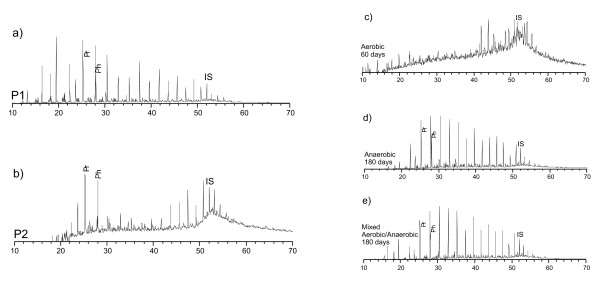
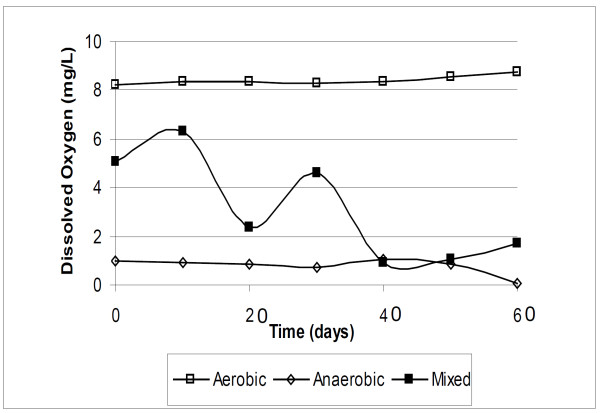
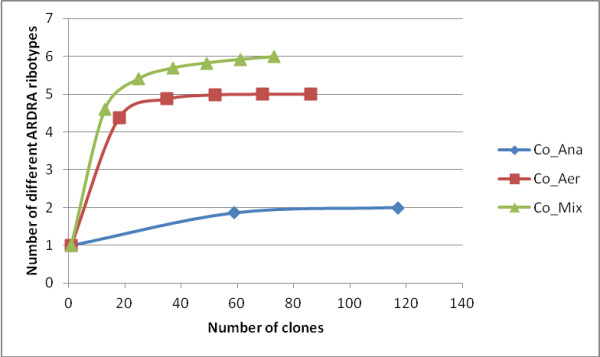
Several studies suggest that petroleum biodegradation can be achieved by either aerobic or anaerobic microorganisms, depending on oxygen input or other electron acceptors and appropriate nutrients. Evidence from in vitro experiments with samples of petroleum formation water and oils from Pampo Field indicate that petroleum biodegradation is more likely to be a joint achievement of both aerobic and anaerobic bacterial consortium, refining our previous observations of aerobic degradation. The aerobic consortium depleted, in decreasing order, hydrocarbons > hopanes > steranes > tricyclic terpanes while the anaerobic consortium depleted hydrocarbons > steranes > hopanes > tricyclic terpanes. The oxygen content of the mixed consortia was measured from time to time revealing alternating periods of microaerobicity (O2 0.8 mg.L-1) and of aerobicity (O26.0 mg.L-1). In this experiment, the petroleum biodegradation changed from time to time, alternating periods of biodegradation similar to the aerobic process and periods of biodegradation similar to the anaerobic process. The consortia showed preferences for metabolizing hydrocarbons > hopanes > steranes > tricyclic terpanes during a 90-day period, after which this trend changed and steranes were more biodegraded than hopanes. The analysis of aerobic oil degrading microbiota by the 16S rRNA gene clone library detected the presence of Bacillus, Brevibacterium, Mesorhizobium and Achromobacter, and the analysis of the anaerobic oil degrading microbiota using the same technique detected the presence of Bacillus and Acinetobacter (facultative strains). In the mixed consortia Stenotrophomonas, Brevibacterium, Bacillus, Rhizobium, Achromobacter and 5% uncultured bacteria were detected. This is certainly a new contribution to the study of reservoir biodegradation processes, combining two of the more important accepted hypotheses.
几项研究表明,石油的生物降解可以通过需氧或厌氧微生物来实现,这取决于氧气的输入或其他电子受体以及适当的营养物质。来自潘帕油田石油形成水和油的体外实验证据表明,石油的生物降解更有可能是需氧和厌氧细菌共生体的共同作用,这完善了我们之前对需氧降解的观察。需氧共生体依次耗尽了烃类>藿烷>甾烷>三环萜烷,而厌氧共生体则耗尽了烃类>甾烷>藿烷>三环萜烷。混合共生体中的氧含量不时被测量,揭示了微需氧(O20.8mg/L)和需氧(O26.0mg/L)交替的时期。在这个实验中,石油的生物降解不时发生变化,从类似需氧过程的生物降解期到类似厌氧过程的生物降解期交替。共生体在 90 天的时间内表现出优先代谢烃类>藿烷>甾烷>三环萜烷的偏好,之后这种趋势发生了变化,甾烷的生物降解程度超过了藿烷。通过 16S rRNA 基因克隆文库对需氧石油降解微生物群落的分析检测到了芽孢杆菌、短杆菌、中慢生根瘤菌和无色杆菌的存在,而使用相同技术对厌氧石油降解微生物群落的分析则检测到了芽孢杆菌和不动杆菌(兼性菌)的存在。在混合共生体中,检测到了寡养单胞菌、短杆菌、芽孢杆菌、根瘤菌、无色杆菌和 5%未培养细菌。这无疑是对储层生物降解过程研究的新贡献,结合了两个更重要的公认假说。