Norwegian Arthroplasty Register, Department of Orthopedic Surgery, Haukeland University Hospital, Bergen, Norway.
Acta Orthop. 2012 Feb;83(1):1-6. doi: 10.3109/17453674.2011.645194. Epub 2011 Dec 29.
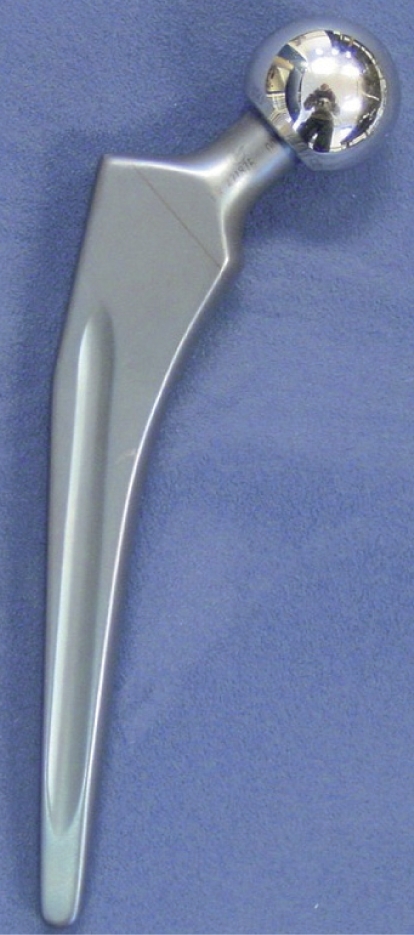
Despite the fact that there have been some reports on poor performance, titanium femoral stems intended for cemented fixation are still used at some centers in Europe. In this population-based registry study, we examined the results of the most frequently used cemented titanium stem in Norway.
11,876 cases implanted with the cemented Titan stem were identified for the period 1987-2008. Hybrid arthroplasties were excluded, leaving 10,108 cases for this study. Stem survival and the influence of age, sex, stem offset and size, and femoral head size were evaluated using Cox regression analyses. Questionnaires were sent to the hospitals to determine the surgical technique used.
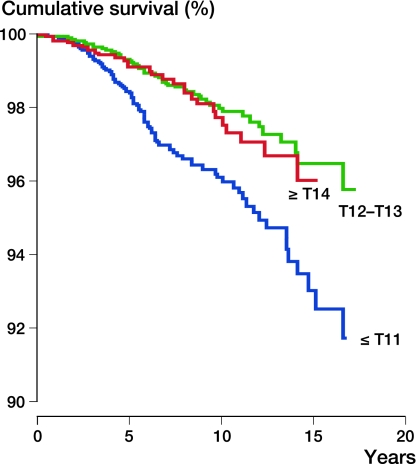
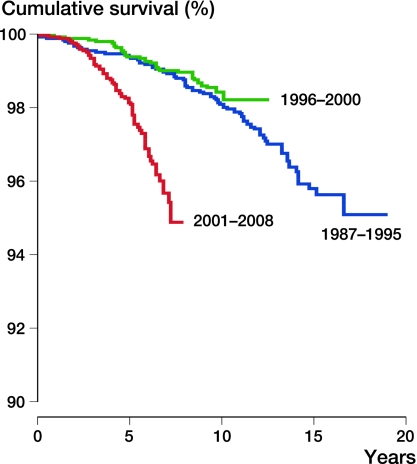
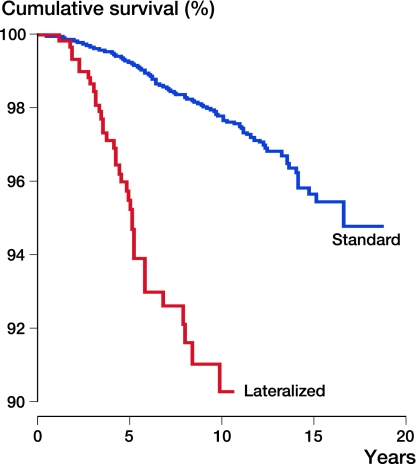
Male sex, high stem offset, and small stem size were found to be risk factors for stem revision, (adjusted RR = 2.5 (1.9-3.4), 3.3 (2.3-4.8), and 2.2 (1.4-3.5), respectively). Patients operated in the period 2001-2008 had an adjusted relative risk (RR) of 4.7 (95% CI: 3.0-7.4) for stem revision due to aseptic stem loosening compared to the period 1996-2000. Changes in broaching technique and cementing technique coincided with deterioration of the results in some hospitals.
The increased use of small stem sizes and high-offset stems could only explain the deterioration of results to a certain degree since the year 2000. The influence of discrete changes in surgical technique over time could not be fully evaluated in this registry study. We suggest that this cemented titanium stem should be abandoned. The results of similar implants should be carefully evaluated.
尽管已有一些研究报告显示该钛制股骨柄的性能不佳,但在欧洲的一些中心,仍在使用这种适用于骨水泥固定的股骨柄。在这项基于人群的注册研究中,我们对挪威最常使用的骨水泥固定钛制股骨柄的结果进行了评估。
1987 年至 2008 年期间共确定了 11876 例植入骨水泥固定 Titan 股骨柄的病例。排除混合关节置换病例后,本研究共纳入 10108 例病例。采用 Cox 回归分析评估了股骨柄生存率以及年龄、性别、股骨柄偏心距和尺寸以及股骨头尺寸的影响。向各医院发放了调查问卷,以确定所采用的手术技术。
男性、高股骨柄偏心距和小股骨柄尺寸被发现是股骨柄翻修的危险因素,(校正 RR=2.5(1.9-3.4)、3.3(2.3-4.8)和 2.2(1.4-3.5))。与 1996-2000 年相比,2001-2008 年期间接受手术的患者因无菌性股骨柄松动而进行股骨柄翻修的校正相对风险(RR)为 4.7(95%CI:3.0-7.4)。在一些医院,扩髓技术和骨水泥技术的变化与结果的恶化同时发生。
自 2000 年以来,小股骨柄尺寸和高偏心距股骨柄的广泛应用仅在一定程度上解释了结果的恶化。在这项注册研究中,无法全面评估随时间推移手术技术离散变化的影响。我们建议放弃使用这种骨水泥固定的钛制股骨柄。应仔细评估类似植入物的结果。