Department of Pediatric Nephrology, VU University Medical Center, Postbox 7057, 1007 MB Amsterdam, The Netherlands.
Pediatr Nephrol. 2012 May;27(5):843-9. doi: 10.1007/s00467-011-2073-9. Epub 2011 Dec 30.
Allograft function following renal transplantation is commonly monitored using serum creatinine. Multiple cross-sectional studies have shown that serum cystatin C is superior to creatinine for detection of mild to moderate chronic kidney dysfunction. Recent data in adults indicate that cystatin C might also be a more sensitive marker of acute renal dysfunction. This study aims to compare cystatin C and creatinine for detection of acute allograft dysfunction in children using pediatric RIFLE (risk of renal dysfunction, injury to the kidney, failure or loss of kidney function, end stage renal disease) criteria for acute kidney injury.
Retrospective chart review of post-transplant period in 24 patients in whom creatinine and cystatin C were measured every day. Allograft dysfunction was defined as a sustained rise in marker concentration above the mean of the three preceding measurements.
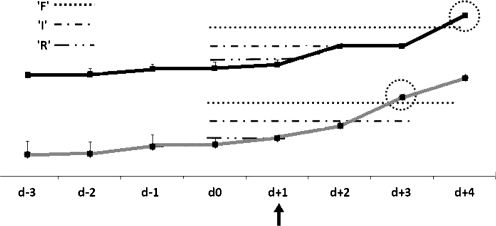
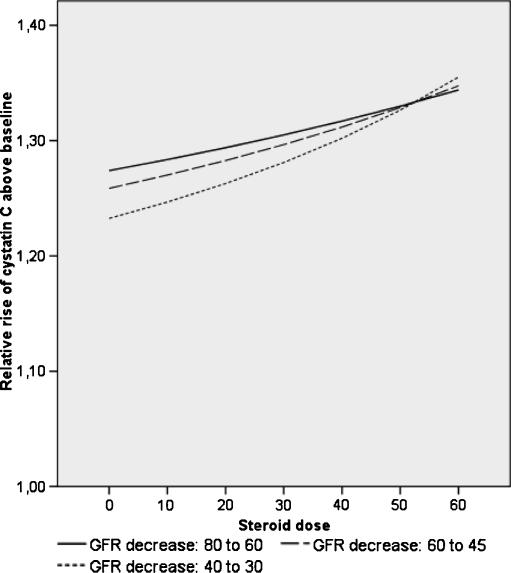
In total, there were 13 episodes of allograft dysfunction. Maximum RIFLE stages with creatinine were 'R' in 7, 'I' in 4, and 'F' in 2, with cystatin C 'R' in 6, 'I' in 4 and 'F' in 3, respectively. In 9/13 cases, both markers rose simultaneously, in three, the rise in creatinine preceded cystatin C by 1-5 days (median 4). In one case, the rise in cystatin C preceded creatinine by 1 day. The time lag was not statistically different. The maximum relative rise of creatinine was significantly higher than cystatin C. By multiple linear regression analysis, the maximum rise of cystatin C was related to the maximum rise of creatinine, but independent of patient age, gender, steroid dose, and anthropometric data.
In this pediatric population, cystatin C was not superior to creatinine for the detection of acute allograft dysfunction.
肾移植后同种异体肾的功能通常通过血清肌酐进行监测。多项横断面研究表明,胱抑素 C 比肌酐更能检测到轻度至中度慢性肾功能障碍。最近的成人数据表明,胱抑素 C 可能也是急性肾功能障碍的更敏感标志物。本研究旨在使用儿科 RIFLE(肾功能障碍风险、肾损伤、衰竭或肾功能丧失、终末期肾病)急性肾损伤标准比较胱抑素 C 和肌酐对儿童急性同种异体肾功能障碍的检测。
对 24 例患者移植后期间每天测量肌酐和胱抑素 C 的病历进行回顾性分析。同种异体功能障碍定义为标志物浓度持续升高,超过前三次测量平均值。
共发生 13 例同种异体功能障碍。肌酐最大 RIFLE 分期为“R”7 例、“I”4 例、“F”2 例,胱抑素 C 分别为“R”6 例、“I”4 例、“F”3 例。在 9/13 例中,两种标志物同时升高,在 3 例中,肌酐升高先于胱抑素 C 升高 1-5 天(中位数 4 天)。在 1 例中,胱抑素 C 的升高先于肌酐 1 天。时间滞后无统计学差异。肌酐的最大相对升高明显高于胱抑素 C。通过多元线性回归分析,胱抑素 C 的最大升高与肌酐的最大升高相关,但与患者年龄、性别、类固醇剂量和人体测量数据无关。
在本儿科人群中,胱抑素 C 对急性同种异体肾功能障碍的检测不如肌酐。