Laboratory of Retinal Cell Biology, Keio University School of Medicine, 35 Shinanomachi, Shinjuku-ku, Tokyo 160-8582, Japan.
Curr Pharm Des. 2012;18(1):51-6. doi: 10.2174/138161212798919101.
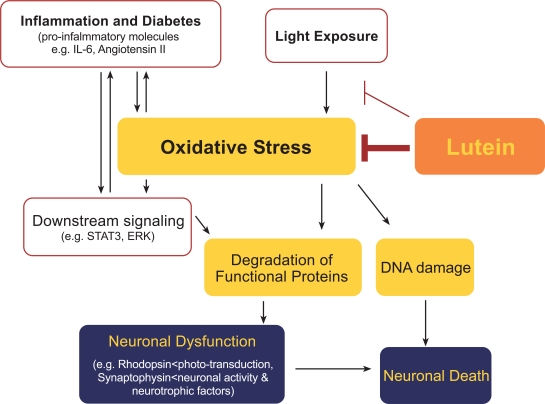
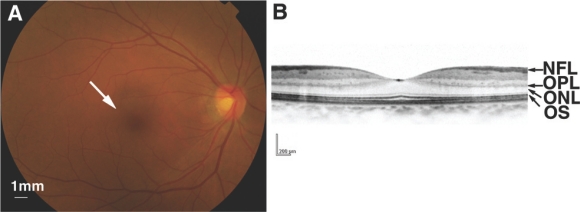
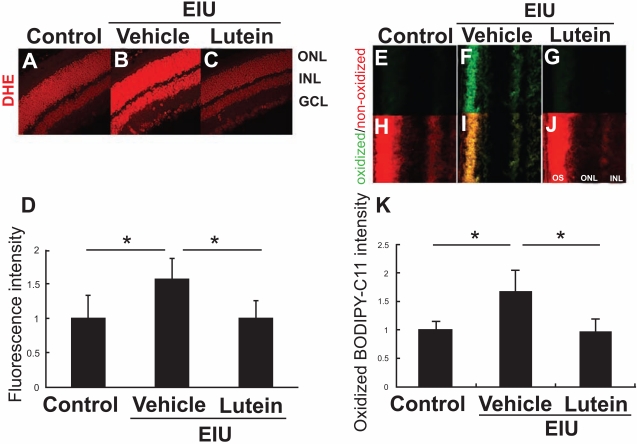
Although a large variety of pharmaceutical therapies for treating disease have been developed in recent years, there has been little progress in disease prevention. In particular, the protection of neural tissue is essential, because it is hardly regenerated. The use of nutraceuticals for maintaining the health has been supported by several clinical studies, including cross-sectional and interventional studies for age-related macular disease. However, mechanistic evidence for their effects at the molecular level has been very limited. In this review, we focus on lutein, which is a xanthophyll type of carotenoid. Lutein is not synthesized in mammals, and must be obtained from the diet. It is delivered to the retina, and in humans, it is concentrated in the macula. Here, we describe the neuroprotective effects of lutein and their underlying molecular mechanisms in animal models of vision-threatening diseases, such as innate retinal inflammation, diabetic retinopathy, and light-induced retinal degeneration. In lutein-treated mouse ocular disease models, oxidative stress in the retina is reduced, and its downstream pathological signals are inhibited. Furthermore, degradation of the functional proteins, rhodopsin (a visual substance) and synaptophysin (a synaptic vesicle protein also influenced in other neurodegenerative diseases such as Alzheimer's disease and Parkinson's disease), the depletion of brain-derived neurotrophic factor (BDNF), and DNA damage are prevented by lutein, which preserves visual function. We discuss the possibility of using lutein, an antioxidant, as a neuroprotective treatment for humans.
尽管近年来开发了许多治疗疾病的药物疗法,但在疾病预防方面几乎没有进展。特别是神经组织的保护至关重要,因为神经组织几乎无法再生。许多临床研究支持使用营养保健品来维持健康,包括针对年龄相关性黄斑病变的横断面研究和干预性研究。然而,其在分子水平上的作用的机制证据非常有限。在这篇综述中,我们重点介绍叶黄素,它是一种类胡萝卜素的叶黄素。叶黄素在哺乳动物中不能合成,必须从饮食中获得。它被递送到视网膜,在人类中,它集中在黄斑区。在这里,我们描述了叶黄素在威胁视力的疾病的动物模型中的神经保护作用及其潜在的分子机制,如先天视网膜炎症、糖尿病性视网膜病变和光诱导的视网膜变性。在叶黄素治疗的小鼠眼部疾病模型中,视网膜中的氧化应激减少,其下游病理信号被抑制。此外,叶黄素可防止视紫红质(一种视觉物质)和突触小泡蛋白(在其他神经退行性疾病如阿尔茨海默病和帕金森病中也受到影响)的功能蛋白降解、脑源性神经营养因子(BDNF)耗竭和 DNA 损伤,从而保持视觉功能。我们讨论了将叶黄素(一种抗氧化剂)用作人类神经保护治疗的可能性。