Yeh Po-Ting, Huang Hsin-Wei, Yang Chung-May, Yang Wei-Shiung, Yang Chang-Hao
Department of Ophthalmology, National Taiwan University Hospital, Taipei, Taiwan.
Graduate Institute of Pathology, College of Medicine, National Taiwan University, Taipei, Taiwan.
PLoS One. 2016 Jan 14;11(1):e0146438. doi: 10.1371/journal.pone.0146438. eCollection 2016.
We evaluated whether orally administered astaxanthin (AST) protects against oxidative damage in the ocular tissues of streptozotocin (STZ)-induced diabetic rats.
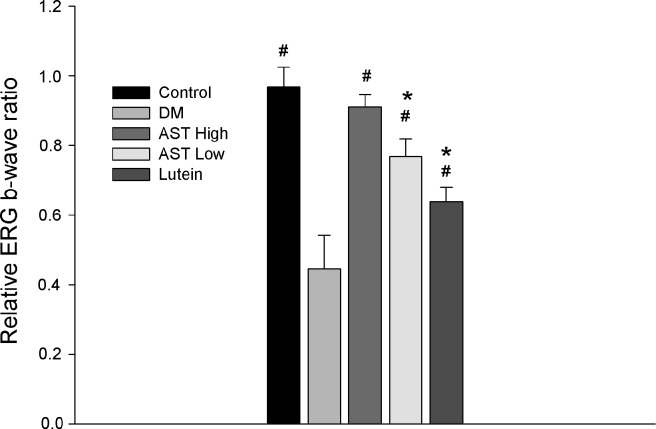
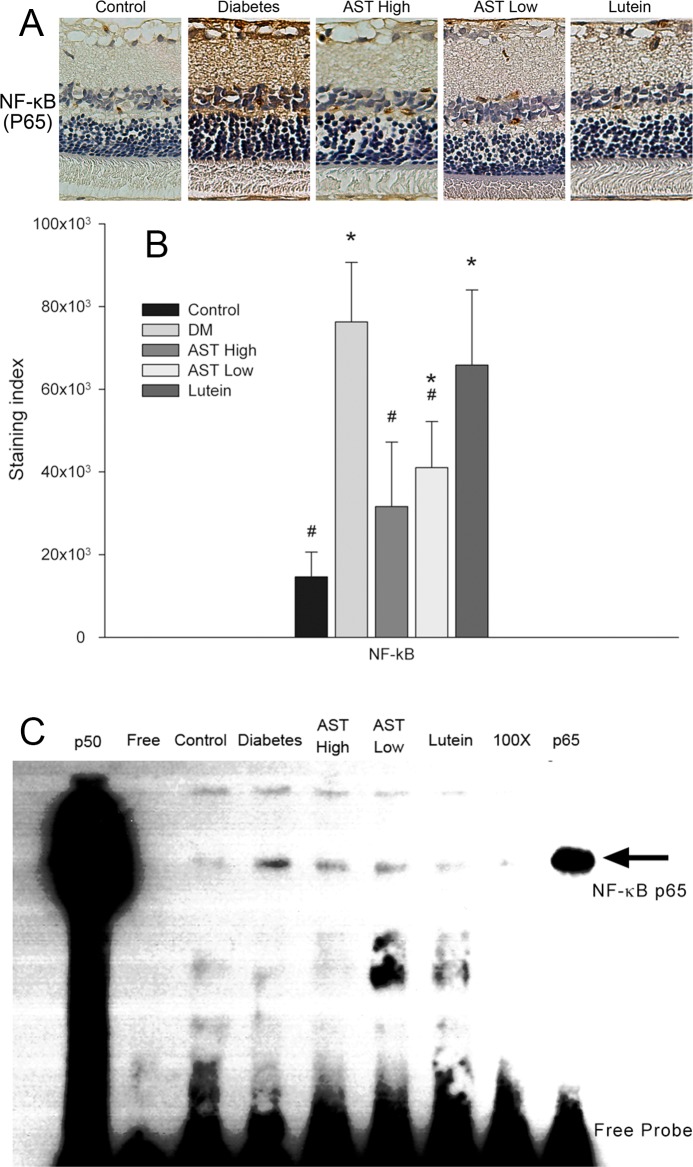
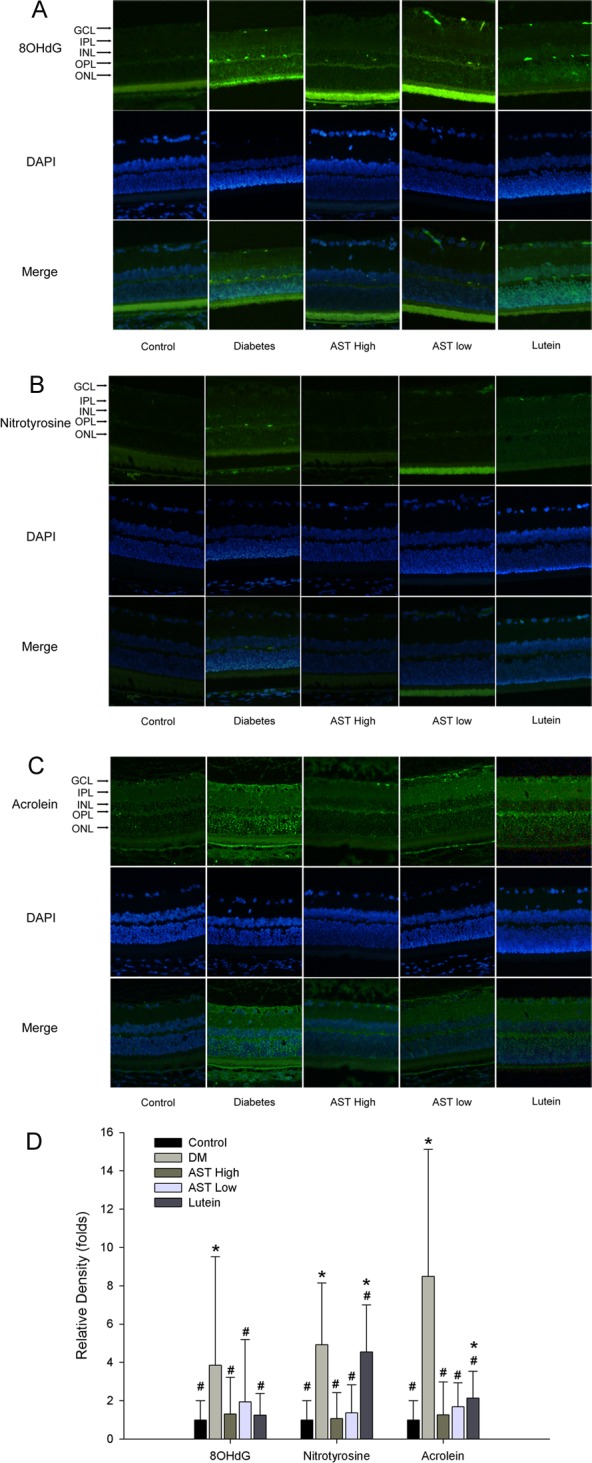
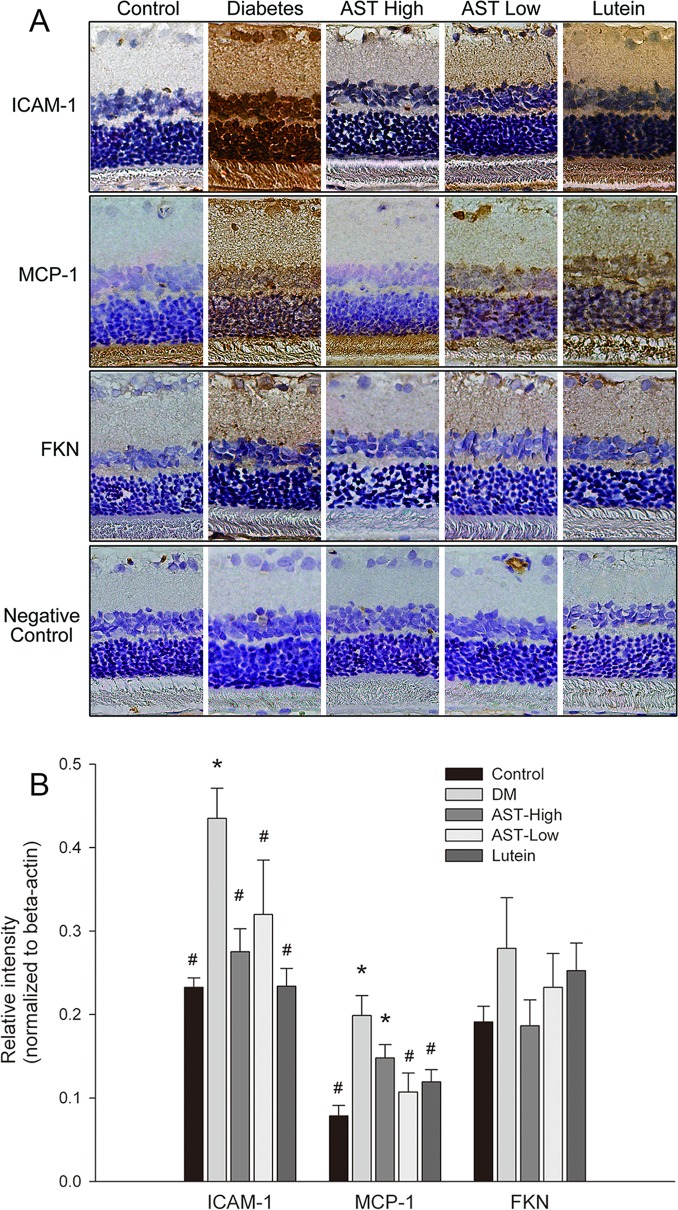
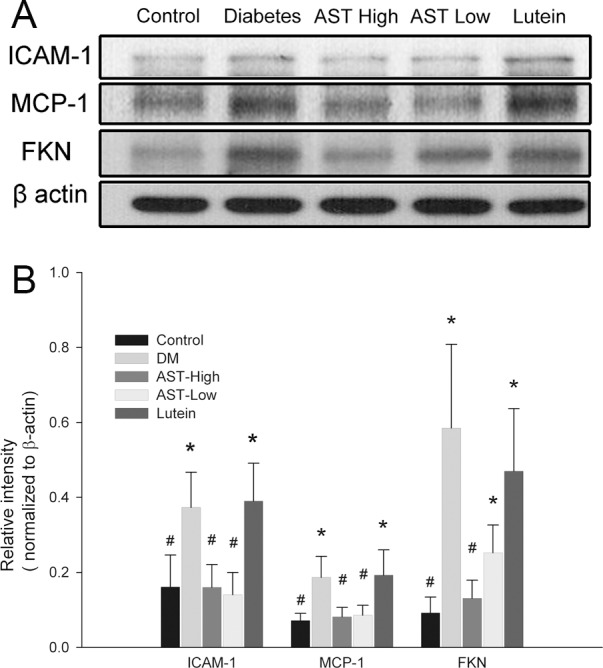
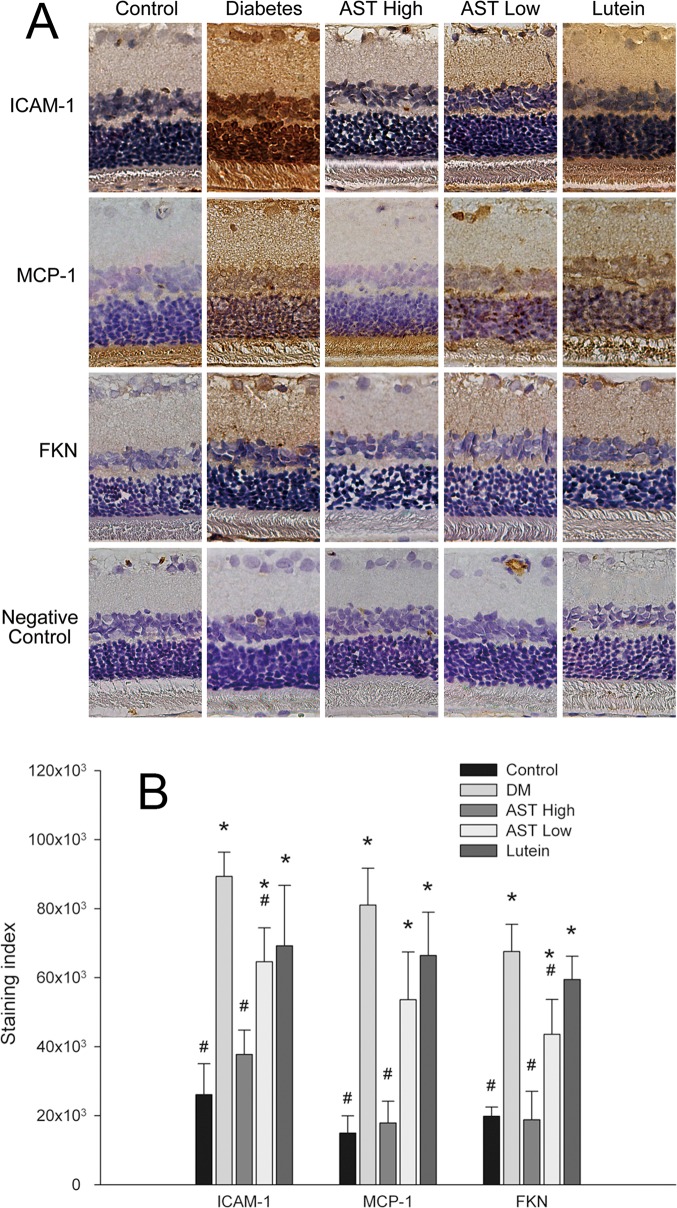
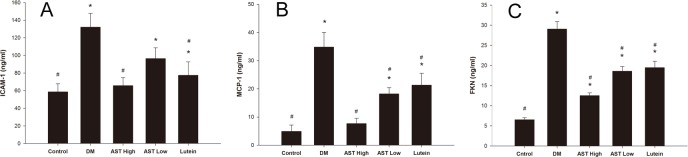
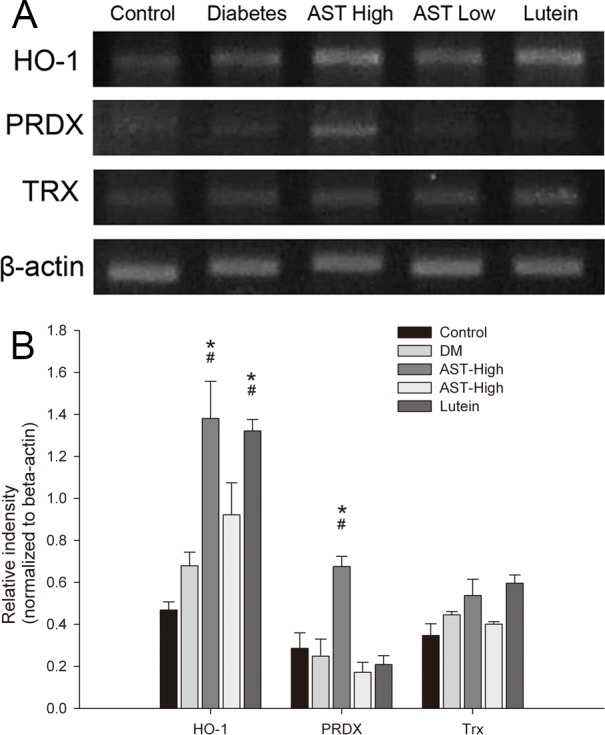
Fifty 6-week-old female Wistar rats were randomly assigned to receive an injection of STZ to induce diabetes (n = 40) or to remain uninduced (n = 10). The diabetic rats were randomly selected into four groups and they were separately administered normal saline, 0.6 mg/kg AST, 3 mg/kg AST, or 0.5 mg/kg lutein daily for eight weeks. Retinal functions of each group were evaluated by electroretinography. The expression of oxidative stress and inflammatory mediators in the ocular tissues was then assessed by immunohistochemistry, western blot analysis, ELISA, RT-PCR, and electrophoretic mobility shift assay (EMSA). Retinal functions were preserved by AST and lutein in different levels. Ocular tissues from AST- and lutein-treated rats had significantly reduced levels of oxidative stress mediators (8-hydroxy-2'-deoxyguanosine, nitrotyrosine, and acrolein) and inflammatory mediators (intercellular adhesion molecule-1, monocyte chemoattractant protein-1, and fractalkine), increased levels of antioxidant enzymes (heme oxygenase-1 and peroxiredoxin), and reduced activity of the transcription factor nuclear factor-kappaB (NF-κB).
The xanthophyll carotenoids AST and lutein have neuroprotective effects and reduce ocular oxidative stress, and inflammation in the STZ diabetic rat model, which may be mediated by downregulation of NF-κB activity.
我们评估了口服虾青素(AST)是否能保护链脲佐菌素(STZ)诱导的糖尿病大鼠眼组织免受氧化损伤。
将50只6周龄雌性Wistar大鼠随机分为两组,一组注射STZ诱导糖尿病(n = 40),另一组不诱导(n = 10)。将糖尿病大鼠随机分为四组,分别每日给予生理盐水、0.6 mg/kg AST、3 mg/kg AST或0.5 mg/kg叶黄素,持续八周。通过视网膜电图评估每组的视网膜功能。然后通过免疫组织化学、蛋白质免疫印迹分析、酶联免疫吸附测定、逆转录聚合酶链反应和电泳迁移率变动分析(EMSA)评估眼组织中氧化应激和炎症介质的表达。AST和叶黄素在不同程度上保护了视网膜功能。AST和叶黄素处理的大鼠眼组织中氧化应激介质(8-羟基-2'-脱氧鸟苷、硝基酪氨酸和丙烯醛)和炎症介质(细胞间黏附分子-1、单核细胞趋化蛋白-1和 fractalkine)的水平显著降低,抗氧化酶(血红素加氧酶-1和过氧化物酶)水平升高,转录因子核因子-κB(NF-κB)的活性降低。
叶黄素类胡萝卜素AST和叶黄素具有神经保护作用,可减轻STZ糖尿病大鼠模型中的眼部氧化应激和炎症,这可能是通过下调NF-κB活性介导的。