Singapore Immunology Network, Agency for Science, Technology and Research A*STAR, Singapore, Singapore.
PLoS One. 2011;6(12):e29430. doi: 10.1371/journal.pone.0029430. Epub 2011 Dec 22.
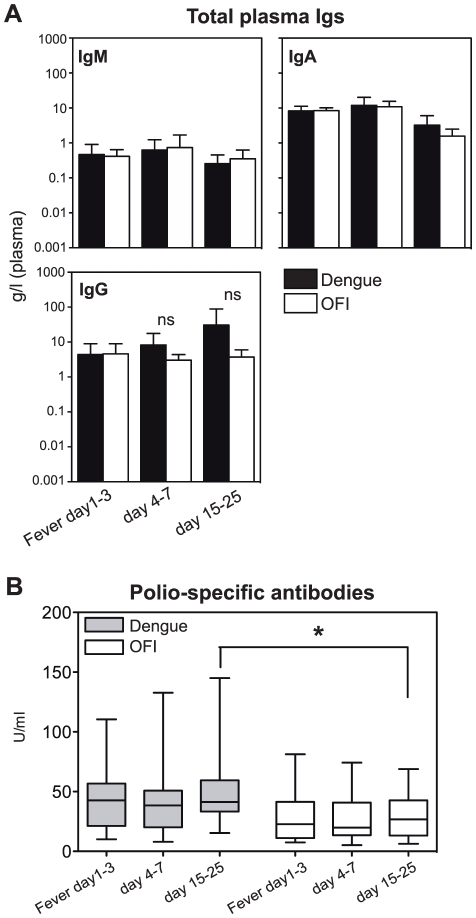
Dengue virus is transmitted by mosquitoes and has four serotypes. Cross-protection to other serotypes lasting for a few months is observed following infection with one serotype. There is evidence that low-affinity T and/or B cells from primary infections contribute to the severe syndromes often associated with secondary dengue infections. such pronounced immune-mediated enhancement suggests a dengue-specific pattern of immune cell activation. This study investigates the acute and early convalescent B cell response leading to the generation of cross-reactive and neutralizing antibodies following dengue infection.
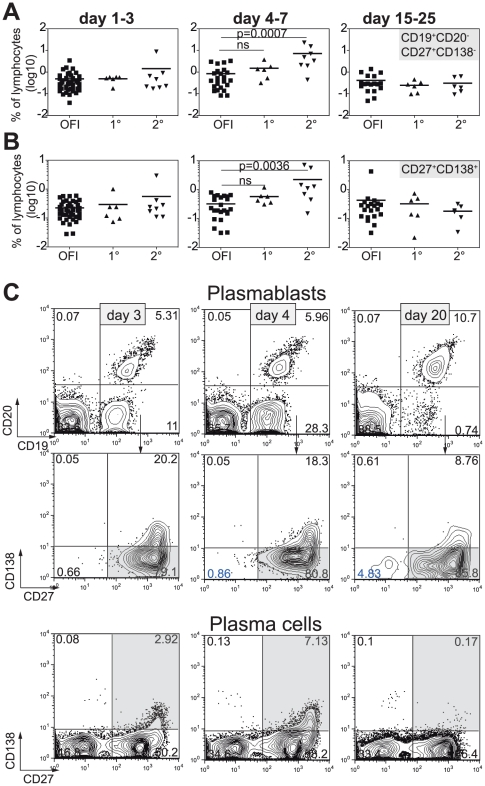
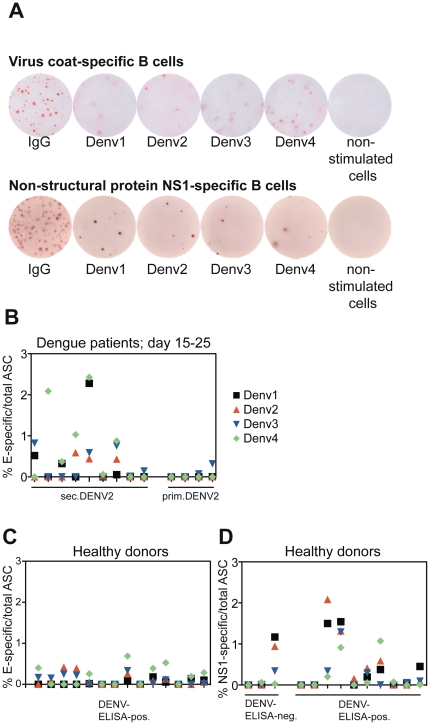
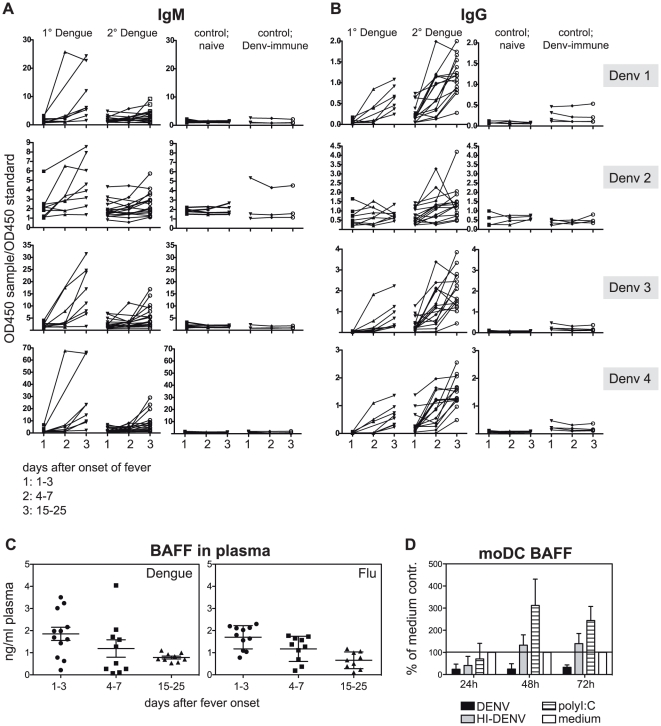
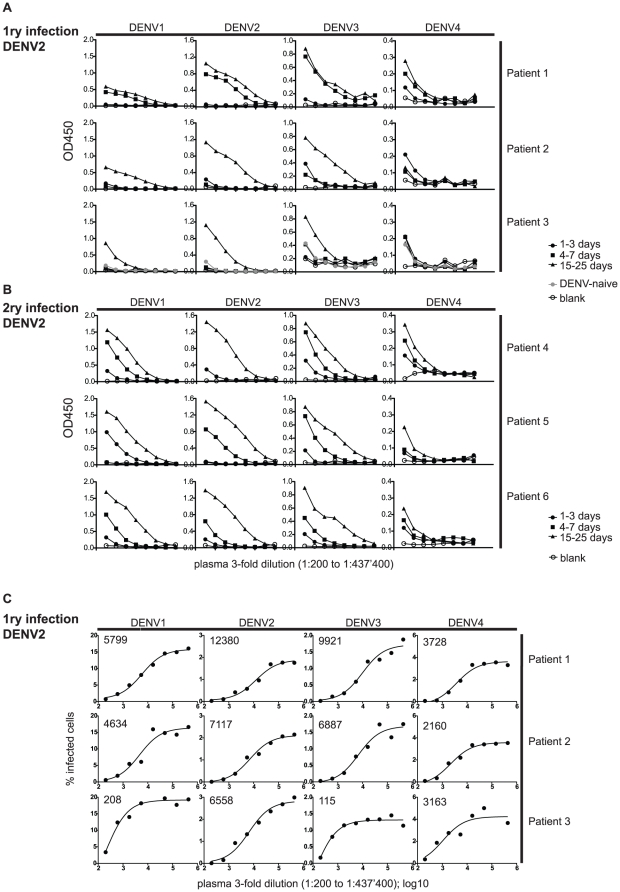
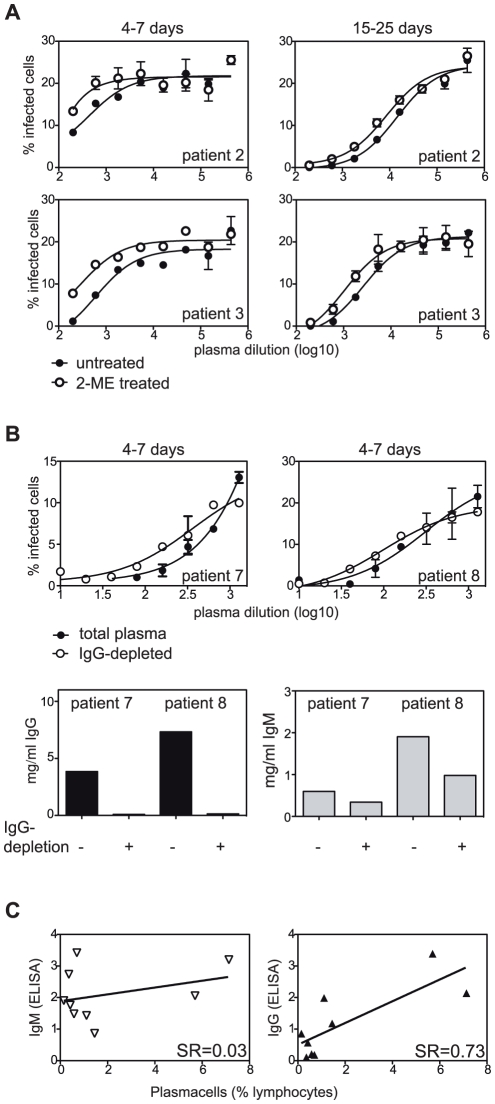
METHODOLOGY/PRINCIPAL FINDINGS: We assayed blood samples taken from dengue patients with primary or secondary infection during acute disease and convalescence and compared them to samples from patients presenting with non-dengue related fever. Dengue induced massive early plasmablast formation, which correlated with the appearance of polyclonal, cross-reactive IgG for both primary and secondary infection. Surprisingly, the contribution of IgG to the neutralizing titer 4-7 days after fever onset was more than 50% even after primary infection.
CONCLUSIONS/SIGNIFICANCE: Poly-reactive and virus serotype cross-reactive IgG are an important component of the innate response in humans during both primary and secondary dengue infection, and "innate specificities" seem to constitute part of the adaptive response in dengue. While of potential importance for protection during secondary infection, cross-reactive B cells will also compete with highly neutralizing B cells and possibly interfere with their development.
登革热病毒通过蚊子传播,有四种血清型。感染一种血清型后,会对其他血清型产生持续数月的交叉保护。有证据表明,初次感染产生的低亲和力 T 细胞和/或 B 细胞有助于与二次登革热感染相关的严重综合征。如此明显的免疫介导增强表明存在登革热特异性的免疫细胞激活模式。本研究调查了急性和早期恢复期 B 细胞反应,这些反应导致登革热感染后产生交叉反应和中和抗体。
方法/主要发现:我们检测了急性疾病和恢复期登革热患者及非登革热相关发热患者的血液样本。登革热诱导了大量早期浆母细胞的形成,这与初次和二次感染的多克隆、交叉反应 IgG 的出现相关。令人惊讶的是,即使在初次感染后,IgG 对发热后 4-7 天中和滴度的贡献也超过 50%。
结论/意义:多反应性和病毒血清型交叉反应性 IgG 是人类初次和二次登革热感染期间固有反应的重要组成部分,“固有特异性”似乎构成了登革热适应性反应的一部分。虽然在二次感染期间具有潜在的保护作用,但交叉反应性 B 细胞也会与高度中和的 B 细胞竞争,并可能干扰其发育。