Department of Chemistry, University College London, 20 Gordon Street, London WC1H 0AJ, UK.
Sensors (Basel). 2010;10(6):5469-502. doi: 10.3390/s100605469. Epub 2010 Jun 1.
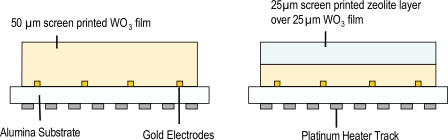
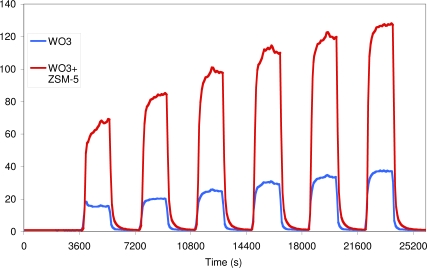
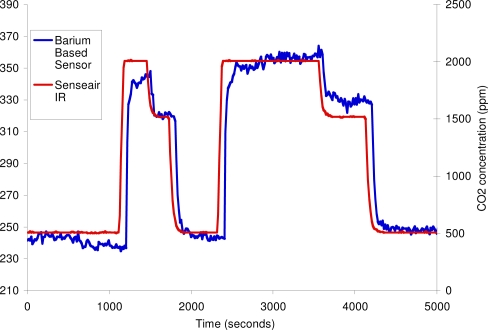
Metal oxide semiconductor gas sensors are utilised in a variety of different roles and industries. They are relatively inexpensive compared to other sensing technologies, robust, lightweight, long lasting and benefit from high material sensitivity and quick response times. They have been used extensively to measure and monitor trace amounts of environmentally important gases such as carbon monoxide and nitrogen dioxide. In this review the nature of the gas response and how it is fundamentally linked to surface structure is explored. Synthetic routes to metal oxide semiconductor gas sensors are also discussed and related to their affect on surface structure. An overview of important contributions and recent advances are discussed for the use of metal oxide semiconductor sensors for the detection of a variety of gases--CO, NO(x), NH(3) and the particularly challenging case of CO(2). Finally a description of recent advances in work completed at University College London is presented including the use of selective zeolites layers, new perovskite type materials and an innovative chemical vapour deposition approach to film deposition.
金属氧化物半导体气体传感器在各种不同的角色和行业中得到了应用。与其他传感技术相比,它们相对便宜、坚固、轻巧、持久,并且具有高材料灵敏度和快速响应时间的优势。它们已经被广泛用于测量和监测痕量的环境重要气体,如一氧化碳和二氧化氮。在这篇综述中,探讨了气体响应的性质以及它与表面结构的基本关系。还讨论了金属氧化物半导体气体传感器的合成途径,并将其与表面结构的影响联系起来。讨论了金属氧化物半导体传感器在检测各种气体(CO、NOx、NH3),特别是 CO2 这一极具挑战性的气体方面的重要贡献和最新进展。最后,介绍了伦敦大学学院最近完成的工作进展,包括使用选择性沸石层、新型钙钛矿型材料和创新的化学气相沉积方法进行薄膜沉积。