Department of Genetics and Pathology, Uppsala University, Dag Hammarskjölds väg 20, Rudbecklaboratoriet C11 PLAN 3, 751 85 Uppsala, Sweden.
Hear Res. 2012 Feb;284(1-2):42-51. doi: 10.1016/j.heares.2011.12.006. Epub 2011 Dec 24.
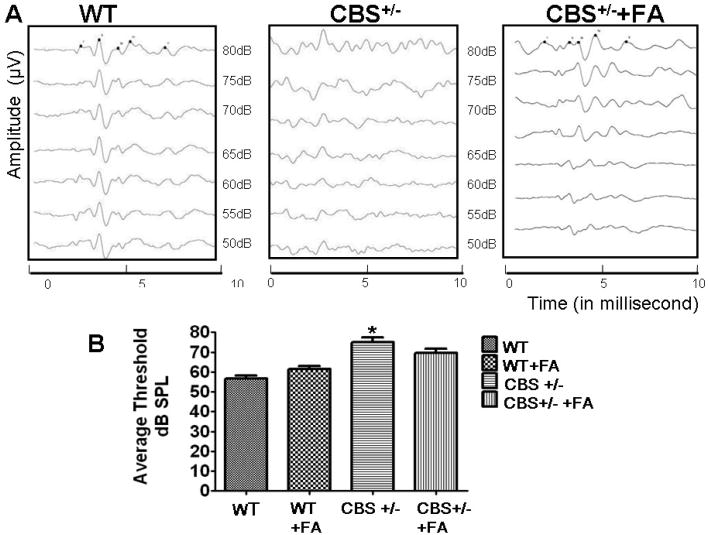
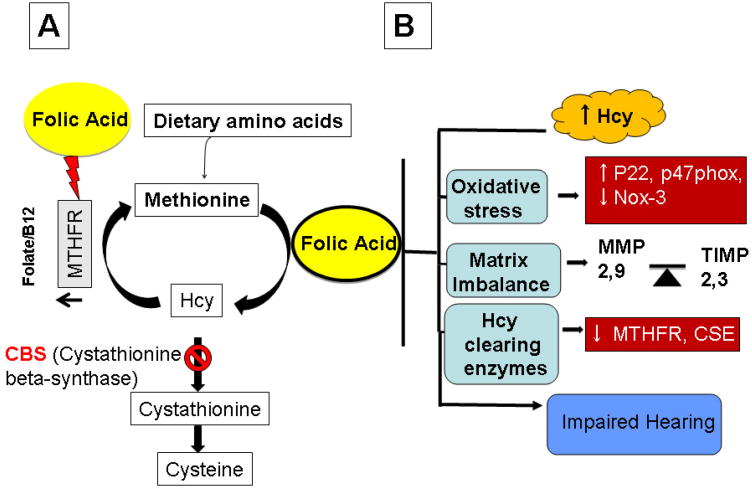
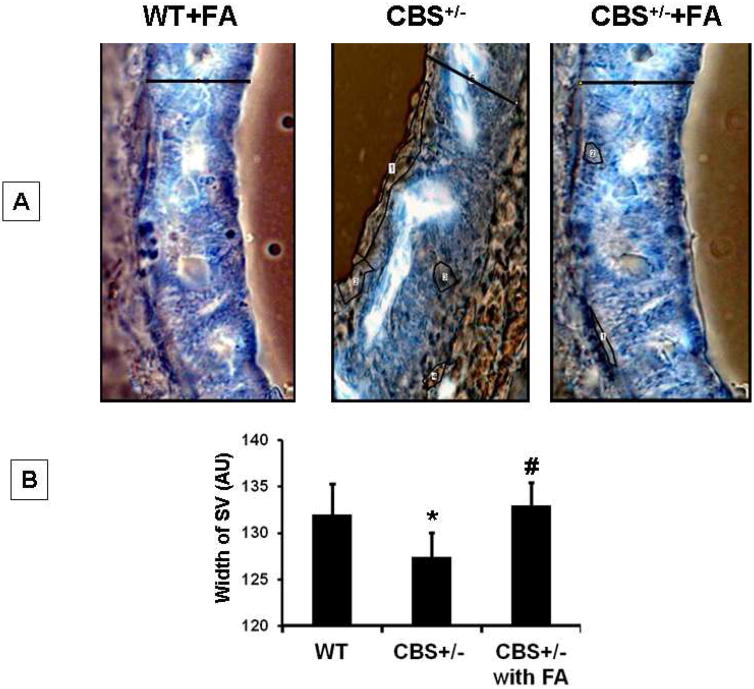
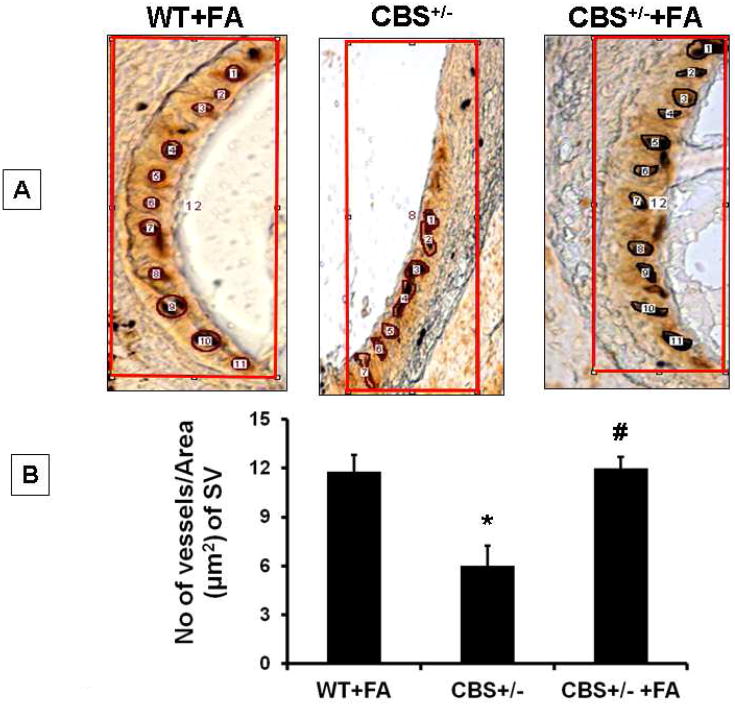
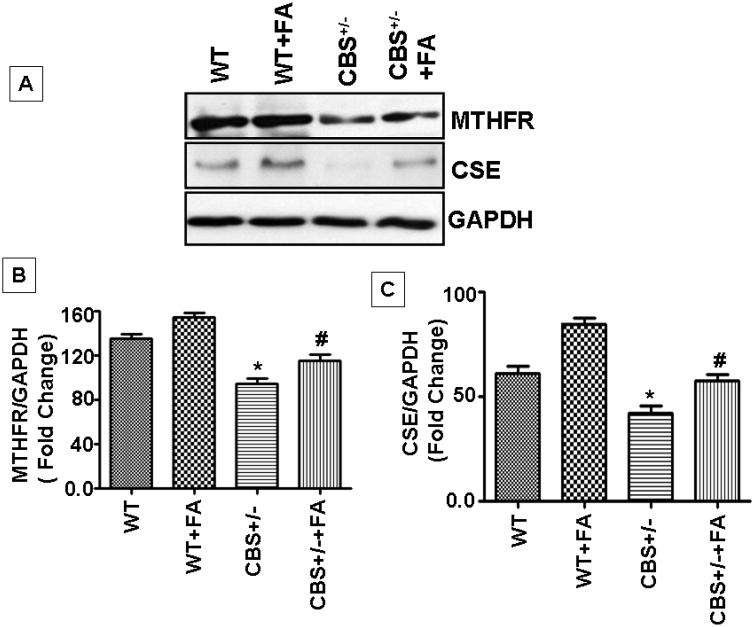
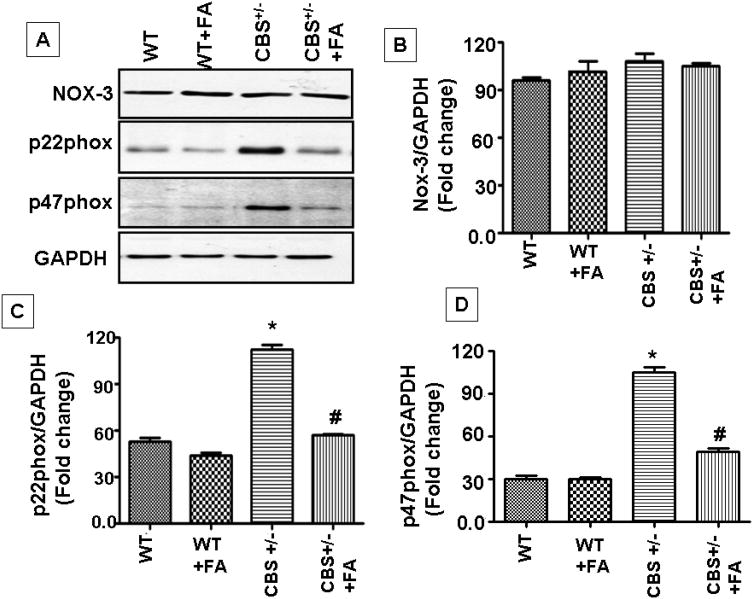
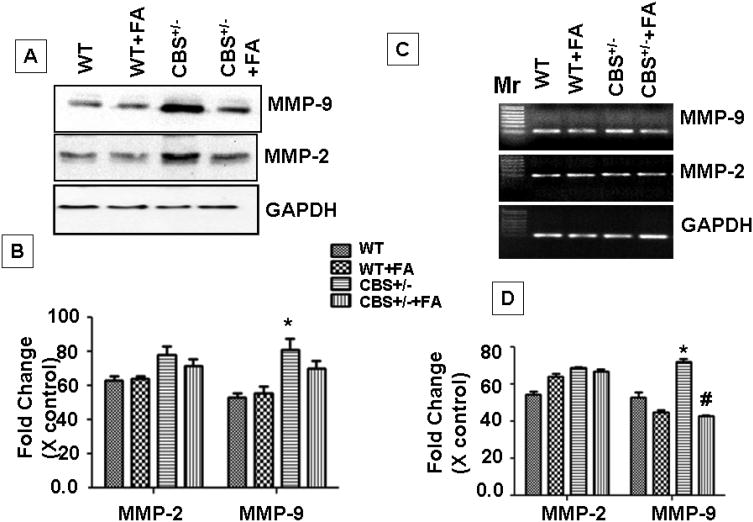
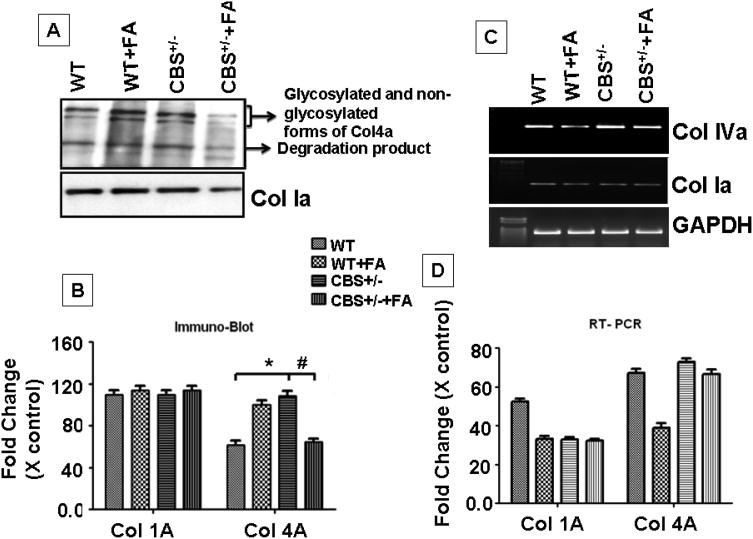
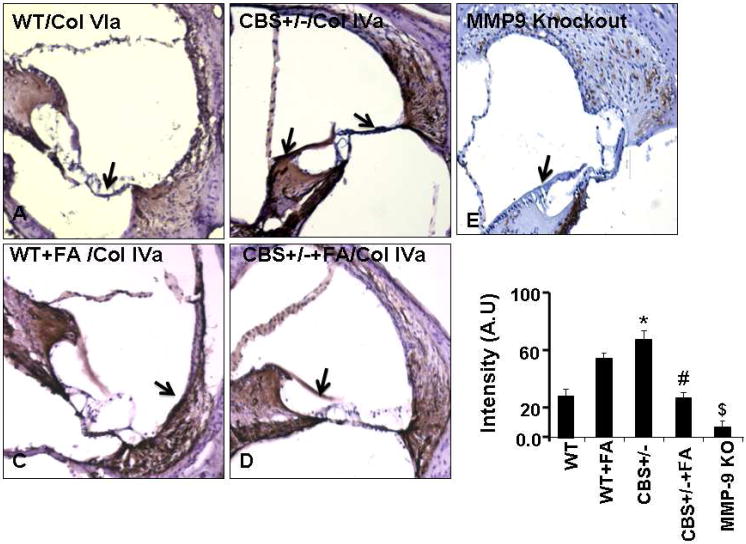
More than 29 million adults in the United States have been diagnosed with hearing loss. Interestingly, elevated homocysteine (Hcy) levels, known as hyperhomocysteinemia (HHcy), are also associated with impaired hearing. However, the associated mechanism remains obscure. The collagen receptor such as discoidin domain receptor 1 and matrix metalloproteinase (MMP) play a significant role in inner ear structure and function. We hypothesize that HHcy increases hearing thresholds by compromise in inner ear vasculature resulted from impaired Hcy metabolism, increased oxidative stress, collagen IVa and collagen Ia turnover. The treatment with folic acid (FA) protects elevated hearing thresholds and prevents reduction in vessel density by lowering abundant collagen deposition and oxidative stress in inner ear. To test this hypothesis we employed 8 weeks old male wild type (WT), cystathionine-beta-synthase heterozygote knockout (CBS+/-) mice, WT + FA (0.0057 μg/g/day, equivalent to a 400 μg/70 kg/day human dose in drinking water); and CBS(+/-) +FA. The mice were treated for four weeks. The hearing thresholds were determined by recording the auditory brainstem responses. Integrity of vessels was analyzed by perfusion of horseradish peroxidase (HRP) tracer. Endothelial permeability was assessed, which indicated restoration of HRP leakage by FA treatment. A total Hcy level was increased in stria vascularis (SV) and spiral ligament (SL) of CBS+/- mice which was lowered by FA. Interestingly, FA treatment lowered Col IVa Immunostaining by affecting its turnover. The levels of MMP-2, -9, methylenetetrahydrofolate reductase (MTHFR) and cystathione gamma lyase (CSE) were measured by Western blot analysis. The oxidative stress was high in SV and SL of CBS+/- compared to WT however the treatment with FA lowered oxidative stress in CBS+/- mice. These data suggested that hearing loss in CBS+/- mice was primarily due to leakage in inner ear circulation, also partly by induced collagen imbalance, increase in Hcy and oxidative stress in inner ear.
超过 2900 万美国成年人被诊断患有听力损失。有趣的是,同型半胱氨酸(Hcy)水平升高,即高同型半胱氨酸血症(HHcy),也与听力受损有关。然而,相关机制尚不清楚。胶原受体,如盘状结构域受体 1 和基质金属蛋白酶(MMP),在内耳结构和功能中发挥重要作用。我们假设 HHcy 通过损害 Hcy 代谢、增加氧化应激、胶原 IVa 和胶原 Ia 周转,导致内耳血管损伤,从而增加听力阈值。叶酸(FA)的治疗通过降低内耳中丰富的胶原沉积和氧化应激来保护升高的听力阈值并防止血管密度降低。为了验证这一假设,我们使用了 8 周龄雄性野生型(WT)、半胱氨酸-β-合酶杂合子敲除(CBS +/-)小鼠、WT+FA(0.0057μg/g/天,相当于人类饮用水中 400μg/70kg/天的剂量)和 CBS(+/-)+FA。老鼠治疗了四周。听力阈值通过记录听觉脑干反应来确定。血管的完整性通过辣根过氧化物酶(HRP)示踪剂灌注来分析。内皮通透性评估表明,FA 治疗可恢复 HRP 渗漏。CBS+/- 小鼠的血管纹(SV)和螺旋韧带(SL)中的总 Hcy 水平升高,FA 降低了这一水平。有趣的是,FA 治疗通过影响其周转来降低 Col IVa 免疫染色。通过 Western blot 分析测量 MMP-2、-9、亚甲基四氢叶酸还原酶(MTHFR)和胱硫醚-γ-裂解酶(CSE)的水平。与 WT 相比,CBS+/- 中的 SV 和 SL 中的氧化应激水平较高,但 FA 处理降低了 CBS+/- 小鼠的氧化应激水平。这些数据表明,CBS+/- 小鼠的听力损失主要是由于内耳循环渗漏引起的,部分原因是内耳中胶原失衡、Hcy 和氧化应激增加所致。