School of Dentistry, Sagrado Coração University, Bauru, SP, Brazil.
J Appl Oral Sci. 2011 Nov-Dec;19(6):648-54. doi: 10.1590/s1678-77572011000600018.
This study evaluated, in vitro, the fracture resistance of human non-vital teeth restored with different reconstruction protocols.
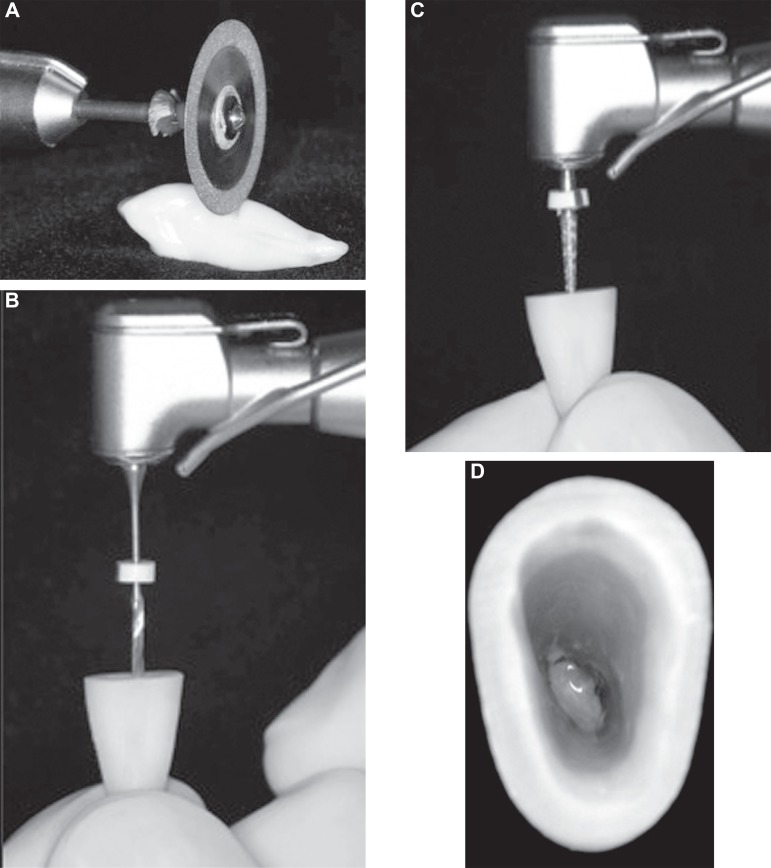
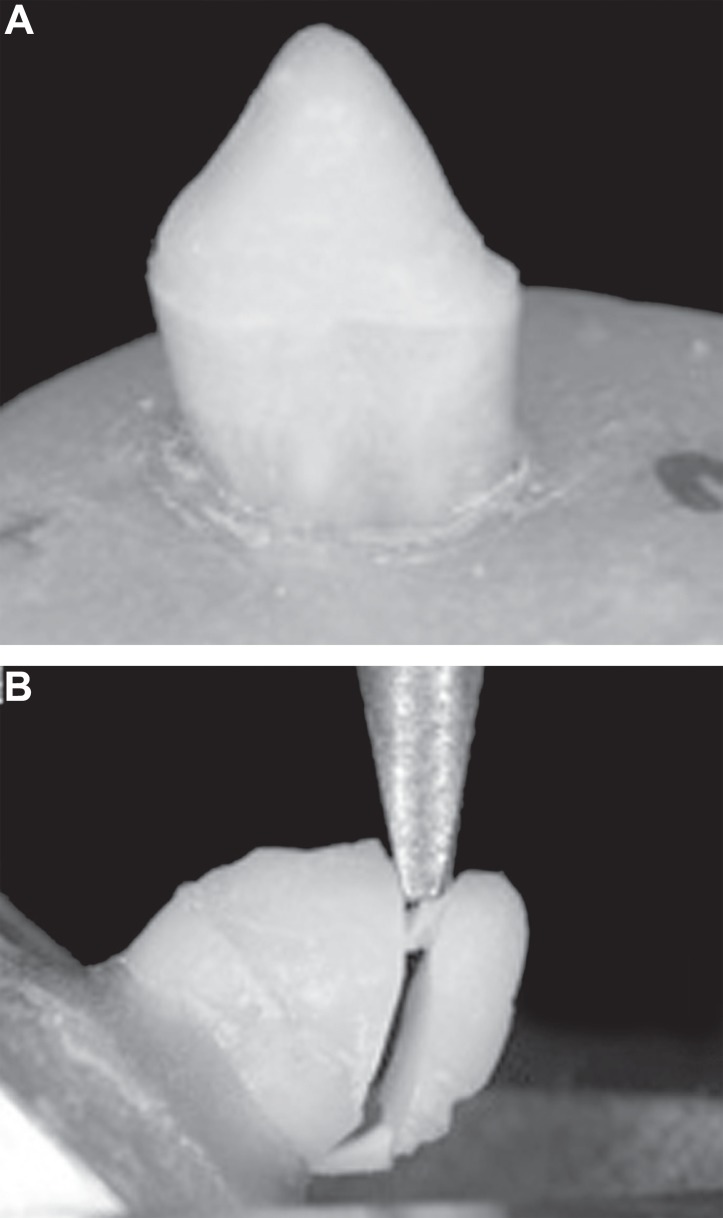
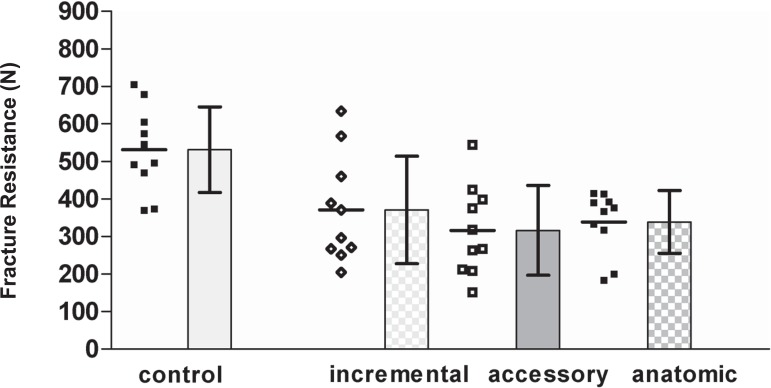
Forty human anterior roots of similar shape and dimensions were assigned to four groups (n=10), according to the root reconstruction protocol: Group I (control): non-weakened roots with glass fiber post; Group II: roots with composite resin by incremental technique and glass fiber post; Group III: roots with accessory glass fiber posts and glass fiber post; and Group IV: roots with anatomic glass fiber post technique. Following post cementation and core reconstruction, the roots were embedded in chemically activated acrylic resin and submitted to fracture resistance testing, with a compressive load at an angle of 45º in relation to the long axis of the root at a speed of 0.5 mm/min until fracture. All data were statistically analyzed with bilateral Dunnett's test (α=0.05).
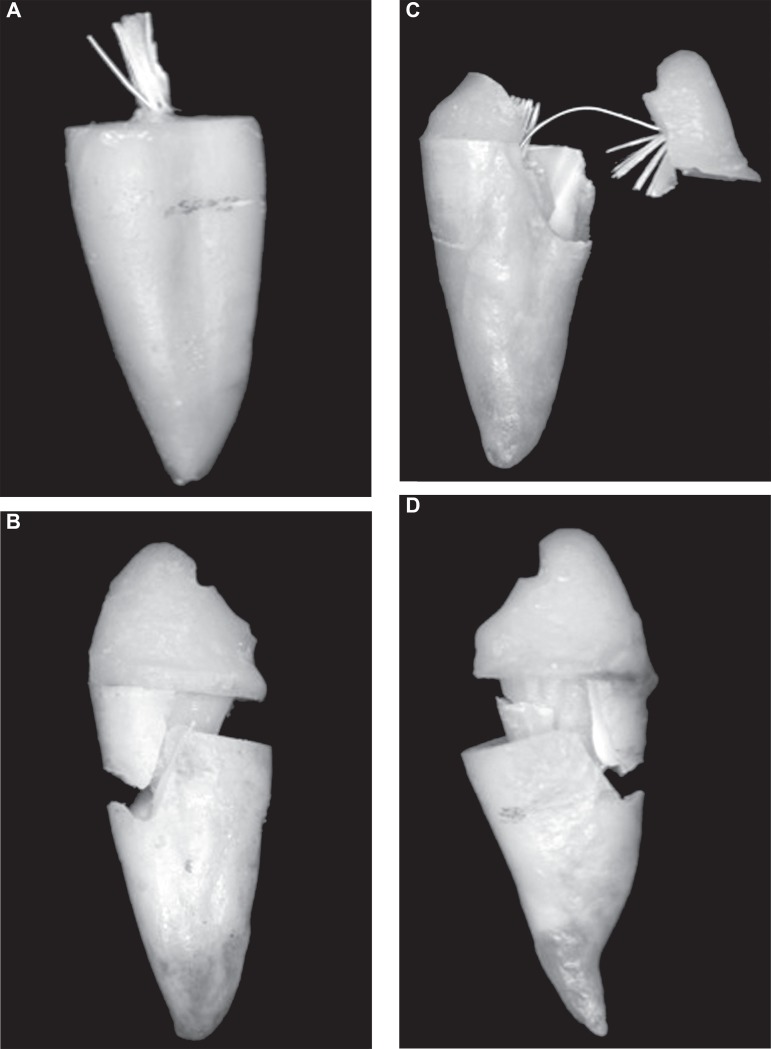
Group I presented higher mean values of fracture resistance when compared with the three experimental groups, which, in turn, presented similar resistance to fracture among each other. None of the techniques of root reconstruction with intraradicular posts improved root strength, and the incremental technique was suggested as being the most recommendable, since the type of fracture that occurred allowed the remaining dental structure to be repaired.
The results of this in vitro study suggest that the healthy remaining radicular dentin is more important to increase fracture resistance than the root reconstruction protocol.
本研究通过体外实验评估了不同重建方案修复的非活力人牙的抗折能力。
将 40 个人类前牙根按根重建方案分为四组(n=10):组 I(对照组):未削弱的牙根,带有玻璃纤维桩;组 II:采用增量技术和玻璃纤维桩的复合树脂修复的牙根;组 III:带有附加玻璃纤维桩和玻璃纤维桩的牙根;组 IV:采用解剖玻璃纤维桩技术的牙根。玻璃纤维桩粘固和核重建后,将牙根嵌入化学激活丙烯酸树脂中,进行抗折力测试,以 45°的角度向牙根的长轴施加压缩载荷,速度为 0.5mm/min,直至断裂。所有数据均采用双侧 Dunnett 检验(α=0.05)进行统计学分析。
与三组实验组成相比,组 I 的抗折力平均值较高,而三组实验组成之间的抗折力相似。根内桩的任何根重建技术都没有提高根的强度,增量技术被认为是最推荐的技术,因为发生的骨折类型允许修复剩余的牙体结构。
本体外研究的结果表明,健康的剩余根管牙本质比根重建方案更重要,可提高抗折能力。