Section of Metabolic Diseases, Children's Hospital of Philadelphia, 3501 Civic Center Boulevard, Philadelphia, PA 19104, USA.
Eur J Pediatr. 2012 Jun;171(6):911-9. doi: 10.1007/s00431-011-1644-x. Epub 2012 Jan 11.
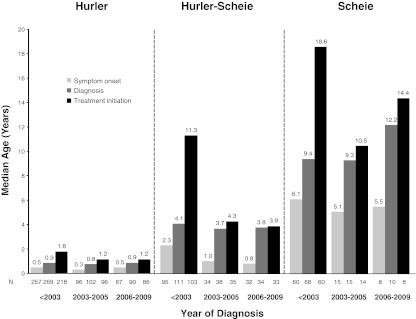
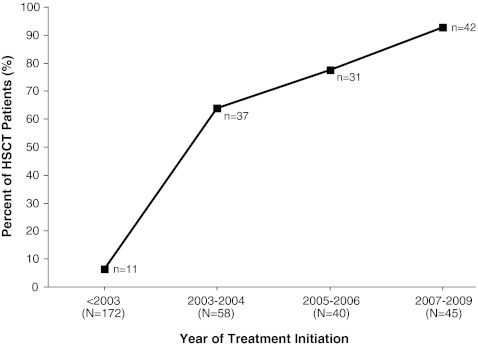
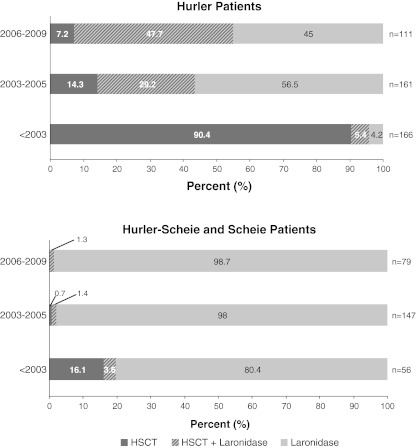
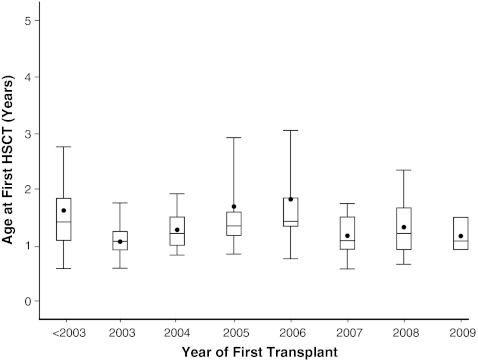
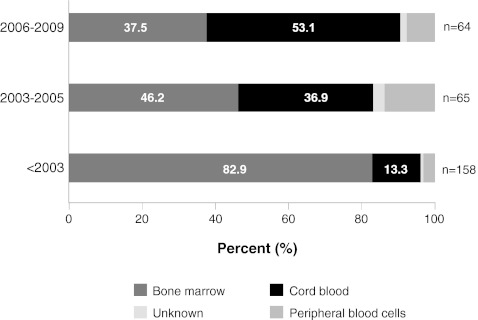
Our objective was to assess how the diagnosis and treatment of mucopolysaccharidosis I (MPS I) have changed over time. We used data from 891 patients in the MPS I Registry, an international observational database, to analyze ages at symptom onset, diagnosis, treatment initiation, and treatment allocation (hematopoietic stem cell transplantation, enzyme replacement therapy with laronidase, both, or neither) over time for all disease phenotypes (Hurler, Hurler-Scheie, and Scheie syndromes). The interval between diagnosis and treatment has become shorter since laronidase became available in 2003 (gap during 2006-2009: Hurler--0.2 year, Hurler-Scheie--0.5 year, Scheie--1.4 years). However, the age at diagnosis has not decreased for any MPS I phenotype over time, and the interval between symptom onset and treatment initiation remains substantial for both Hurler-Scheie and Scheie patients (gap during 2006-2009, 2.42 and 6.71 years, respectively). Among transplanted patients, an increasing proportion received hematopoietic stem cells from cord blood (34 out of 64 patients by 2009) and was also treated with laronidase (42 out of 45 patients by 2009).
Despite the availability of laronidase since 2003, the diagnosis of MPS I is still substantially delayed for patients with Hurler-Scheie and Scheie phenotypes, which can lead to a sub-optimal treatment outcome. Increased awareness of MPS I signs and symptoms by primary care providers and pediatric subspecialists is crucial to initiate early treatment and to improve the quality of life of MPS I patients.
我们的目的是评估黏多糖贮积症 I(MPS I)的诊断和治疗随时间的变化。我们使用 MPS I 登记处(一个国际观察性数据库)中的 891 名患者的数据,分析了所有疾病表型(Hurler、Hurler-Scheie 和 Scheie 综合征)的症状发作、诊断、治疗开始和治疗分配(造血干细胞移植、用 laronidase 进行酶替代治疗、两者或两者都没有)的年龄随时间的变化。自 2003 年 laronidase 上市以来,诊断和治疗之间的时间间隔已经缩短(2006-2009 年期间的差距:Hurler-0.2 年,Hurler-Scheie-0.5 年,Scheie-1.4 年)。然而,随着时间的推移,任何 MPS I 表型的诊断年龄都没有降低,而且 Hurler-Scheie 和 Scheie 患者的症状发作和治疗开始之间的间隔仍然很大(2006-2009 年期间的差距分别为 2.42 年和 6.71 年)。在接受移植的患者中,越来越多的患者接受来自脐带血的造血干细胞(到 2009 年为 64 名患者中的 34 名),并且也接受 laronidase 治疗(到 2009 年为 45 名患者中的 42 名)。
尽管自 2003 年以来 laronidase 已经上市,但 Hurler-Scheie 和 Scheie 表型的患者的 MPS I 诊断仍然严重延迟,这可能导致治疗效果不理想。初级保健提供者和儿科亚专科医生对 MPS I 体征和症状的认识提高对于早期治疗和改善 MPS I 患者的生活质量至关重要。