Department of Anatomy and Neurobiology, College of Medicine, Hallym University, Chunchon, Kangwon-Do, South Korea.
J Neuroinflammation. 2012 Jan 12;9:6. doi: 10.1186/1742-2094-9-6.
Status epilepticus (SE) induces severe vasogenic edema in the piriform cortex (PC) accompanied by neuronal and astroglial damages. To elucidate the mechanism of SE-induced vasogenic edema, we investigated the roles of tumor necrosis factor (TNF)-α in blood-brain barrier (BBB) disruption during vasogenic edema and its related events in rat epilepsy models provoked by pilocarpine-induced SE.
SE was induced by pilocarpine in rats that were intracerebroventricularly infused with saline-, and soluble TNF p55 receptor (sTNFp55R) prior to SE induction. Thereafter, we performed Fluoro-Jade B staining and immunohistochemical studies for TNF-α and NF-κB subunits.
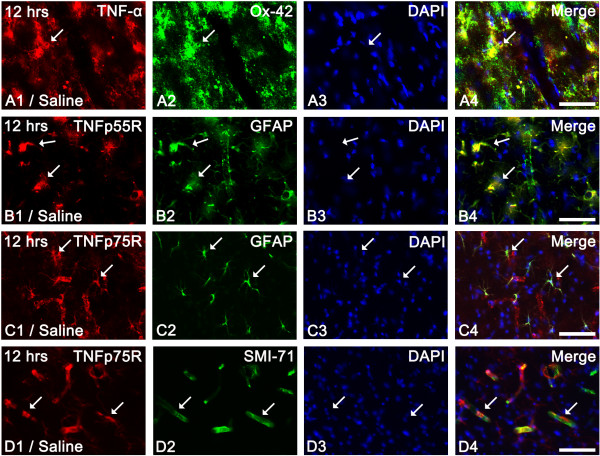
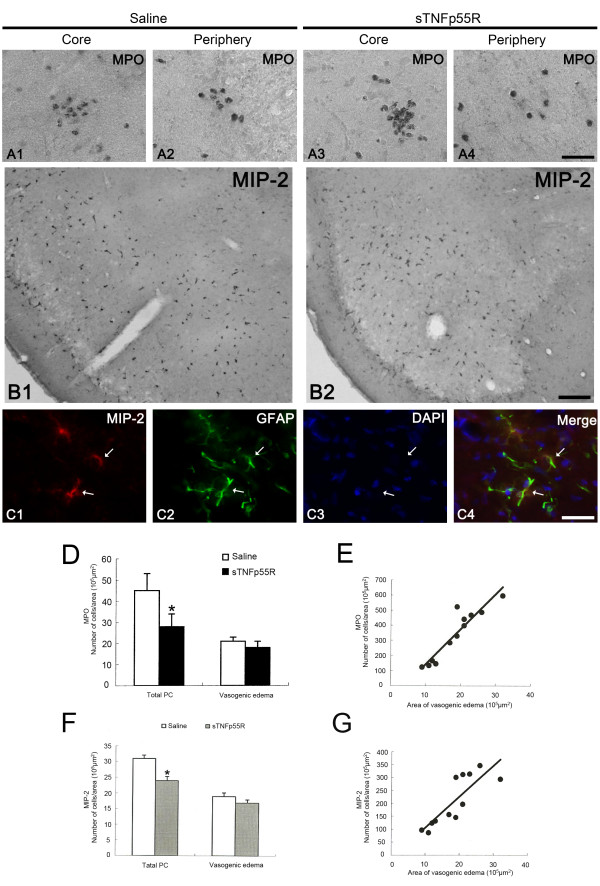
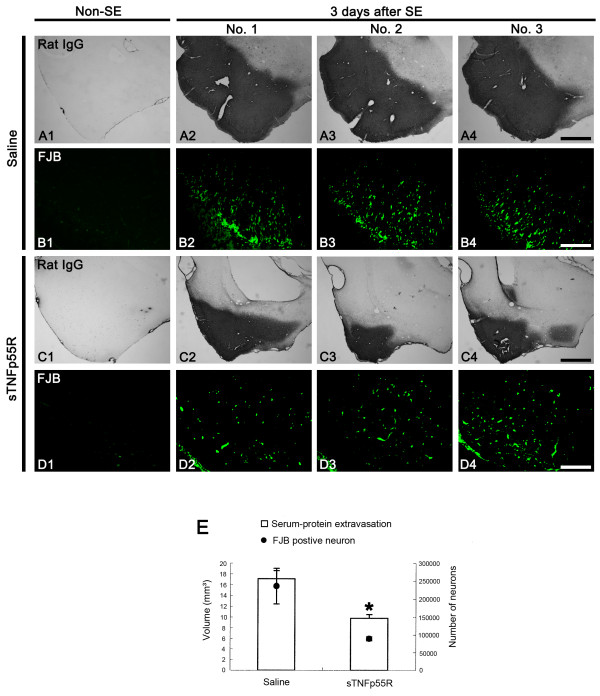
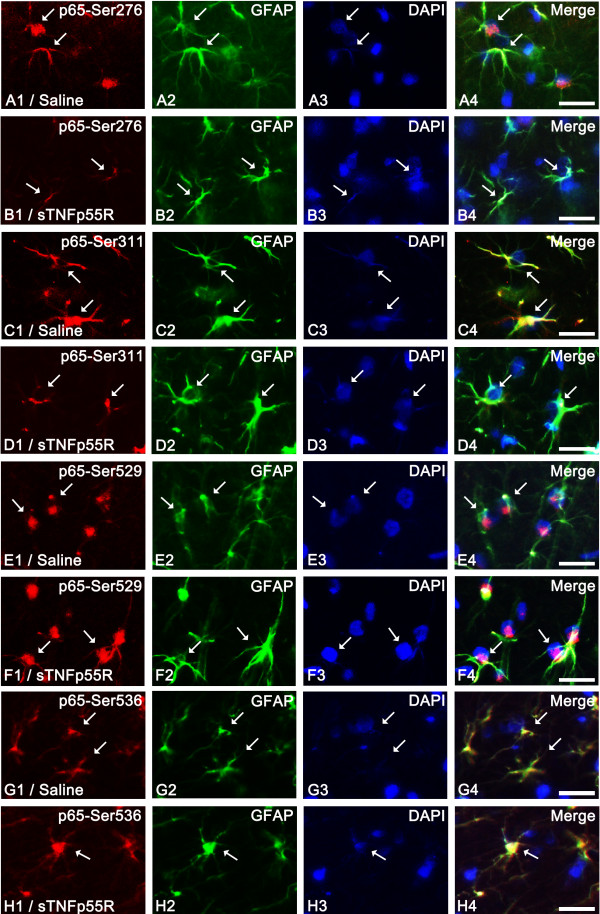
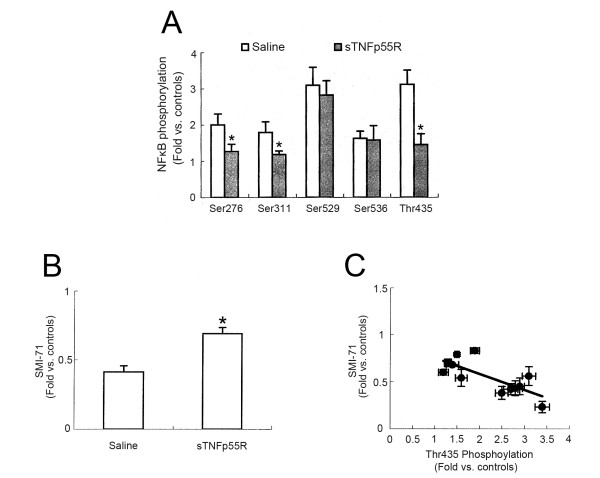
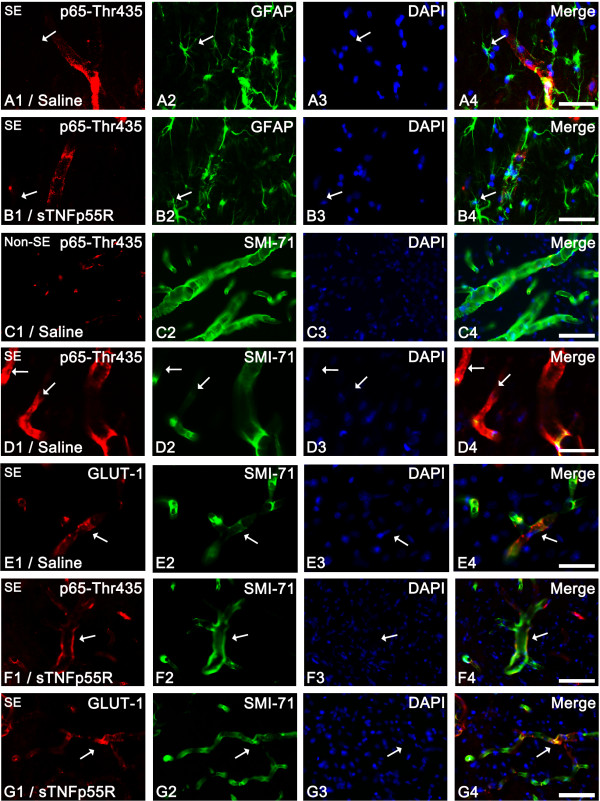
Following SE, most activated microglia showed strong TNF-α immunoreactivity. In addition, TNF p75 receptor expression was detected in endothelial cells as well as astrocytes. In addition, only p65-Thr435 phosphorylation was increased in endothelial cells accompanied by SMI-71 expression (an endothelial barrier antigen). Neutralization of TNF-α by soluble TNF p55 receptor (sTNFp55R) infusion attenuated SE-induced vasogenic edema and neuronal damages via inhibition of p65-Thr435 phosphorylation in endothelial cells. Furthermore, sTNFp55R infusion reduced SE-induced neutrophil infiltration in the PC.
These findings suggest that impairments of endothelial cell functions via TNF-α-mediated p65-Thr 485 NF-κB phosphorylation may be involved in SE-induced vasogenic edema. Subsequently, vasogenic edema results in extensive neutrophil infiltration and neuronal-astroglial loss.
癫痫持续状态(SE)可导致梨状皮层(PC)产生严重的血管源性水肿,伴有神经元和星形胶质细胞损伤。为了阐明 SE 诱导的血管源性水肿的机制,我们研究了肿瘤坏死因子(TNF)-α 在 SE 期间血脑屏障(BBB)破坏以及在匹罗卡品诱导的 SE 大鼠癫痫模型中与 BBB 破坏相关的事件中的作用。
通过匹罗卡品向大鼠脑室内输注生理盐水和可溶性 TNF p55 受体(sTNFp55R),在 SE 诱导前诱导 SE。此后,我们进行了 Fluoro-Jade B 染色和 TNF-α 和 NF-κB 亚基的免疫组织化学研究。
SE 后,大多数活化的小胶质细胞表现出强烈的 TNF-α 免疫反应性。此外,TNF p75 受体表达也在内皮细胞和星形胶质细胞中检测到。此外,只有内皮细胞中 p65-Thr435 磷酸化增加,同时伴有内皮屏障抗原 SMI-71 的表达。可溶性 TNF p55 受体(sTNFp55R)输注中和 TNF-α 可通过抑制内皮细胞中 p65-Thr435 磷酸化来减轻 SE 诱导的血管源性水肿和神经元损伤。此外,sTNFp55R 输注可减少 SE 诱导的 PC 中性粒细胞浸润。
这些发现表明,TNF-α 介导的 p65-Thr485 NF-κB 磷酸化对内皮细胞功能的损害可能与 SE 诱导的血管源性水肿有关。随后,血管源性水肿导致广泛的中性粒细胞浸润和神经元-星形胶质细胞丢失。