Genomics Institute of the Novartis Research Foundation, 10675 John Jay Hopkins Drive, San Diego, CA 92121-1125, USA.
Structure. 2012 Jan 11;20(1):101-12. doi: 10.1016/j.str.2011.11.001.
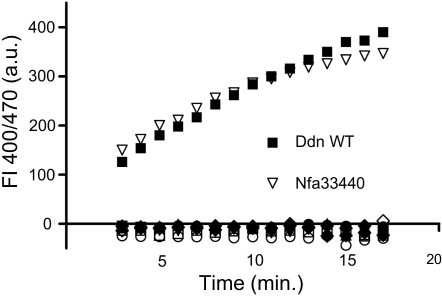
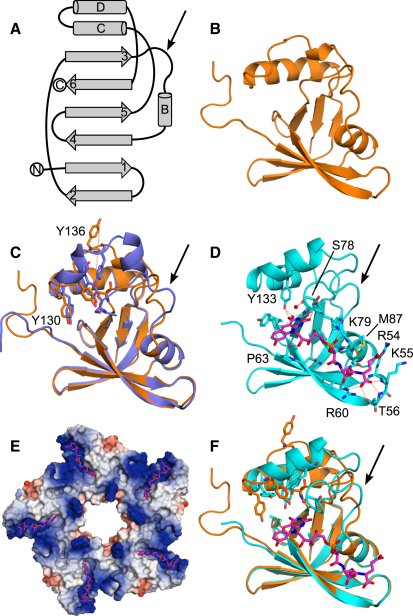
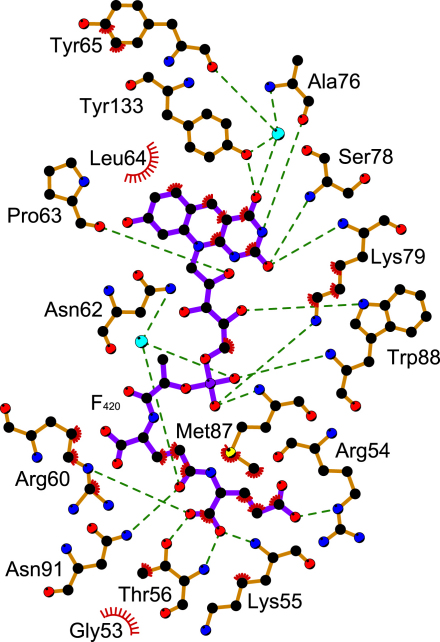
Tuberculosis continues to be a global health threat, making bicyclic nitroimidazoles an important new class of therapeutics. A deazaflavin-dependent nitroreductase (Ddn) from Mycobacterium tuberculosis catalyzes the reduction of nitroimidazoles such as PA-824, resulting in intracellular release of lethal reactive nitrogen species. The N-terminal 30 residues of Ddn are functionally important but are flexible or access multiple conformations, preventing structural characterization of the full-length, enzymatically active enzyme. Several structures were determined of a truncated, inactive Ddn protein core with and without bound F(420) deazaflavin coenzyme as well as of a catalytically competent homolog from Nocardia farcinica. Mutagenesis studies based on these structures identified residues important for binding of F(420) and PA-824. The proposed orientation of the tail of PA-824 toward the N terminus of Ddn is consistent with current structure-activity relationship data.
结核病仍然是一个全球性的健康威胁,使得双环硝咪唑类成为一个重要的新治疗类别。来自结核分枝杆菌的去氮黄素依赖型硝基还原酶(Ddn)催化硝基咪唑类药物(如 PA-824)的还原,导致细胞内释放致命的反应性氮物种。Ddn 的 N 端 30 个残基在功能上很重要,但具有柔韧性或可进入多种构象,从而阻止全长、具有酶活性的酶的结构特征。已经确定了具有和不具有结合 F(420)去氮黄素辅酶的截断、无活性的 Ddn 蛋白核心以及来自诺卡氏菌的催化能力同源物的几个结构。基于这些结构的突变研究确定了对 F(420)和 PA-824 结合重要的残基。PA-824 尾部朝向 Ddn N 端的提议取向与当前的结构-活性关系数据一致。