Department of Medicine and Center for Immunity and Inflammation, New Jersey Medical School, University of Medicine & Dentistry of New Jersey, Newark, New Jersey, USA.
Nat Med. 2012 Jan 15;18(2):260-6. doi: 10.1038/nm.2628.
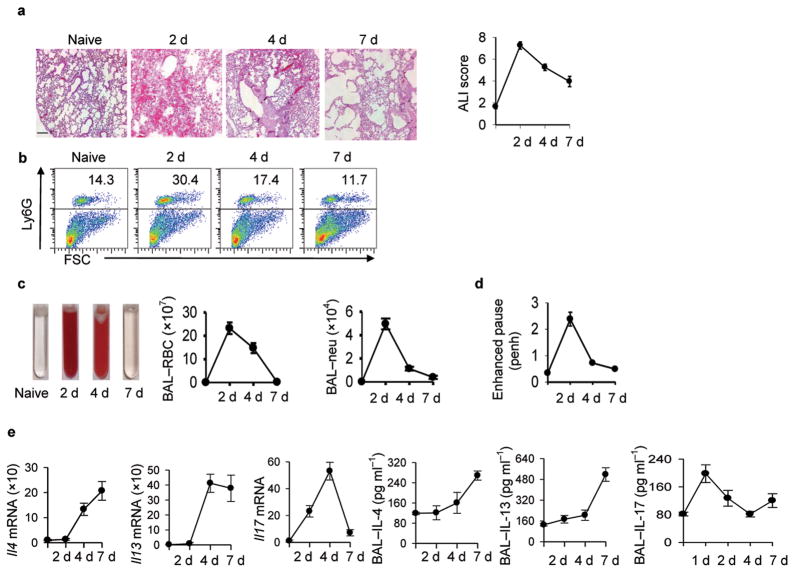
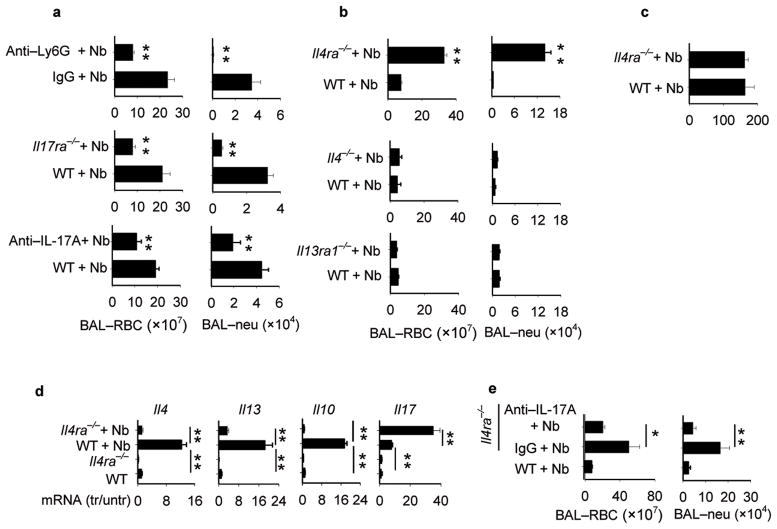
Helminths induce potent T helper 2 (TH2)-type immune responses that can mediate worm expulsion, but the role of this response in controlling the acute tissue damage caused by migrating multicellular parasites through vital tissues remains uncertain. We used a helminth infection model in which parasitic nematode larvae migrate transiently through the lung, resulting in hemorrhage and inflammation. We found that IL-17 initially contributed to inflammation and lung damage, whereas subsequent IL-4 receptor (IL-4R) signaling reduced elevations in IL-17 mRNA levels, enhanced the expression of insulin-like growth factor 1 (IGF-1) and IL-10 and stimulated the development of M2 macrophages, all of which contributed to the rapid resolution of tissue damage. These studies indicate an essential role for TH2-type immune responses in mediating acute wound healing during helminth infection.
蠕虫会诱导强烈的辅助性 T 细胞 2(TH2)型免疫应答,从而促进蠕虫排出,但这种应答在控制通过重要组织迁移的多细胞寄生虫引起的急性组织损伤方面的作用尚不确定。我们使用了一种蠕虫感染模型,其中寄生线虫幼虫会短暂迁移通过肺部,导致出血和炎症。我们发现,IL-17 最初有助于炎症和肺部损伤,而随后的白细胞介素 4 受体(IL-4R)信号转导降低了 IL-17 mRNA 水平的升高,增强了胰岛素样生长因子 1(IGF-1)和 IL-10 的表达,并刺激了 M2 巨噬细胞的发育,所有这些都有助于组织损伤的快速愈合。这些研究表明,TH2 型免疫应答在介导蠕虫感染期间的急性伤口愈合中起着重要作用。