Translational Research Department, Institut Curie, 26 rue d'Ulm, 75005 Paris, France.
Breast Cancer Res. 2012 Jan 16;14(1):R11. doi: 10.1186/bcr3095.
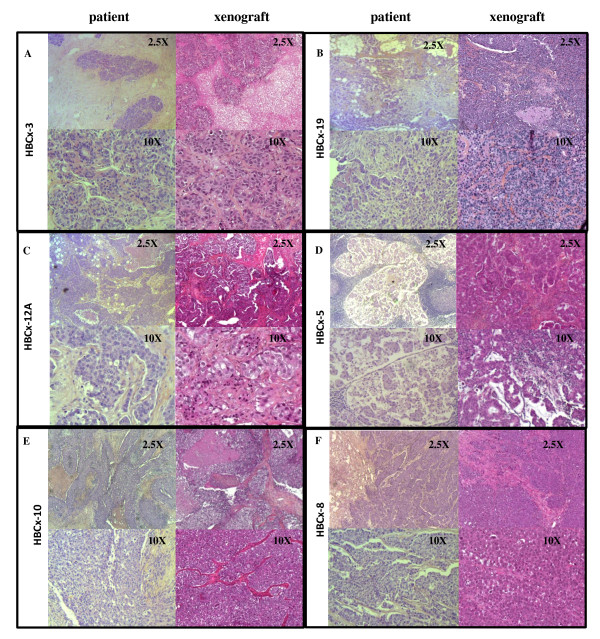
Identification of new therapeutic agents for breast cancer (BC) requires preclinical models that reproduce the molecular characteristics of their respective clinical tumors. In this work, we analyzed the genomic and gene expression profiles of human BC xenografts and the corresponding patient tumors.
Eighteen BC xenografts were obtained by grafting tumor fragments from patients into Swiss nude mice. Molecular characterization of patient tumors and xenografts was performed by DNA copy number analysis and gene expression analysis using Affymetrix Microarrays.
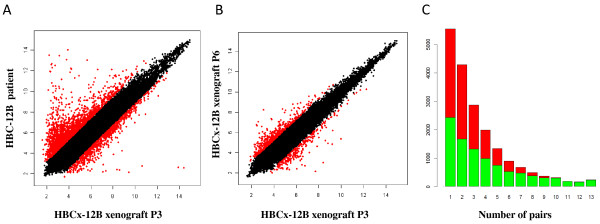
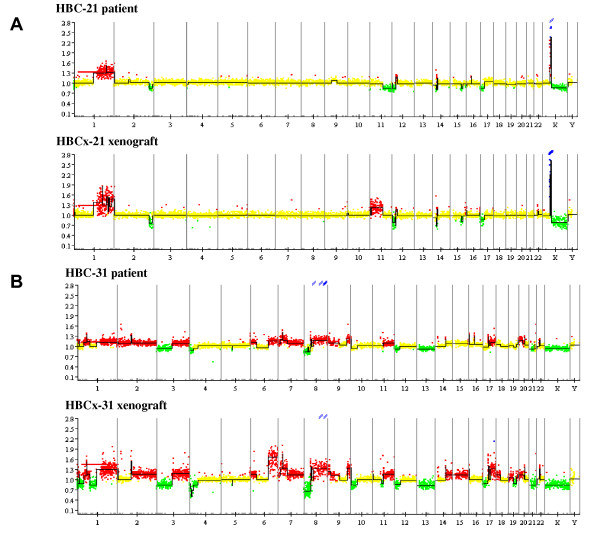
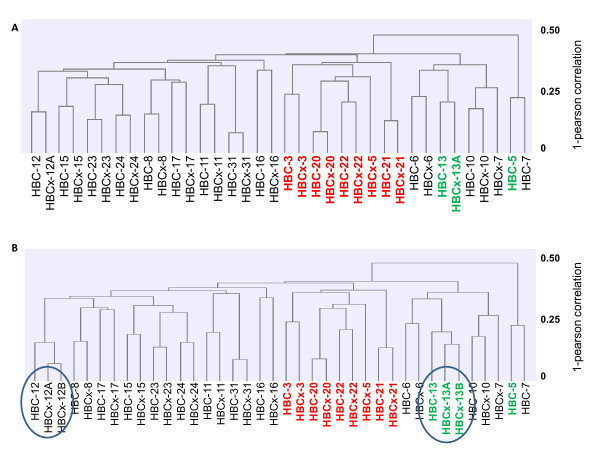
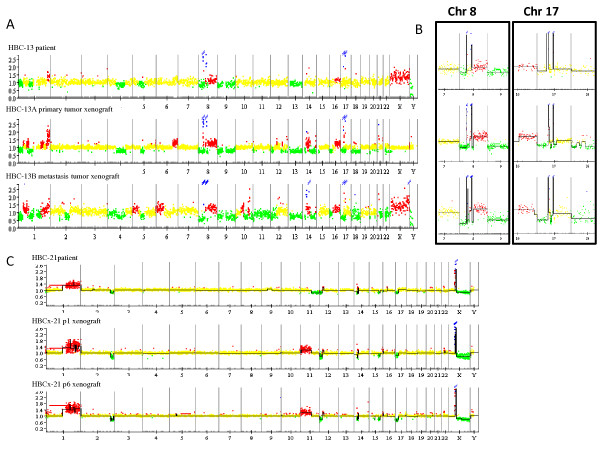
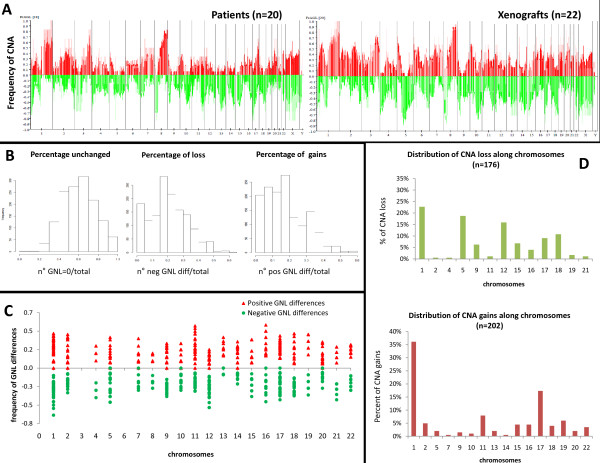
Comparison analysis showed that 14/18 pairs of tumors shared more than 56% of copy number alterations (CNA). Unsupervised hierarchical clustering analysis showed that 16/18 pairs segregated together, confirming the similarity between tumor pairs. Analysis of recurrent CNA changes between patient tumors and xenografts showed losses in 176 chromosomal regions and gains in 202 chromosomal regions. Gene expression profile analysis showed that less than 5% of genes had recurrent variations between patient tumors and their respective xenografts; these genes largely corresponded to human stromal compartment genes. Finally, analysis of different passages of the same tumor showed that sequential mouse-to-mouse tumor grafts did not affect genomic rearrangements or gene expression profiles, suggesting genetic stability of these models over time.
This panel of human BC xenografts maintains the overall genomic and gene expression profile of the corresponding patient tumors and remains stable throughout sequential in vivo generations. The observed genomic profile and gene expression differences appear to be due to the loss of human stromal genes. These xenografts, therefore, represent a validated model for preclinical investigation of new therapeutic agents.
为了鉴定乳腺癌(BC)的新治疗药物,需要建立能够重现其相应临床肿瘤分子特征的临床前模型。在这项工作中,我们分析了人源 BC 异种移植物及其相应患者肿瘤的基因组和基因表达谱。
通过将患者的肿瘤碎片移植到瑞士裸鼠中,获得了 18 个 BC 异种移植物。通过 DNA 拷贝数分析和 Affymetrix 微阵列进行基因表达分析,对患者肿瘤和异种移植物进行分子特征分析。
比较分析表明,18 对肿瘤中有 14 对共享超过 56%的拷贝数改变(CNA)。无监督层次聚类分析表明,18 对中有 16 对聚集在一起,证实了肿瘤对之间的相似性。对患者肿瘤和异种移植物之间的反复 CNA 变化进行分析显示,176 个染色体区域发生缺失,202 个染色体区域发生增益。基因表达谱分析表明,患者肿瘤与其相应异种移植物之间,不到 5%的基因发生反复变化;这些基因主要对应于人类基质细胞基因。最后,对同一肿瘤的不同传代分析表明,连续的小鼠到小鼠肿瘤移植不会影响基因组重排或基因表达谱,表明这些模型随时间推移具有遗传稳定性。
该个人源 BC 异种移植物组保留了相应患者肿瘤的整体基因组和基因表达谱,并且在连续的体内传代中保持稳定。观察到的基因组谱和基因表达差异似乎是由于人类基质基因的丢失所致。因此,这些异种移植物代表了用于新治疗药物的临床前研究的验证模型。