
应激诱导的 NQO1 通过控制 C/EBPα 对抗 20S 蛋白酶体降解的稳定性来调节 p63 的表达,这对预防化学诱导的皮肤癌有影响。
Stress-induced NQO1 controls stability of C/EBPα against 20S proteasomal degradation to regulate p63 expression with implications in protection against chemical-induced skin cancer.
机构信息
Department of Pharmacology and Experimental Therapeutics, University of Maryland School of Medicine, Baltimore, MD 21201, USA.
出版信息
Oncogene. 2012 Oct 4;31(40):4362-71. doi: 10.1038/onc.2011.600. Epub 2012 Jan 16.
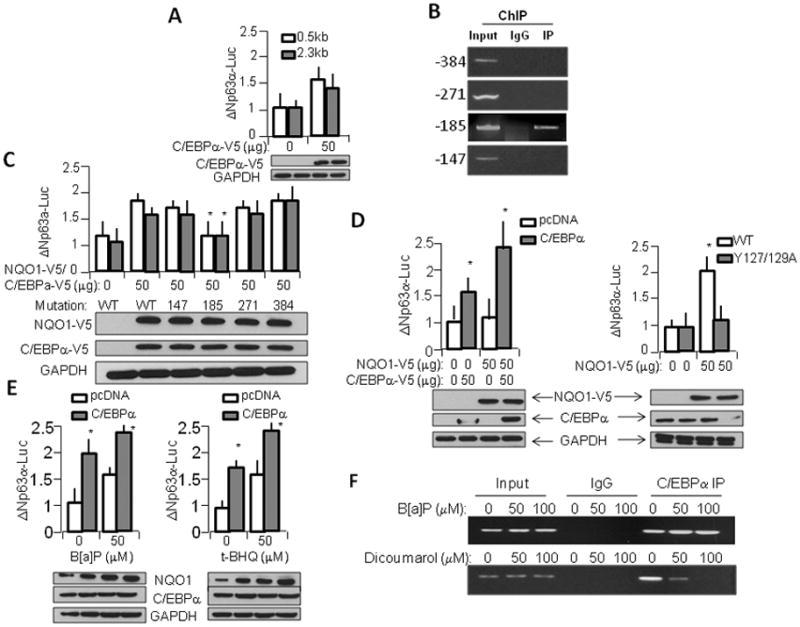
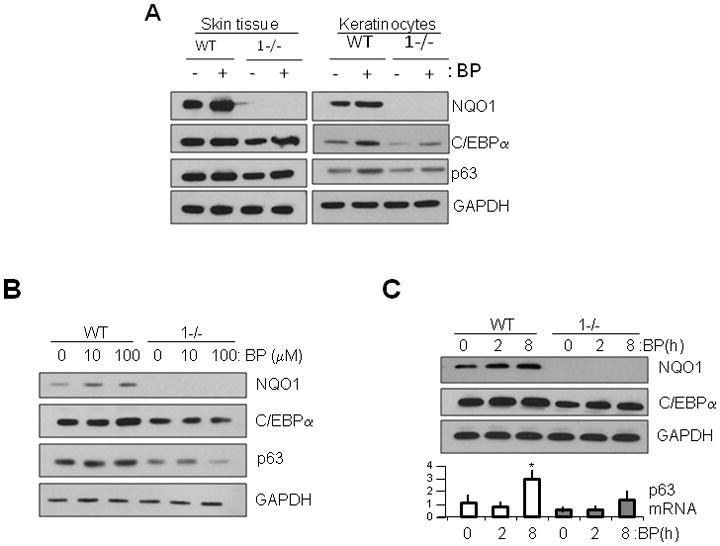
Previously, we have shown a role of cytosolic NAD(P)H:quinone oxidoreductase 1 (NQO1) in the stabilization of p63 against 20S proteasomal degradation resulting in thinning of the epithelium and chemical-induced skin cancer (Oncogene (2011) 30, 1098-1107). Current studies have demonstrated that NQO1 control of CCAAT-enhancer binding protein (C/EBPα) against 20S proteasomal degradation also contributes to the upregulation of p63 expression and protection. Western and immunohistochemistry analysis revealed that disruption of the NQO1 gene in mice and mouse keratinocytes led to degradation of C/EBPα and loss of p63 gene expression. p63 promoter mutagenesis, transfection and chromatin immunoprecipitation assays identified a C/EBPα-binding site between nucleotide position -185 and -174 that bound to C/EBPα and upregulated p63 gene expression. Co-immunoprecipitation and immunoblot analysis demonstrated that 20S proteasomes directly interacted and degraded C/EBPα. NQO1 direct interaction with C/EBPα led to stabilization of C/EBPα against 20S proteasomal degradation. NQO1 protection of C/EBPα required binding of NADH with NQO1. Exposure of skin and keratinocytes to the chemical stress agent benzo(a)pyrene led to induction of NQO1 and stabilization of C/EBPα protein, resulting in an increase in p63 RNA and protein in wild-type but not in NQO1-/- mice. Collectively, the current data combined with previous data suggest that stress induction of NQO1 through both stabilization of C/EBPα and increase in p63 and direct stabilization of p63 controls keratinocyte differentiation, leading to protection against chemical-induced skin carcinogenesis. The studies are significant as 2-4% human individuals are homozygous and 23% are heterozygous for the NQO1P187S mutation and might be susceptible to stress-induced skin diseases.
先前,我们已证明细胞质 NAD(P)H:醌氧化还原酶 1(NQO1)在稳定 p63 对抗 20S 蛋白酶体降解方面起作用,导致上皮变薄和化学诱导的皮肤癌(Oncogene(2011)30,1098-1107)。当前的研究表明,NQO1 控制 CCAAT 增强子结合蛋白(C/EBPα)对抗 20S 蛋白酶体降解也有助于上调 p63 表达和保护。Western 和免疫组织化学分析显示,在小鼠和鼠角质细胞中破坏 NQO1 基因导致 C/EBPα 的降解和 p63 基因表达的丧失。p63 启动子诱变、转染和染色质免疫沉淀试验鉴定出一个位于核苷酸位置-185 至-174 之间的 C/EBPα 结合位点,该位点与 C/EBPα 结合并上调 p63 基因表达。共免疫沉淀和免疫印迹分析表明,20S 蛋白酶体直接相互作用并降解 C/EBPα。NQO1 与 C/EBPα 的直接相互作用导致 C/EBPα 对 20S 蛋白酶体降解的稳定。NQO1 对 C/EBPα 的保护需要 NADH 与 NQO1 的结合。皮肤和角质细胞暴露于化学应激剂苯并(a)芘会诱导 NQO1 的产生并稳定 C/EBPα 蛋白,导致野生型小鼠中 p63 RNA 和蛋白增加,但 NQO1-/-小鼠中没有增加。总的来说,当前的数据与先前的数据相结合表明,通过稳定 C/EBPα 和增加 p63 以及直接稳定 p63 来诱导 NQO1 的应激控制角质细胞分化,从而防止化学诱导的皮肤癌发生。这些研究意义重大,因为 2-4%的人类个体是 NQO1P187S 突变的纯合子,23%是杂合子,他们可能容易受到应激诱导的皮肤疾病的影响。




 Zotero 插件