Vasiliou Vasilis, Ross David, Nebert Daniel W
Department of Pharmaceutical Sciences, School of Pharmacy, University of Colorado Health Sciences Center, Denver, CO 80262, USA.
Hum Genomics. 2006 Mar;2(5):329-35. doi: 10.1186/1479-7364-2-5-329.
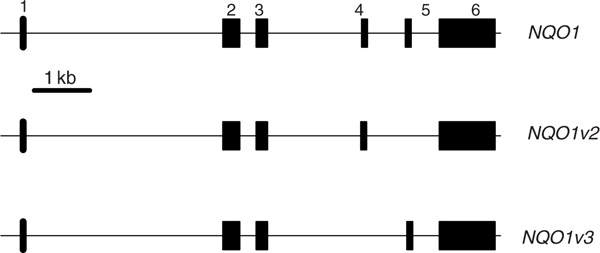
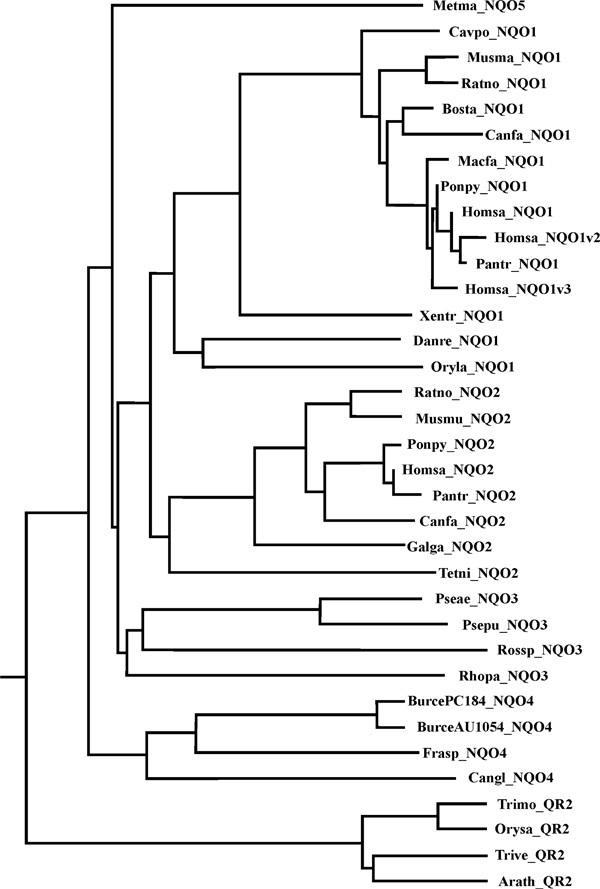
The NAD(P)H:quinone acceptor oxidoreductase (NQO) gene family belongs to the flavoprotein clan and, in the human genome, consists of two genes (NQO1 and NQO2). These two genes encode cytosolic flavoenzymes that catalyse the beneficial two-electron reduction of quinones to hydroquinones. This reaction prevents the unwanted one-electron reduction of quinones by other quinone reductases; one-electron reduction results in the formation of reactive oxygen species, generated by redox cycling of semiquinones in the presence of molecular oxygen. Both the mammalian NQO1 and NQO2 genes are upregulated as a part of the oxidative stress response and are inexplicably overexpressed in particular types of tumours. A non-synonymous mutation in the NQO1 gene, leading to absence of enzyme activity, has been associated with an increased risk of myeloid leukaemia and other types of blood dyscrasia in workers exposed to benzene. NQO2 has a melatonin-binding site, which may explain the anti-oxidant role of melatonin. An ancient NQO3 subfamily exists in eubacteria and the authors suggest that there should be additional divisions of the NQO family to include the NQO4 subfamily in fungi and NQO5 subfamily in archaebacteria. Interestingly, no NQO genes could be identified in the worm, fly, sea squirt or plants; because these taxa carry quinone reductases capable of one- and two-electron reductions, there has been either convergent evolution or redundancy to account for the appearance of these enzyme functions whenever they have been needed during evolution.
烟酰胺腺嘌呤二核苷酸磷酸(NAD(P)H):醌受体氧化还原酶(NQO)基因家族属于黄素蛋白家族,在人类基因组中由两个基因(NQO1和NQO2)组成。这两个基因编码胞质黄素酶,催化醌类有益的双电子还原为氢醌。该反应可防止其他醌还原酶对醌进行不必要的单电子还原;单电子还原会导致活性氧的形成,这是由半醌在分子氧存在下的氧化还原循环产生的。哺乳动物的NQO1和NQO2基因在氧化应激反应中均会上调,并且在特定类型的肿瘤中会出现不明原因的过表达。NQO1基因中的一个非同义突变会导致酶活性缺失,这与接触苯的工人患髓系白血病和其他类型血液恶液质的风险增加有关。NQO2有一个褪黑素结合位点,这可能解释了褪黑素的抗氧化作用。真细菌中存在一个古老的NQO3亚家族,作者认为NQO家族应有更多的分类,包括真菌中的NQO4亚家族和古细菌中的NQO5亚家族。有趣的是,在蠕虫、果蝇、海鞘或植物中未发现NQO基因;由于这些分类群携带能够进行单电子和双电子还原的醌还原酶,因此在进化过程中每当需要这些酶功能时,要么是趋同进化,要么是功能冗余导致了它们的出现。