Department of Microbiology and Tumor Virology Program of the Abramson Cancer Center, Perelman School of Medicine at the University of Pennsylvania, Philadelphia, Pennsylvania, United States of America.
PLoS Pathog. 2012 Jan;8(1):e1002479. doi: 10.1371/journal.ppat.1002479. Epub 2012 Jan 12.
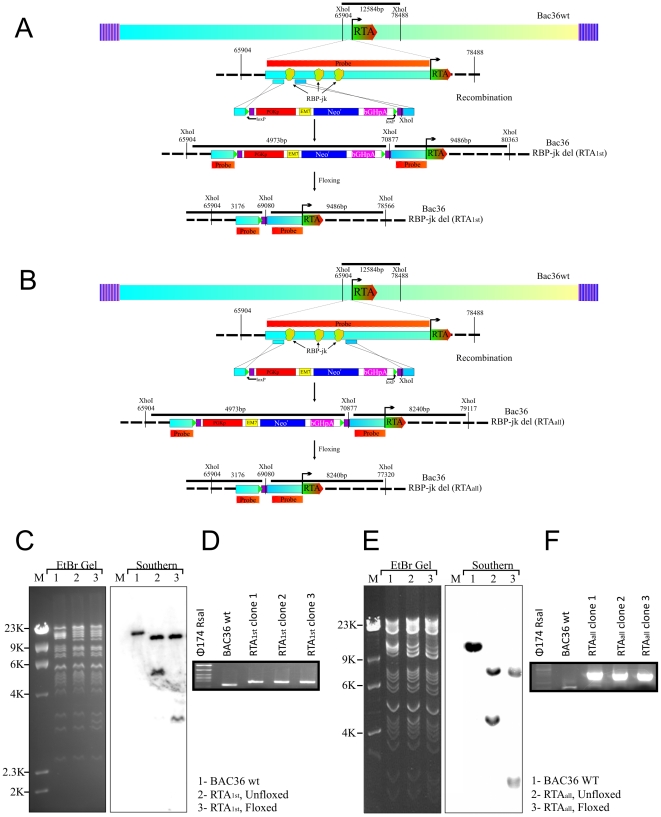
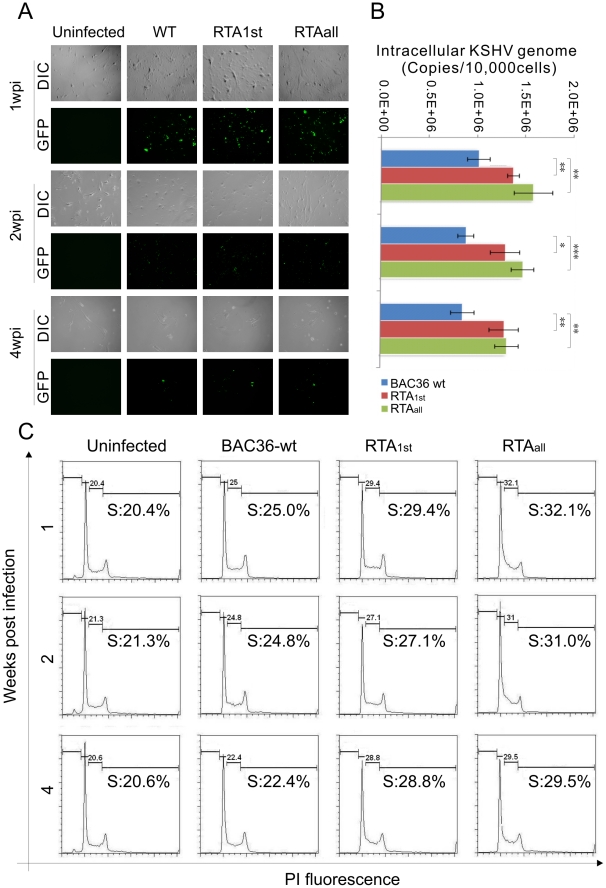
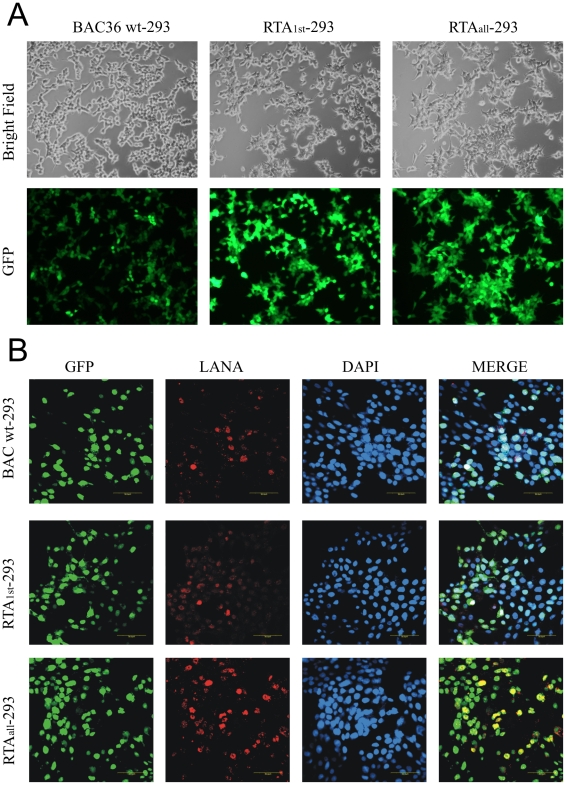
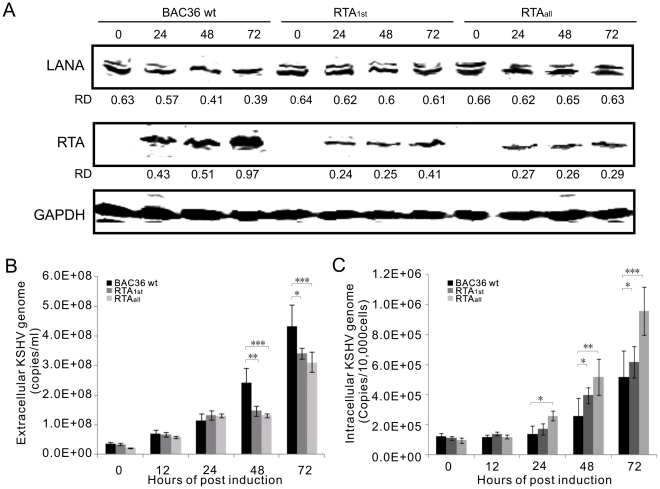
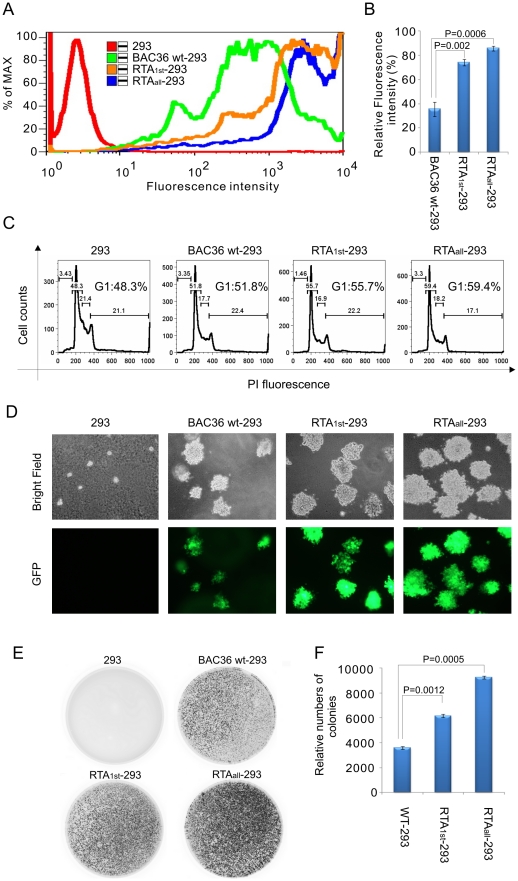
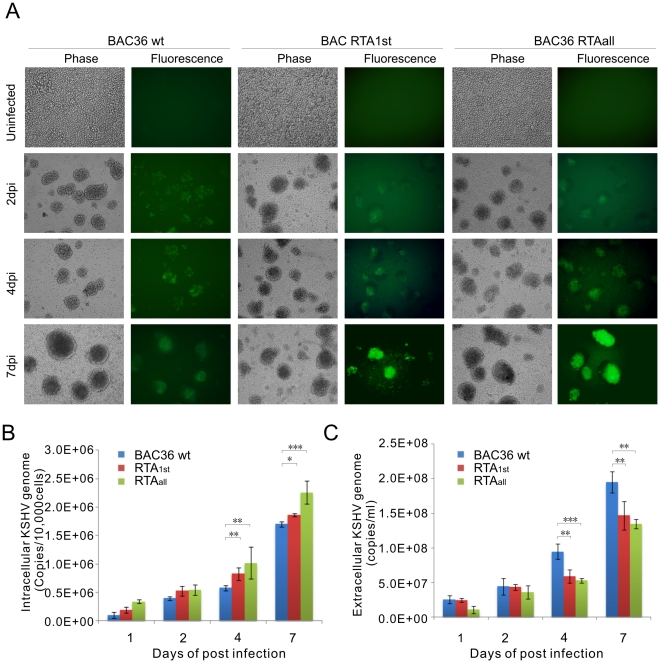
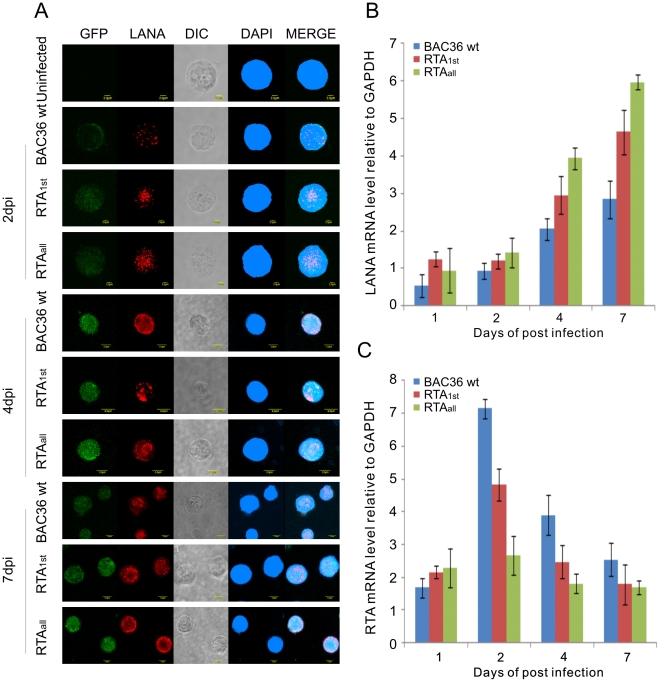
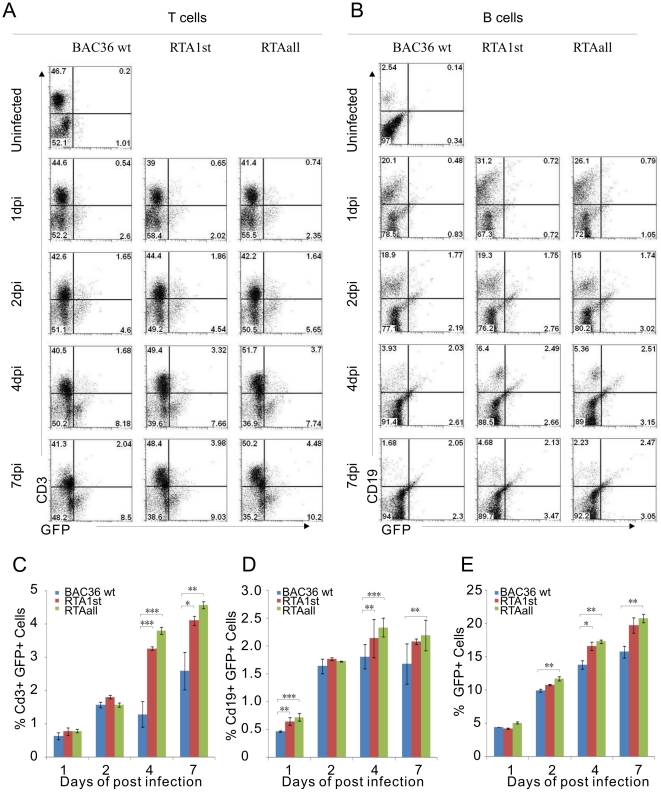
Kaposi's sarcoma-associated herpesvirus (KSHV) is tightly linked to at least two lymphoproliferative disorders, primary effusion lymphoma (PEL) and multicentric Castleman's disease (MCD). However, the development of KSHV-mediated lymphoproliferative disease is not fully understood. Here, we generated two recombinant KSHV viruses deleted for the first RBP-Jκ binding site (RTA(1st)) and all three RBP-Jκ binding sites (RTA(all)) within the RTA promoter. Our results showed that RTA(1st) and RTA(all) recombinant viruses possess increased viral latency and a decreased capability for lytic replication in HEK 293 cells, enhancing colony formation and proliferation of infected cells. Furthermore, recombinant RTA(1st) and RTA(all) viruses showed greater infectivity in human peripheral blood mononuclear cells (PBMCs) relative to wt KSHV. Interestingly, KSHV BAC36 wt, RTA(1st) and RTA(all) recombinant viruses infected both T and B cells and all three viruses efficiently infected T and B cells in a time-dependent manner early after infection. Also, the capability of both RTA(1st) and RTA(all) recombinant viruses to infect CD19+ B cells was significantly enhanced. Surprisingly, RTA(1st) and RTA(all) recombinant viruses showed greater infectivity for CD3+ T cells up to 7 days. Furthermore, studies in Telomerase-immortalized human umbilical vein endothelial (TIVE) cells infected with KSHV corroborated our data that RTA(1st) and RTA(all) recombinant viruses have enhanced ability to persist in latently infected cells with increased proliferation. These recombinant viruses now provide a model to explore early stages of primary infection in human PBMCs and development of KSHV-associated lymphoproliferative diseases.
卡波西肉瘤相关疱疹病毒(KSHV)与至少两种淋巴组织增生性疾病密切相关,即原发性渗出性淋巴瘤(PEL)和多中心卡斯特曼病(MCD)。然而,KSHV 介导的淋巴组织增生性疾病的发展尚未完全阐明。在此,我们构建了两个缺失 RTA 启动子中第一个 RBP-Jκ 结合位点(RTA(1st))和全部三个 RBP-Jκ 结合位点(RTA(all))的重组 KSHV 病毒。结果显示,RTA(1st)和 RTA(all)重组病毒在 HEK 293 细胞中的潜伏能力增强,裂解复制能力降低,增强了感染细胞的集落形成和增殖能力。此外,与野生型 KSHV 相比,重组 RTA(1st)和 RTA(all)病毒对人外周血单个核细胞(PBMCs)的感染力更强。有趣的是,KSHV BAC36wt、RTA(1st)和 RTA(all)重组病毒均可感染 T 细胞和 B 细胞,并且三种病毒均可在感染后早期以时间依赖性方式有效地感染 T 细胞和 B 细胞。此外,RTA(1st)和 RTA(all)重组病毒感染 CD19+B 细胞的能力显著增强。令人惊讶的是,RTA(1st)和 RTA(all)重组病毒对 CD3+T 细胞的感染力可高达 7 天。此外,在感染 KSHV 的永生化人脐静脉内皮细胞(TIVE)中的研究证实了我们的数据,即 RTA(1st)和 RTA(all)重组病毒在潜伏感染细胞中具有增强的持续存在和增殖能力。这些重组病毒现在为研究人 PBMCs 中的原发性感染早期阶段和 KSHV 相关的淋巴组织增生性疾病的发展提供了模型。