INRA, UMR1019, UNH, CRNH Auvergne, Clermont-Ferrand, Clermont Université, Université d'Auvergne, Unité de Nutrition Humaine, Clermont-Ferrand, France.
PLoS One. 2012;7(1):e29837. doi: 10.1371/journal.pone.0029837. Epub 2012 Jan 10.
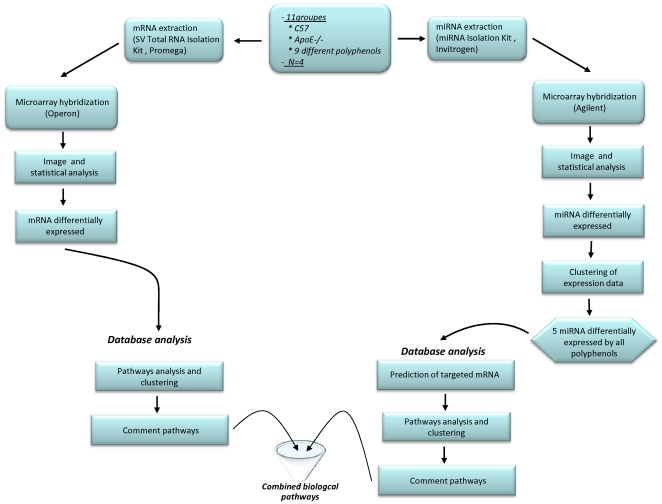
Polyphenols are the most abundant antioxidants in the human diet and are widespread constituents of fruits and beverages, such as tea, coffee or wine. Epidemiological, clinical and animal studies support a role of polyphenols in the prevention of various diseases, such as cardiovascular diseases, cancers or neurodegenerative diseases. Recent findings suggest that polyphenols could interact with cellular signaling cascades regulating the activity of transcription factors and consequently affecting the expression of genes. However, the impact of polyphenol on the expression of microRNA, small non-coding RNAs, has not yet been studied. The aim of this study was to investigate the impact of dietary supplementation with polyphenols at nutritional doses on miRNA expression in the livers of apolipoprotein E-deficient mice (apoE⁻/⁻) jointly with mRNA expression profiling.
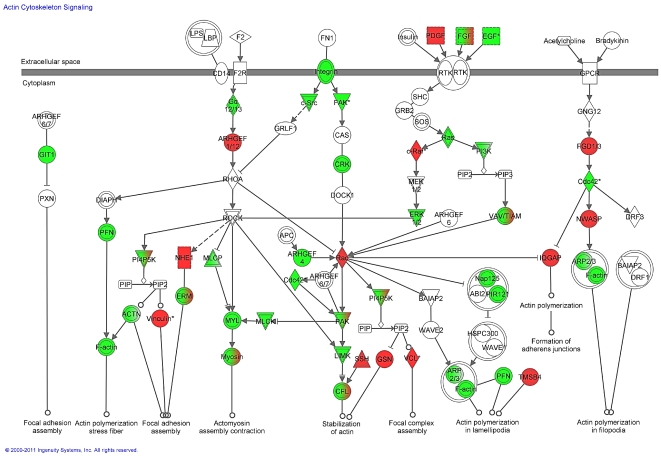
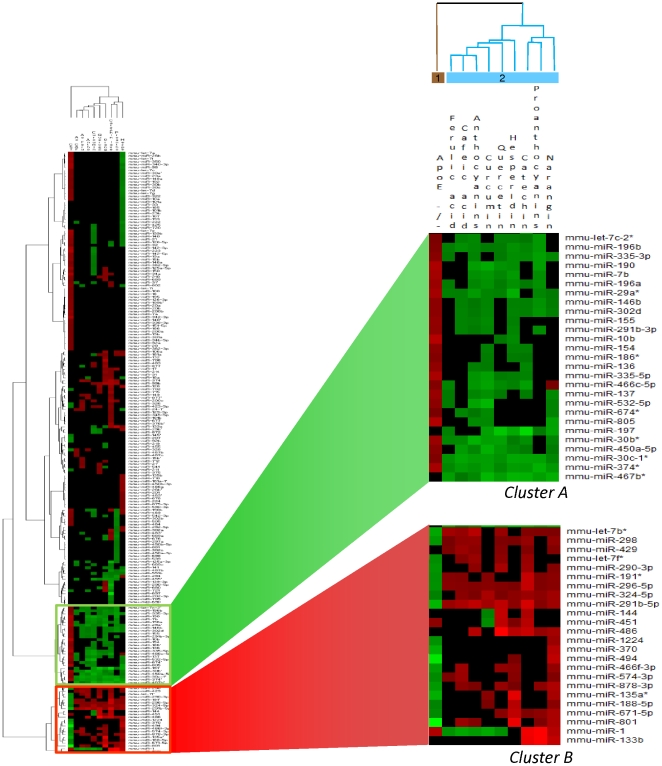
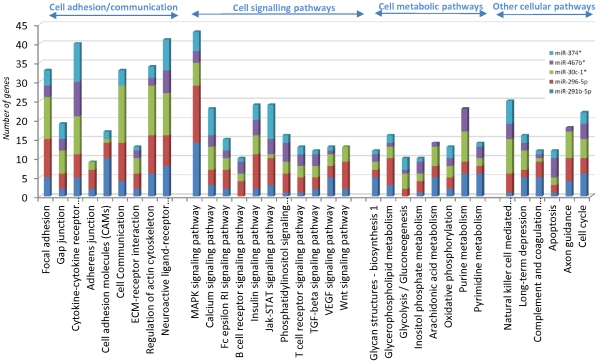
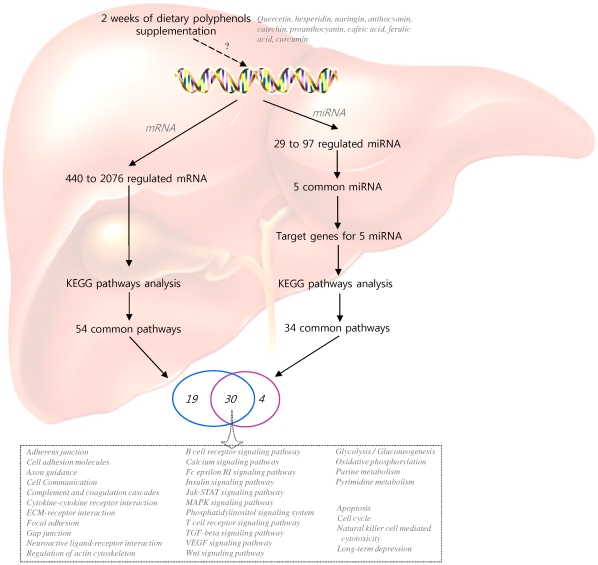
METHODOLOGY/PRINCIPAL FINDINGS: Using microarrays, we measured the global miRNA expression in the livers of wild-type (C57B6/J) mice or apoE⁻/⁻ mice fed diets supplemented with one of nine different polyphenols or a control diet. This analysis revealed that knock-out of the apoE gene induced significant modulation in the expression of miRNA. Moreover, changes in miRNA expression were observed after polyphenol supplementation, and five miRNAs (mmu-miR-291b-5p, mmu-miR-296-5p, mmu-miR-30c-1*, mmu-miR-467b* and mmu-miR-374*) were identified as being commonly modulated by these polyphenols. We also observed that these polyphenols counteracted the modulation of miRNA expression induced by apoE mutation. Pathway analyses on these five miRNA-target genes revealed common pathways, some of which were also identified from a pathway analysis on mRNA profiles.
This in vivo study demonstrated for the first time that polyphenols at nutritional doses modulate the expression of miRNA in the liver. Even if structurally different, all polyphenols induced a similar miRNA expression profile. Common pathways were identified from both miRNA-target and mRNA analysis, revealing cellular functions that could be regulated by polyphenols at both the miRNA and mRNA level.
多酚是人类饮食中最丰富的抗氧化剂,广泛存在于水果和饮料中,如茶、咖啡或葡萄酒。流行病学、临床和动物研究支持多酚在预防各种疾病中的作用,如心血管疾病、癌症或神经退行性疾病。最近的研究结果表明,多酚可能与调节转录因子活性的细胞信号级联相互作用,从而影响基因的表达。然而,多酚对 microRNA 的表达,即小非编码 RNA 的影响尚未得到研究。本研究旨在研究营养剂量的多酚膳食补充对载脂蛋白 E 缺陷型小鼠(apoE⁻/⁻)肝脏中 microRNA 表达的影响,并与 mRNA 表达谱一起进行研究。
方法/主要发现:使用微阵列,我们测量了野生型(C57B6/J)小鼠或 apoE⁻/⁻小鼠肝脏中的全局 microRNA 表达,这些小鼠喂食添加了九种不同多酚之一或对照饮食的饮食。该分析表明,apoE 基因的敲除会引起 microRNA 表达的显著调节。此外,在多酚补充后观察到 microRNA 表达的变化,并且鉴定出五种 microRNA(mmu-miR-291b-5p、mmu-miR-296-5p、mmu-miR-30c-1*、mmu-miR-467b和 mmu-miR-374)被这些多酚共同调节。我们还观察到这些多酚抵消了 apoE 突变引起的 microRNA 表达的调节。对这五个 microRNA-靶基因的途径分析揭示了共同的途径,其中一些途径也从 mRNA 谱的途径分析中得到鉴定。
这项体内研究首次表明,营养剂量的多酚可调节肝脏中 microRNA 的表达。即使结构不同,所有多酚都诱导出相似的 microRNA 表达谱。从 microRNA-靶和 mRNA 分析中都鉴定出了共同的途径,揭示了多酚在 microRNA 和 mRNA 水平上都可以调节的细胞功能。