Department of Chemical Biology, Ernest Mario School of Pharmacy, Rutgers, The State University of New Jersey, Piscataway, NJ 08854, USA.
Nutrients. 2011 Nov;3(11):962-86. doi: 10.3390/nu3110962. Epub 2011 Nov 14.
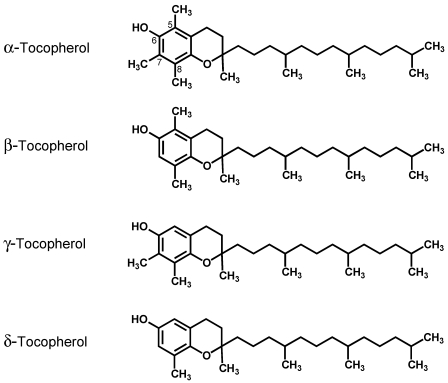
Vitamin E consists of eight different variants: α-, β-, γ-, and δ-tocopherols (saturated phytyl tail) and α-, β-, γ-, and δ-tocotrienols (unsaturated phytyl tail). Cancer prevention studies with vitamin E have primarily utilized the variant α-tocopherol. To no avail, a majority of these studies focused on variant α-tocopherol with inconsistent results. However, γ-tocopherol, and more recently δ-tocopherol, have shown greater ability to reduce inflammation, cell proliferation, and tumor burden. Recent results have shown that γ-enriched mixed tocopherols inhibit the development of mammary hyperplasia and tumorigenesis in animal models. In this review, we discuss the possible differences between the variant forms, molecular targets, and cancer-preventive effects of tocopherols. We recommend that a γ-enriched mixture, γ- and δ-tocopherol, but not α-tocopherol, are promising agents for breast cancer prevention and warrant further investigation.
维生素 E 由八种不同的变体组成:α-、β-、γ-和 δ-生育酚(饱和植基尾部)以及α-、β-、γ-和 δ-生育三烯酚(不饱和植基尾部)。维生素 E 的癌症预防研究主要使用变体α-生育酚。然而,大多数这些研究都集中在变体α-生育酚上,结果却不一致。然而,γ-生育酚,以及最近的 δ-生育酚,已显示出更大的减轻炎症、细胞增殖和肿瘤负担的能力。最近的研究结果表明,富含 γ-的混合生育酚可以抑制动物模型中乳腺增生和肿瘤发生的发展。在这篇综述中,我们讨论了生育酚变体形式、分子靶标和癌症预防作用之间可能存在的差异。我们建议富含 γ-的混合物、γ-和 δ-生育酚,而不是 α-生育酚,是预防乳腺癌的有前途的药物,值得进一步研究。