Center for Cancer Prevention Research, Ernest Mario School of Pharmacy, Rutgers, the State University of New Jersey, USA.
Chin Med. 2010 Oct 27;5:37. doi: 10.1186/1749-8546-5-37.
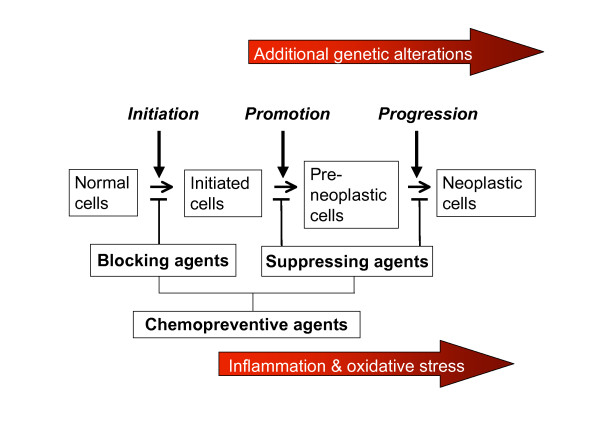
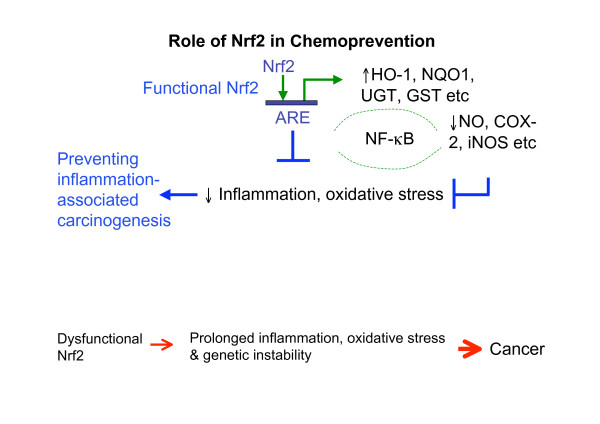
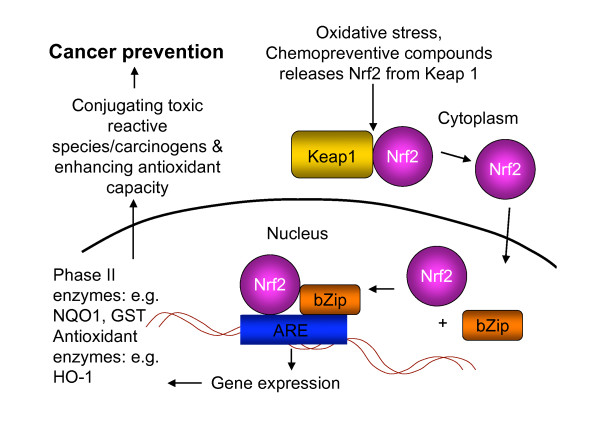
This article reviews recent basic and clinical studies of ginseng, particularly the anti-cancer effects and the potential chemopreventive actions by activating the transcriptional factor, nuclear factor (erythroid-derived 2)-like 2 (Nrf2 or NFE2L2)-mediated anti-oxidative stress or anti-inflammatory pathways. Nrf2 is a novel target for cancer prevention as it regulates the antioxidant responsive element (ARE), a critical regulatory element in the promoter region of genes encoding cellular phase II detoxifying and anti-oxidative stress enzymes. The studies on the chemopreventive effects of ginseng or its components/products showed that Nrf2 could also be a target for ginseng's actions. A number of papers also demonstrated the anti-inflammatory effects of ginseng. Targeting Nrf2 pathway is a novel approach to the investigation of ginseng's cancer chemopreventive actions, including some oxidative stress and inflammatory conditions responsible for the initiation, promotion and progression of carcinogenesis.
这篇文章综述了人参的近期基础和临床研究,特别是人参通过激活转录因子核因子(红细胞衍生 2)样 2(Nrf2 或 NFE2L2)介导的抗氧化应激或抗炎途径的抗癌作用和潜在的化学预防作用。Nrf2 是癌症预防的一个新靶点,因为它调节抗氧化反应元件(ARE),这是基因启动子区域中编码细胞相 II 解毒和抗氧化应激酶的关键调节元件。关于人参或其成分/产品的化学预防作用的研究表明,Nrf2 也可能是人参作用的靶点。许多论文还证实了人参的抗炎作用。针对 Nrf2 通路是研究人参抗癌化学预防作用的一种新方法,包括一些与癌症发生的起始、促进和进展有关的氧化应激和炎症条件。