University of Pittsburgh, Department of Pharmaceutical Sciences, Center for Education and Drug Abuse Research, 3501 Terrace St., 711 Salk Hall, Pittsburgh, PA 15261, United States.
Drug Alcohol Depend. 2012 Jun;123 Suppl 1:S87-98. doi: 10.1016/j.drugalcdep.2011.12.016. Epub 2012 Jan 17.
Mitigation of substance use (SU) disorder (SUD) risk factors is a common goal of prevention. Research has clarified much about risk factors including their prediction of SU/SUD, associations with other etiological variables and mediation of SU outcomes. Greater understanding of the emergence of risk factors themselves may improve prevention. For example, in lieu of experimental data, the level of resistance to change of a risk factor (its pliability) could inform "dosage" of intervention needed to reduce the risk.
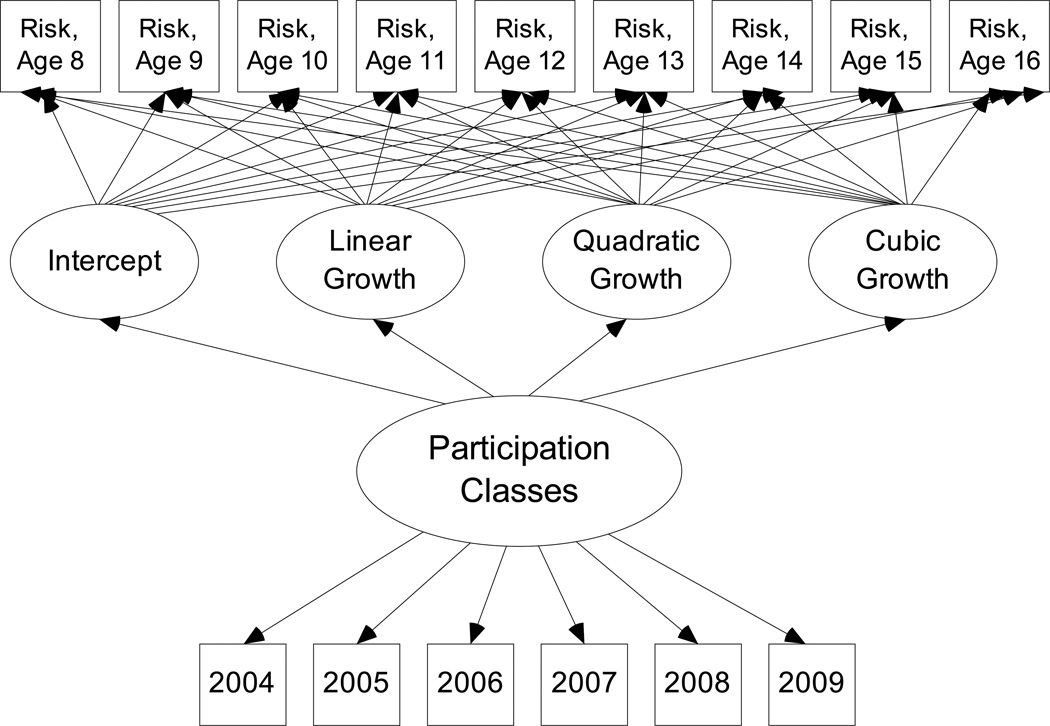
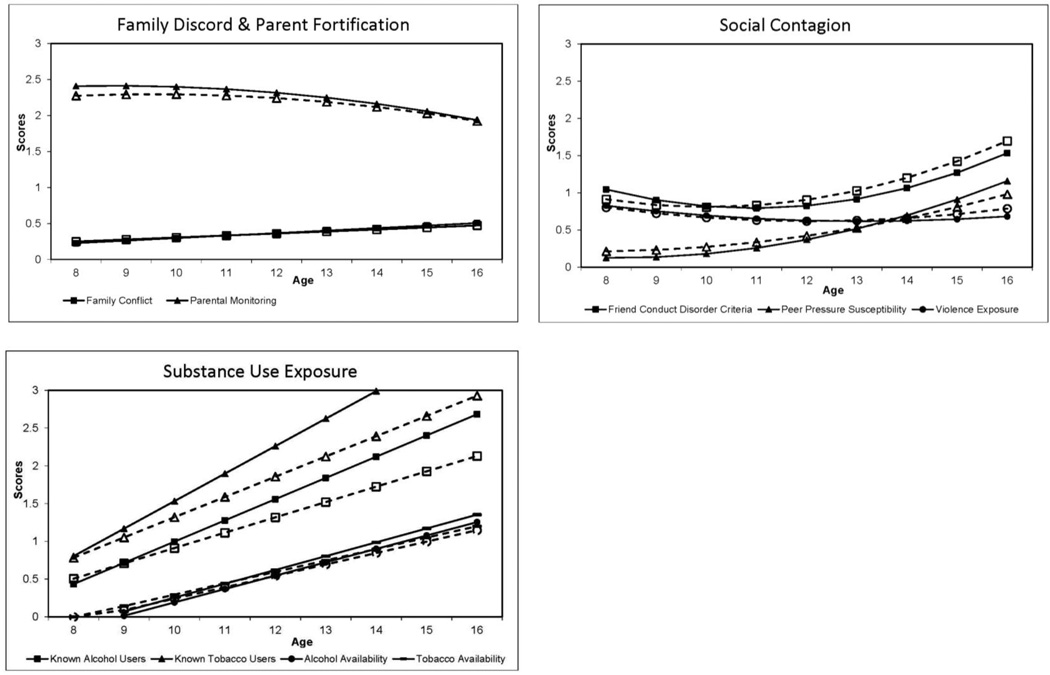
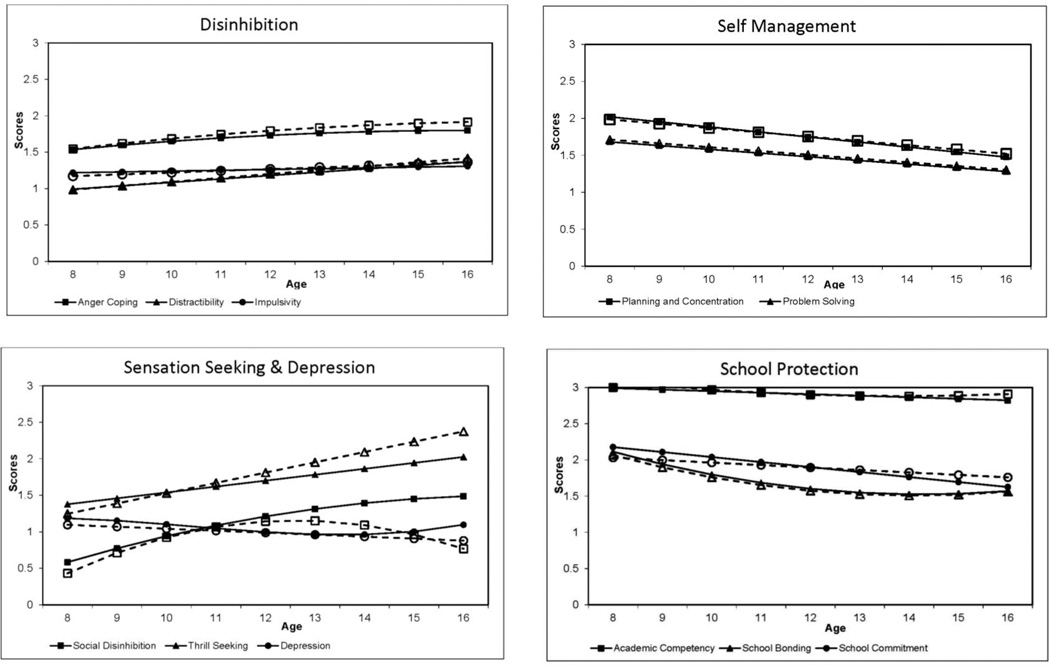
Two attributes of 22 previously-documented predictors of SU/SUD were quantified: natural history (average age-related trend) and pliability (quantified using correlations between intercepts and growth parameters of hierarchical linear modeling trajectories). The longitudinal sample of 1147 8- through 16-year-olds were recruited from a northeastern summer camp for youth experiencing chronic stress due to one or more stressors (X¯=2.2stressors, SD=1.41) which typically last at least one year. Half were male, 69.3% were European-American, 8.5% were African-American, and the remaining were small proportions each of other or mixed races/ethnicities.
Average trajectories of 21 predictors correspond to increasing SUD risk with age. Predictor pliability varied greatly, ranging from extremely high for School Commitment to extremely low for Peer Pressure Susceptibility.
Results suggest different intervention strategies may be needed to manage risk factors over the long-term. To illustrate, maintaining a high school commitment appears to require boosters whereas reducing peer pressure susceptibility appears to require high initial "dosage" with less need for boosters.
减轻物质使用障碍(SUD)风险因素是预防的共同目标。研究已经阐明了许多风险因素,包括它们对 SUD 的预测、与其他病因变量的关联以及对 SUD 结果的中介作用。更好地了解风险因素本身的出现,可能会改善预防效果。例如,在没有实验数据的情况下,风险因素的抗变化能力(其可塑性)可以为干预措施的“剂量”提供信息,以降低风险。
对 22 个先前记录的 SUD 预测因素的两个属性进行了量化:自然史(与年龄相关的平均趋势)和可塑性(使用层次线性建模轨迹的截距和增长参数之间的相关性来量化)。这项纵向研究招募了 1147 名 8 至 16 岁的青少年,他们来自东北部的一个夏令营,这些青少年因一个或多个压力源而经历慢性压力(X¯=2.2 个压力源,SD=1.41),这些压力通常持续至少一年。其中一半是男性,69.3%是欧洲裔美国人,8.5%是非裔美国人,其余的是其他或混合种族/族裔的小比例。
21 个预测因素的平均轨迹与年龄相关的 SUD 风险增加相对应。预测因素的可塑性差异很大,从对学校承诺的极高到对同伴压力易感性的极低。
结果表明,可能需要不同的干预策略来长期管理风险因素。例如,维持对高中的承诺似乎需要加强剂,而降低同伴压力易感性似乎需要较高的初始“剂量”,较少需要加强剂。