Department of Biochemistry and Molecular Biology, University of Arkansas for Medical Sciences, Little Rock, AR 72205, USA.
Cell Death Dis. 2012 Jan 19;3(1):e258. doi: 10.1038/cddis.2011.141.
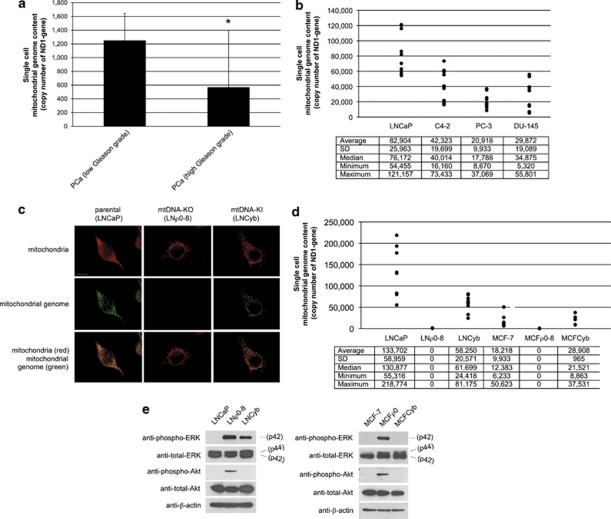
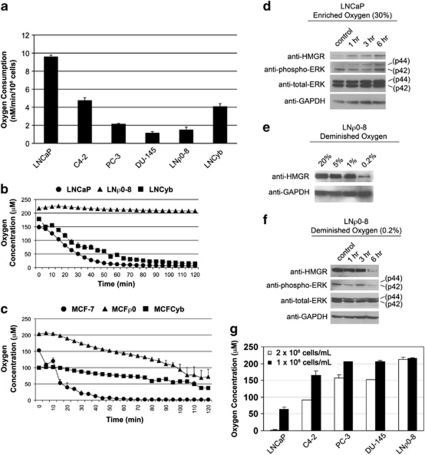
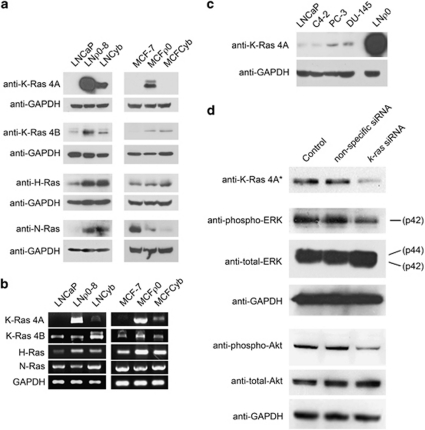
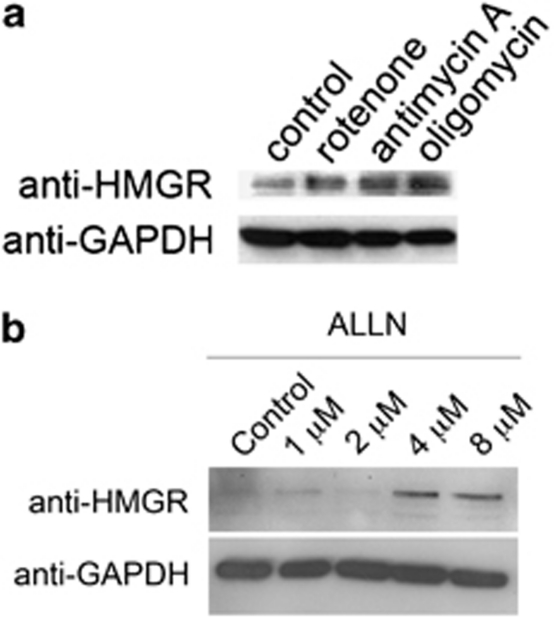
Changes in mitochondrial genome such as mutation, deletion and depletion are common in cancer and can determine advanced phenotype of cancer; however, detailed mechanisms have not been elucidated. We observed that loss of mitochondrial genome reversibly induced overexpression and activation of proto-oncogenic Ras, especially K-Ras 4A, responsible for the activation of AKT and ERK leading to advanced phenotype of prostate and breast cancer. Ras activation was induced by the overexpression of 3-hydroxy-3-methyl-glutaryl-CoA reductase (HMGR), the rate-limiting enzyme of the mevalonate pathway. Hypoxia is known to induce proteasomal degradation of HMGR. Well differentiated prostate and breast cancer cells with high mitochondrial DNA content consumed a large amount of oxygen and induced hypoxia. Loss of mitochondrial genome reduced oxygen consumption and increased in oxygen concentration in the cells. The hypoxic-to-normoxic shift led to the overexpression of HMGR through inhibiting proteasomal degradation. Therefore, reduction of mitochondrial genome content induced overexpression of HMGR through hypoxic to normoxic shift and subsequently the endogenous induction of the mevalonate pathway activated Ras that mediates advanced phenotype. Reduction of mitochondrial genome content was associated with the aggressive phenotype of prostate cancer in vitro cell line model and tissue specimens in vivo. Our results elucidate a coherent mechanism that directly links the mitochondrial genome with the advanced progression of the disease.
线粒体基因组的改变,如突变、缺失和耗竭,在癌症中很常见,并且可以决定癌症的晚期表型;然而,其详细的机制尚未阐明。我们观察到,线粒体基因组的缺失可可逆地诱导原癌基因 Ras(尤其是 K-Ras4A)的过表达和激活,导致前列腺癌和乳腺癌的晚期表型。Ras 的激活是由 3-羟基-3-甲基戊二酰辅酶 A 还原酶(HMGR)的过表达诱导的,HMGR 是甲羟戊酸途径的限速酶。已知缺氧会诱导 HMGR 的蛋白酶体降解。高分化的前列腺癌和乳腺癌细胞具有高线粒体 DNA 含量,会消耗大量氧气并诱导缺氧。线粒体基因组的缺失减少了氧气消耗并增加了细胞中的氧气浓度。缺氧到正常氧的转变通过抑制蛋白酶体降解导致 HMGR 的过表达。因此,通过缺氧到正常氧的转变,减少线粒体基因组含量可诱导 HMGR 的过表达,进而通过激活 Ras 来诱导内源性甲羟戊酸途径,从而介导晚期表型。线粒体基因组含量的减少与前列腺癌在体外细胞系模型和体内组织标本中的侵袭性表型有关。我们的研究结果阐明了一个连贯的机制,即直接将线粒体基因组与疾病的晚期进展联系起来。