Military Malaria Research Program, Malaria Vaccine Branch, Department of Molecular Diagnostics and Genomic Studies, Walter Reed Army Institute of Research, 503 Robert Grant Ave, Silver Spring, 20 Maryland, USA.
Malar J. 2012 Jan 20;11:23. doi: 10.1186/1475-2875-11-23.
Anti-malarial drug resistance poses a threat to current global efforts towards control and elimination of malaria. Several methods are used in monitoring anti-malarial drug resistance. Molecular markers such as single nucleotide polymorphism (SNP) for example are increasingly being used to identify genetic mutations related to anti-malarial drug resistance. Several methods are currently being used in analysis of SNP associated with anti-malarial drug resistance and although each one of these methods has unique strengths and shortcoming, there is still need to improve and/or develop new methods that will close the gap found in the current methods.
TaqMan Allelic Discrimination assays for detection of SNPs associated with anti-malarial drug resistance were designed for analysis on Applied Biosystems PCR platform. These assays were designed by submitting SNP sequences associated with anti-malarial drug resistance to Applied Biosystems website. Eleven SNPs associated with resistance to anti-malarial drugs were selected and tested. The performance of each SNP assay was tested by creating plasmid DNAs carrying codons of interests and analysing them for analysis. To test the sensitivity and specificity of each SNP assay, 12 clinical samples were sequenced at codons of interest and used in the analysis. Plasmid DNAs were used to establish the Limit of Detection (LoD) for each assay.
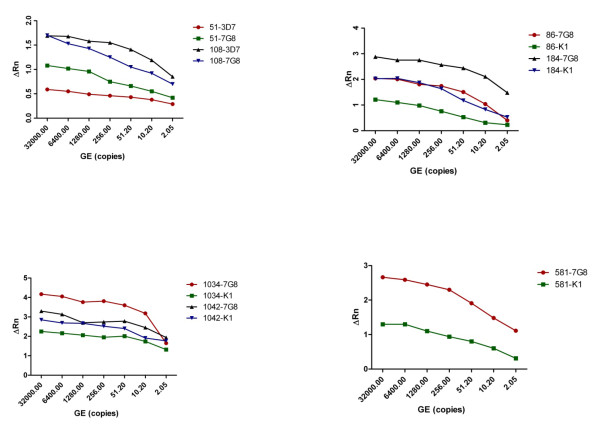
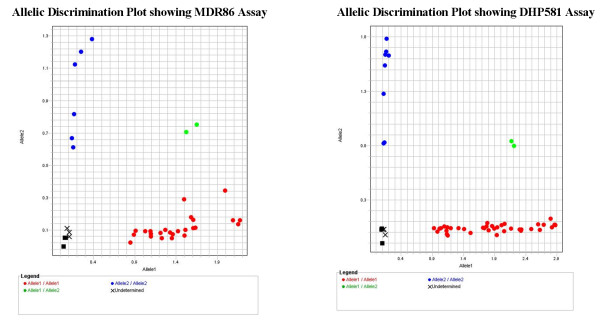
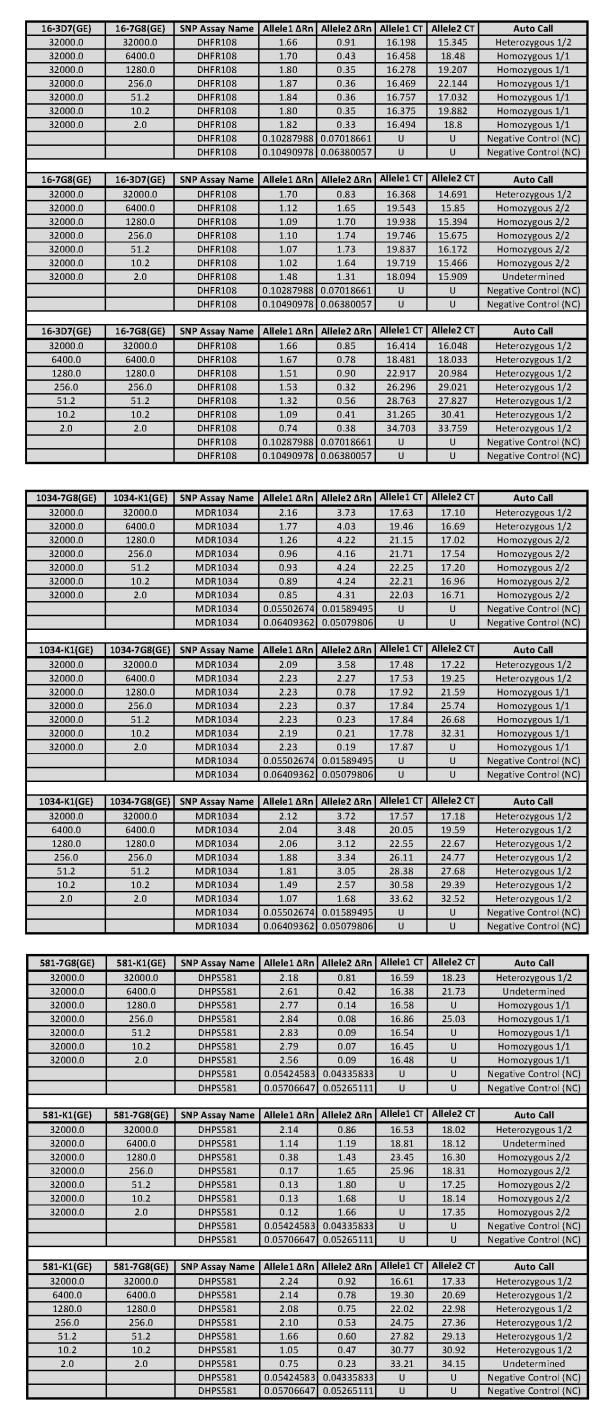
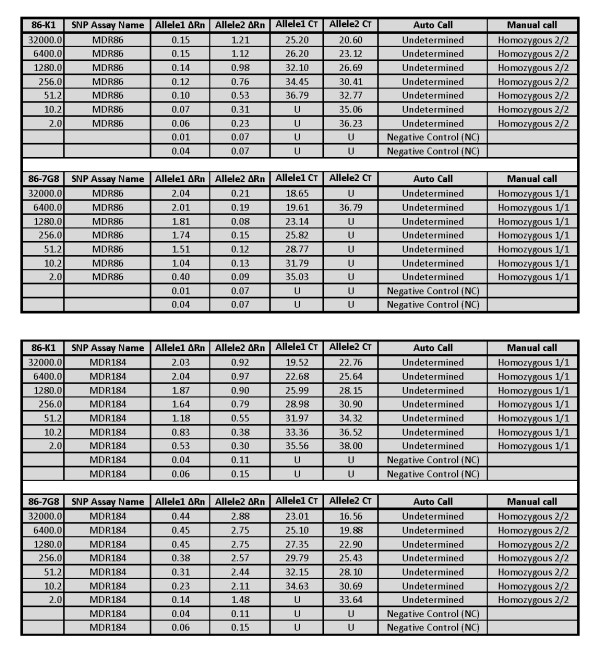
Data from genetic profiles of the Plasmodium falciparum laboratory strains and sequence data from 12 clinical samples was used as the reference method with which the performance of the SNP assays were compared to. The sensitivity and specificity of each SNP assay was establish at 100%. LoD for each assay was established at 2 GE, equivalent to less than 1 parasite/μL. SNP assays performed well in detecting mixed infection and analysis of clinical samples.
TaqMan Allelic Discrimination assay provides a good alternative tool in detection of SNPs associated with anti-malarial drug.
抗疟药物耐药性对当前全球控制和消除疟疾的努力构成威胁。有几种方法用于监测抗疟药物耐药性。例如,单核苷酸多态性(SNP)等分子标记物越来越多地用于识别与抗疟药物耐药性相关的遗传突变。目前有几种方法用于分析与抗疟药物耐药性相关的 SNP,尽管这些方法中的每一种都有其独特的优势和缺点,但仍需要改进和/或开发新的方法来弥补当前方法中的差距。
用于检测与抗疟药物耐药性相关的 SNP 的 TaqMan 等位基因鉴别分析是为在 Applied Biosystems PCR 平台上进行分析而设计的。这些分析是通过向 Applied Biosystems 网站提交与抗疟药物耐药性相关的 SNP 序列来设计的。选择并测试了 11 个与抗疟药物耐药性相关的 SNP。通过创建携带感兴趣密码子的质粒 DNA 并对其进行分析来测试每个 SNP 分析的性能。为了测试每个 SNP 分析的灵敏度和特异性,对 12 个临床样本中的感兴趣密码子进行测序,并将其用于分析。使用质粒 DNA 为每个分析建立检测限(LoD)。
使用 Plasmodium falciparum 实验室菌株的遗传图谱数据和来自 12 个临床样本的序列数据作为参考方法,比较 SNP 分析的性能。每个 SNP 分析的灵敏度和特异性均为 100%。每个分析的 LoD 建立在 2 GE,相当于每微升小于 1 个寄生虫。SNP 分析在检测混合感染和分析临床样本方面表现良好。
TaqMan 等位基因鉴别分析为检测与抗疟药物相关的 SNP 提供了一种很好的替代工具。