Department of Cancer Biology, University of Massachusetts Medical School, Worcester, MA, USA.
Oncogene. 2012 Nov 1;31(44):4689-97. doi: 10.1038/onc.2011.620. Epub 2012 Jan 23.
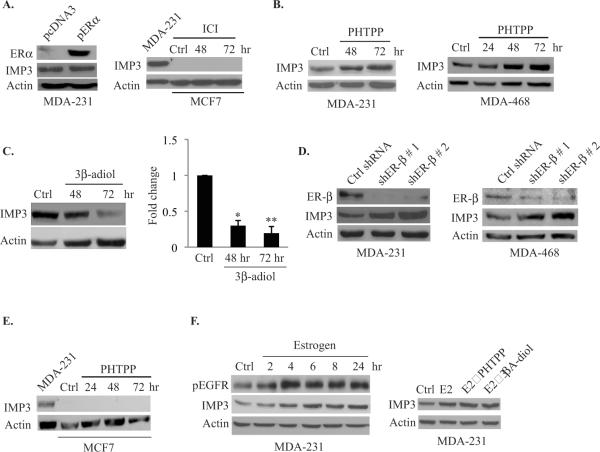
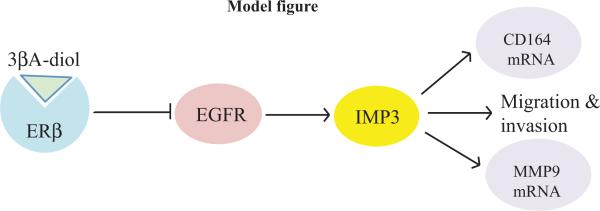
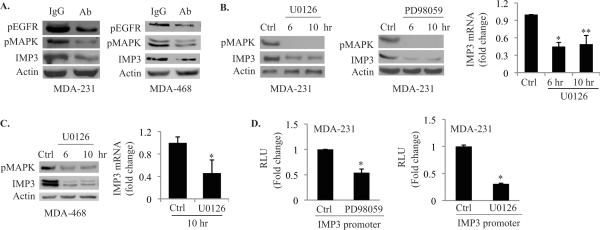
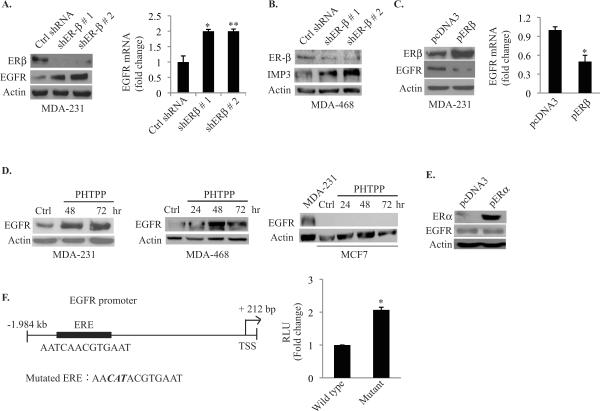
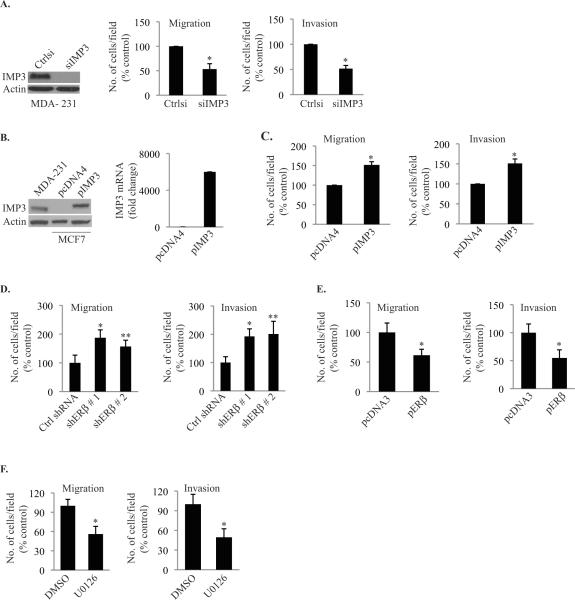
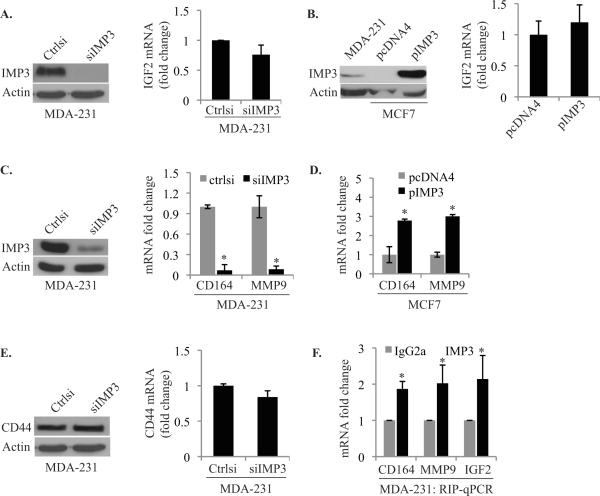
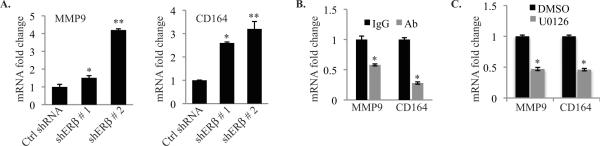
Insulin-like growth factor II (IGF-II) mRNA-binding protein 3 (IMP3) is emerging as a useful indicator of the progression and outcome of several cancers. IMP3 expression is associated with triple-negative breast carcinomas (TNBCs), which are aggressive tumors associated with poor outcome. In this study, we addressed the hypothesis that signaling pathways, which are characteristic of TNBCs, impact the expression of IMP3 and that IMP3 contributes to the function of TNBCs. The data obtained reveal that IMP3 expression is repressed specifically by estrogen receptor β (ERβ) and its ligand 3βA-diol but not by ERα. Epidermal growth factor receptor (EGFR) signaling and consequent activation of the mitogen-activated protein kinase pathway induce IMP3 transcription and expression. Interestingly, we discovered that the EGFR promoter contains an imperfect estrogen response element and that ERβ represses EGFR transcription. These data support a mechanism in which ERβ inhibits IMP3 expression indirectly by repressing the EGFR. This mechanism relates to the biology of TNBC, which is characterized by diminished ERβ and increased EGFR expression. We also demonstrate that IMP3 contributes to the migration and invasion of breast carcinoma cells. Given that IMP3 is an mRNA-binding protein, we determined that it binds several key mRNAs that could contribute to migration and invasion, including CD164 (endolyn) and MMP9. Moreover, expression of these mRNAs is repressed by ERβ and enhanced by EGFR signaling, consistent with our proposed mechanism for the regulation of IMP3 expression in breast cancer cells. Our findings show that IMP3 is an effector of EGFR-mediated migration and invasion and they provide the first indication of how this important mRNA-binding protein is regulated in cancer.
胰岛素样生长因子 II (IGF-II) mRNA 结合蛋白 3 (IMP3) 作为几种癌症进展和预后的有用指标正在出现。IMP3 的表达与三阴性乳腺癌 (TNBC) 相关,TNBC 是一种侵袭性肿瘤,预后不良。在这项研究中,我们假设 TNBC 特征性的信号通路会影响 IMP3 的表达,并且 IMP3 有助于 TNBC 的功能。所得数据表明,IMP3 的表达被雌激素受体 β (ERβ) 及其配体 3βA-二醇特异性抑制,但不受 ERα 影响。表皮生长因子受体 (EGFR) 信号转导和随之而来的丝裂原活化蛋白激酶途径的激活诱导 IMP3 的转录和表达。有趣的是,我们发现 EGFR 启动子含有一个不完美的雌激素反应元件,ERβ 抑制 EGFR 转录。这些数据支持了一种机制,即 ERβ 通过抑制 EGFR 间接抑制 IMP3 的表达。这种机制与 TNBC 的生物学有关,TNBC 的特征是 ERβ 减少和 EGFR 表达增加。我们还证明了 IMP3 有助于乳腺癌细胞的迁移和侵袭。由于 IMP3 是一种 mRNA 结合蛋白,我们确定它结合了几种可能有助于迁移和侵袭的关键 mRNA,包括 CD164(内皮素)和 MMP9。此外,这些 mRNA 的表达受 ERβ 抑制和 EGFR 信号增强的调节,与我们提出的调节乳腺癌细胞中 IMP3 表达的机制一致。我们的发现表明 IMP3 是 EGFR 介导的迁移和侵袭的效应物,并且它们首次表明这种重要的 mRNA 结合蛋白在癌症中是如何被调节的。