Shen Jianying, Maruyama Ichiro N
Information Processing Biology Unit, Okinawa Institute of Science and Technology Graduate University, Okinawa 904-0495, Japan.
J Mol Signal. 2012 Jan 24;7(1):2. doi: 10.1186/1750-2187-7-2.
Neurotrophins (NTs) and their receptors play crucial roles in the development, functions and maintenance of nervous systems. It is widely believed that NT-induced dimerization of the receptors initiates the transmembrane signaling. However, it is still controversial whether the receptor molecule has a monomeric or dimeric structure on the cell surface before its ligand binding.
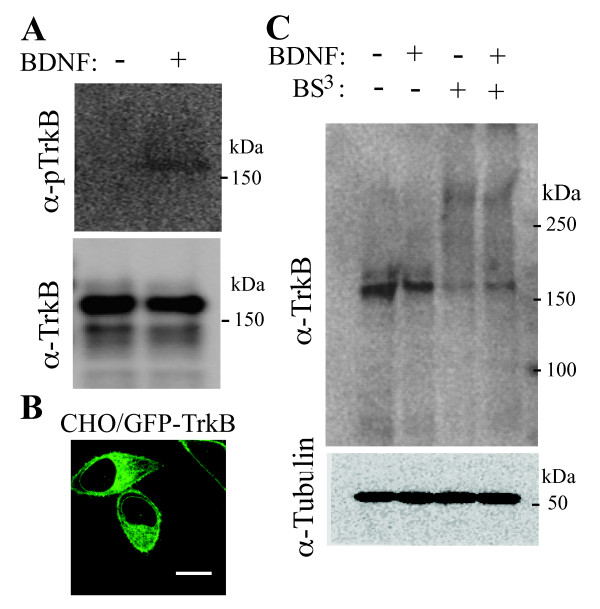
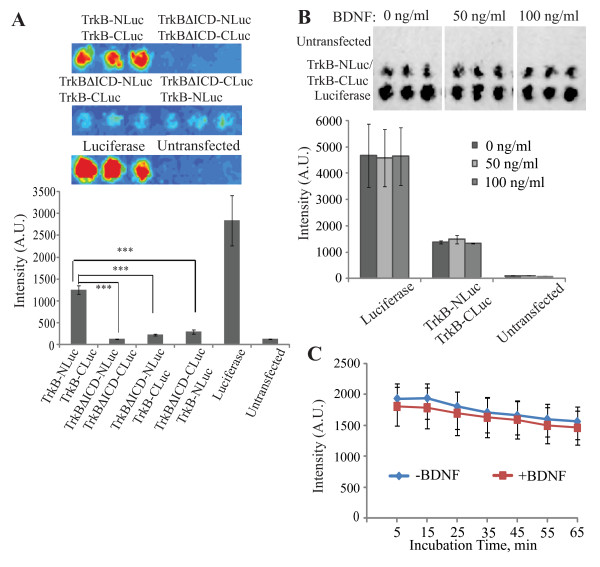
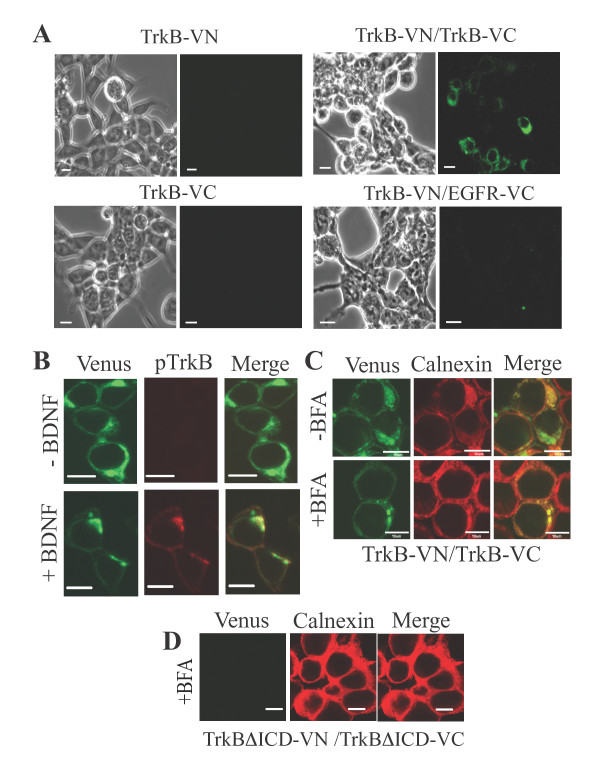
Using chemical cross-linking, bimolecular fluorescence complementation (BiFC) and luciferase fragment complementation (LFC) assays, in this study, we show the brain-derived neurotrophic factor (BDNF) receptor TrkB exists as a homodimer before ligand binding. We have also found by using BiFC and LFC that the dimer forms in the endoplasmic reticulum (ER), and that the receptor lacking its intracellular domain cannot form the dimeric structure.
Most, if not all, of the TrkB receptor has a preformed, yet inactive, homodimeric structure before BDNF binding. The intracellular domain of TrkB plays a crucial role in the spontaneous dimerization of the newly synthesized receptors, which occurs in ER. These findings provide new insight into an understanding of a molecular mechanism underlying transmembrane signaling mediated by NT receptors.
神经营养因子(NTs)及其受体在神经系统的发育、功能和维持中发挥着关键作用。人们普遍认为,神经营养因子诱导的受体二聚化启动跨膜信号传导。然而,在配体结合之前,受体分子在细胞表面是单体结构还是二聚体结构仍存在争议。
在本研究中,我们使用化学交联、双分子荧光互补(BiFC)和荧光素酶片段互补(LFC)分析表明,脑源性神经营养因子(BDNF)受体TrkB在配体结合前以同二聚体形式存在。我们还通过BiFC和LFC发现,二聚体在内质网(ER)中形成,并且缺乏细胞内结构域的受体不能形成二聚体结构。
在BDNF结合之前,大多数(如果不是全部)TrkB受体具有预先形成但无活性的同二聚体结构。TrkB的细胞内结构域在新合成受体的自发二聚化中起关键作用,这种二聚化发生在内质网中。这些发现为理解神经营养因子受体介导的跨膜信号传导的分子机制提供了新的见解。