Janssen Insa, Reimers Kerstin, Allmeling Christina, Matthes Stella, Vogt Peter M, Radtke Christine
Department of Plastic, Hand and Reconstructive Surgery, Hannover Medical School, 30625 Hannover, Germany.
Int J Otolaryngol. 2012;2012:742183. doi: 10.1155/2012/742183. Epub 2012 Jan 4.
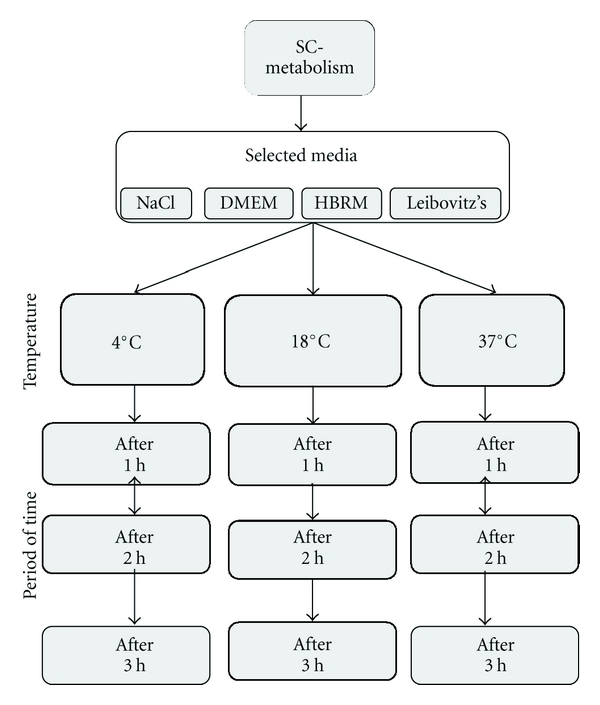
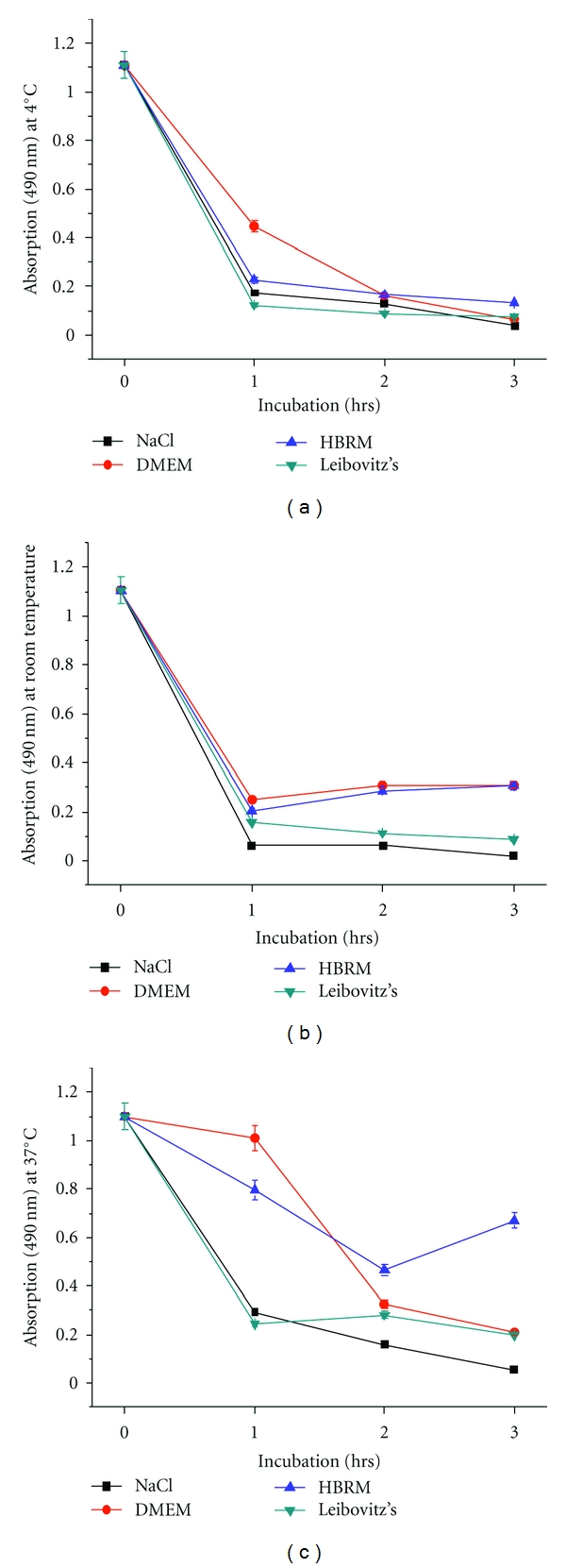
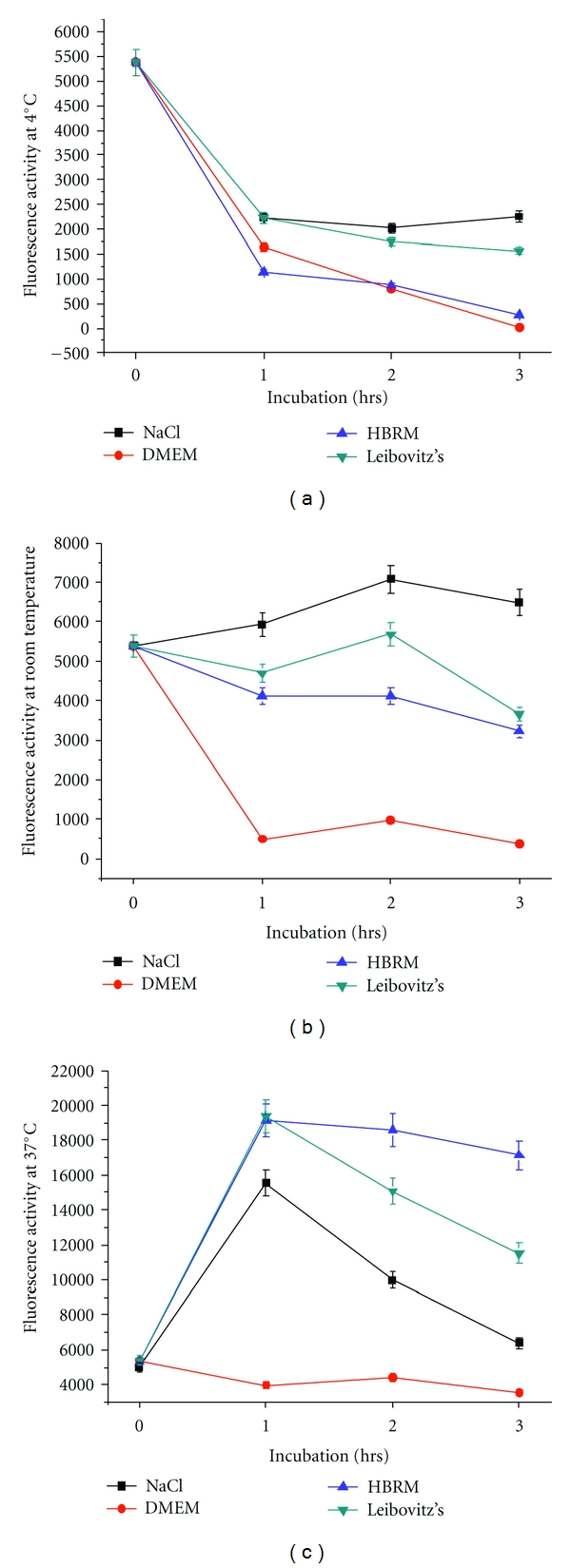
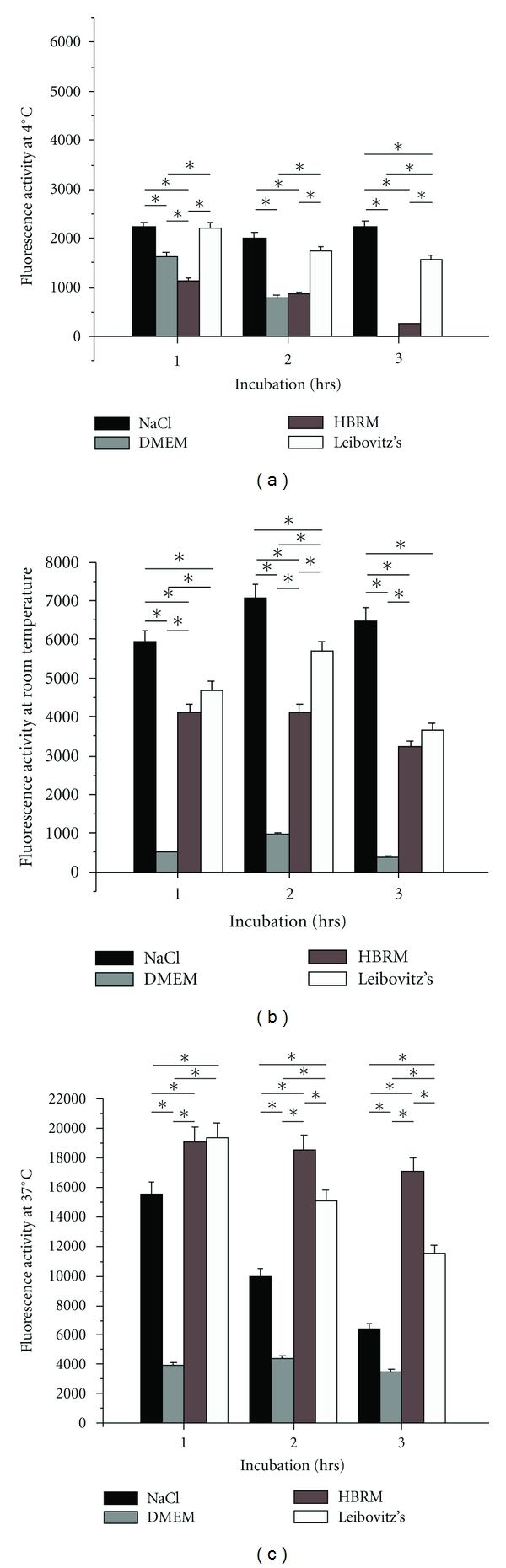
Strategies for improvement of nerve regeneration and optimal conditions to prevent Schwann cell (SC) loss within a nerve transplant procedure are critical. The purpose of this study was to examine SC viability, which plays an important role in peripheral nerve regeneration, under various incubation conditions up to three hours. To address this issue, Schwann cell metabolic activity was determined using different independent test methods. The following experimental conditions were compared: SCs prepared from nerves were incubated in (1) isotonic saline solution (2) Dulbecco's modified Eagles medium as used for cell culturing, (3) Hannover bioreactor medium, and (4) Leibovitz's medium. SC metabolic activity of excised rat sciatic nerve was determined at 4°C, 18°C, and 37°C over 3 hrs. The results indicate that SC activity was optimized by the usage of Leibovitz's medium or HBRM at 37°C. Greater SC viability at the time of surgical nerve grafting could contribute to improved axonal regeneration and remyelination after nerve transplantation, and thus more successful functional recovery.
在神经移植过程中,改善神经再生的策略以及防止雪旺细胞(SC)损失的最佳条件至关重要。本研究的目的是在长达三小时的各种孵育条件下,检测在周围神经再生中起重要作用的雪旺细胞活力。为解决此问题,使用不同的独立测试方法测定雪旺细胞的代谢活性。比较了以下实验条件:从神经制备的雪旺细胞在(1)等渗盐溶液、(2)用于细胞培养的杜氏改良伊格尔培养基、(3)汉诺威生物反应器培养基和(4)莱博维茨培养基中孵育。在4°C、18°C和37°C下,对切除的大鼠坐骨神经的雪旺细胞代谢活性进行了3小时的测定。结果表明,在37°C下使用莱博维茨培养基或汉诺威生物反应器培养基可优化雪旺细胞活性。手术神经移植时更高的雪旺细胞活力可能有助于改善神经移植后的轴突再生和髓鞘再生,从而实现更成功的功能恢复。