Department of Medicine, Obesity Research Center, School of Medicine, Boston University, Boston, Massachusetts, United States of America.
PLoS One. 2012;7(1):e30200. doi: 10.1371/journal.pone.0030200. Epub 2012 Jan 17.
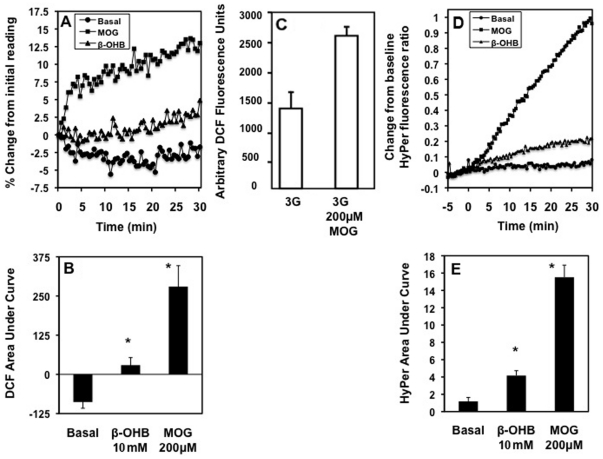
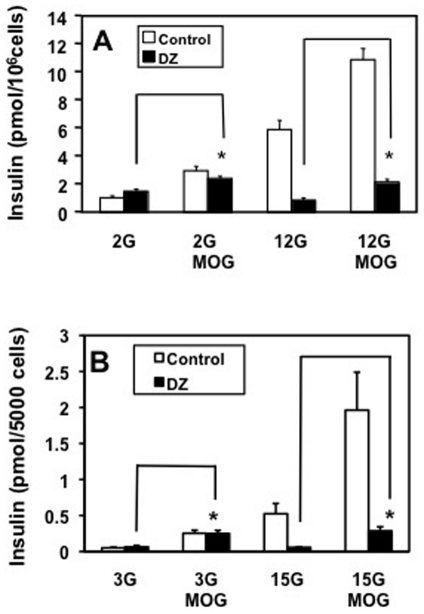
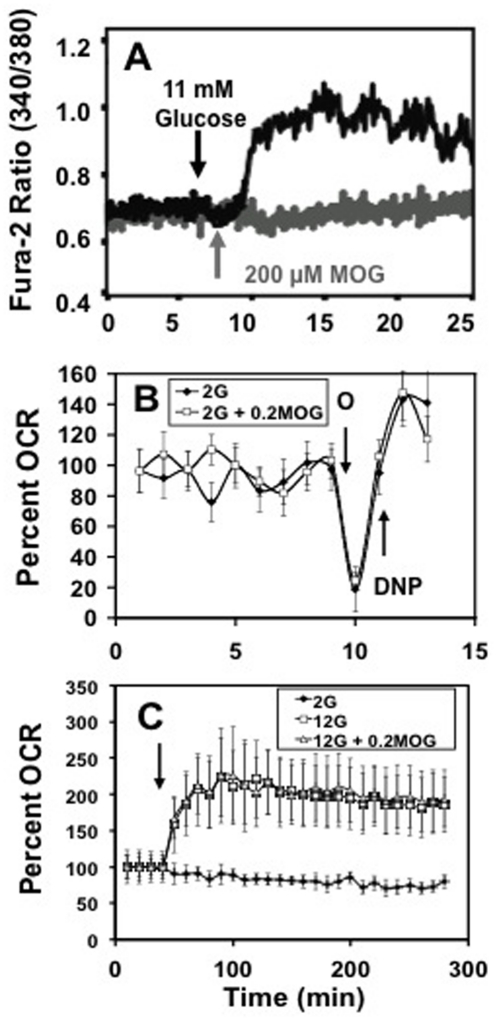
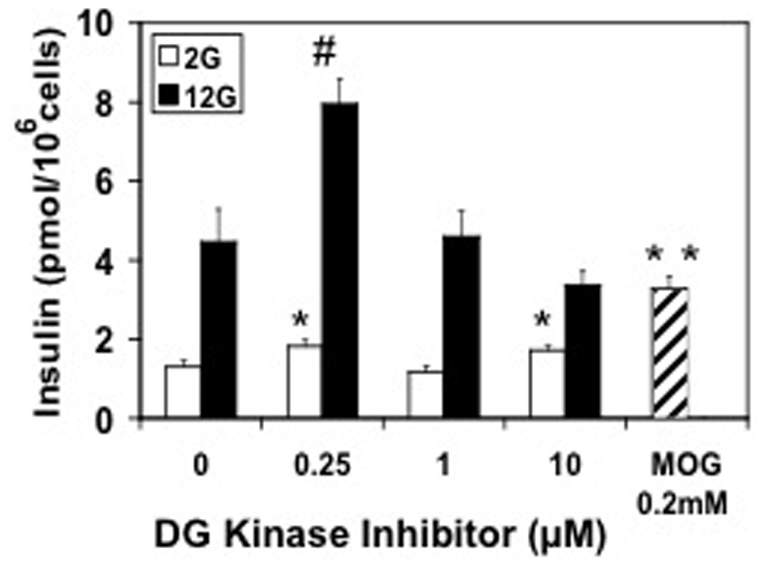
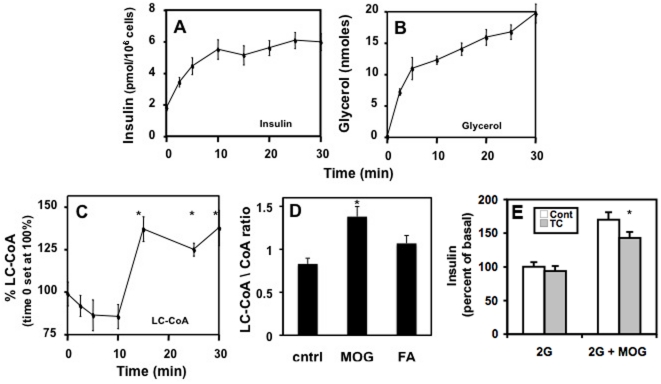
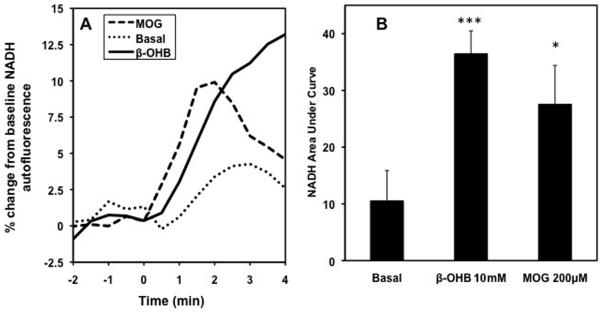
Chronic exposure (24-72 hrs) of pancreatic islets to elevated glucose and fatty acid leads to glucolipoxicity characterized by basal insulin hypersecretion and impaired glucose-stimulated insulin secretion (GSIS). Our aim was to determine the mechanism for basal hypersecretion of insulin. We used mono-oleoyl-glycerol (MOG) as a tool to rapidly increase lipids in isolated rat pancreatic ß-cells and in the clonal pancreatic ß-cell line INS-1 832/13. MOG (25-400 µM) stimulated basal insulin secretion from ß-cells in a concentration dependent manner without increasing intracellular Ca(2+) or O(2) consumption. Like GSIS, MOG increased NAD(P)H and reactive oxygen species (ROS). The mitochondrial reductant ß-hydroxybutyrate (ß-OHB) also increased the redox state and ROS production, while ROS scavengers abrogated secretion. Diazoxide (0.4 mM) did not prevent the stimulatory effect of MOG, confirming that the effect was independent of the K(ATP)-dependent pathway of secretion. MOG was metabolized to glycerol and long-chain acyl-CoA (LC-CoA), whereas, acute oleate did not similarly increase LC-CoA. Inhibition of diacylglycerol kinase (DGK) did not mimic the effect of MOG on insulin secretion, indicating that MOG did not act primarily by inhibiting DGK. Inhibition of acyl-CoA synthetase (ACS) reduced the stimulatory effect of MOG on basal insulin secretion by 30% indicating a role for LC-CoA. These data suggest that basal insulin secretion is stimulated by increased ROS production, due to an increase in the mitochondrial redox state independent of the established components of GSIS.
慢性暴露(24-72 小时)于高葡萄糖和脂肪酸会导致胰岛的糖脂毒性,其特征为基础胰岛素分泌过多和葡萄糖刺激的胰岛素分泌受损(GSIS)。我们的目的是确定基础胰岛素分泌过多的机制。我们使用单油酰基甘油(MOG)作为一种工具,快速增加分离的大鼠胰岛β细胞和克隆的胰岛β细胞系 INS-1 832/13 中的脂质。MOG(25-400μM)以浓度依赖的方式刺激β细胞的基础胰岛素分泌,而不增加细胞内 Ca(2+)或 O(2)消耗。与 GSIS 一样,MOG 增加 NAD(P)H 和活性氧(ROS)。线粒体还原剂β-羟丁酸(β-OHB)也增加了氧化还原状态和 ROS 的产生,而 ROS 清除剂则阻断了分泌。二氮嗪(0.4mM)不能阻止 MOG 的刺激作用,这证实了该作用独立于分泌的 K(ATP)依赖性途径。MOG 被代谢为甘油和长链酰基辅酶 A(LC-CoA),而急性油酸则不能类似地增加 LC-CoA。二酰基甘油激酶(DGK)的抑制不能模拟 MOG 对胰岛素分泌的作用,表明 MOG 不是主要通过抑制 DGK 起作用。酰基辅酶 A 合成酶(ACS)的抑制作用使 MOG 对基础胰岛素分泌的刺激作用降低了 30%,表明 LC-CoA 发挥了作用。这些数据表明,基础胰岛素分泌是由于线粒体氧化还原状态的增加而导致 ROS 产生增加所刺激的,而与 GSIS 的既定成分无关。