Centre National de la Recherche Scientifique, Unité Mixte de Recherche 8206, Paris, France.
PLoS One. 2012;7(1):e30241. doi: 10.1371/journal.pone.0030241. Epub 2012 Jan 17.
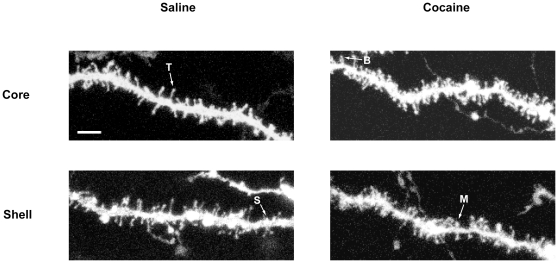
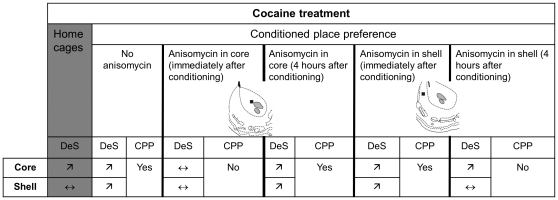
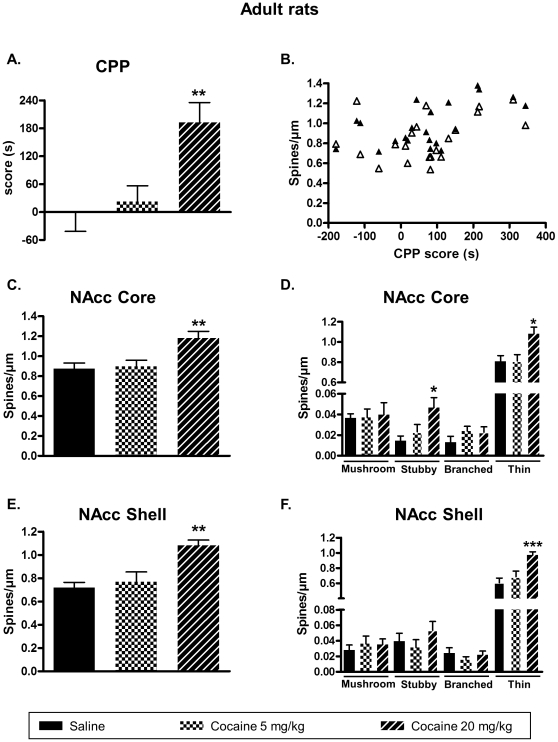
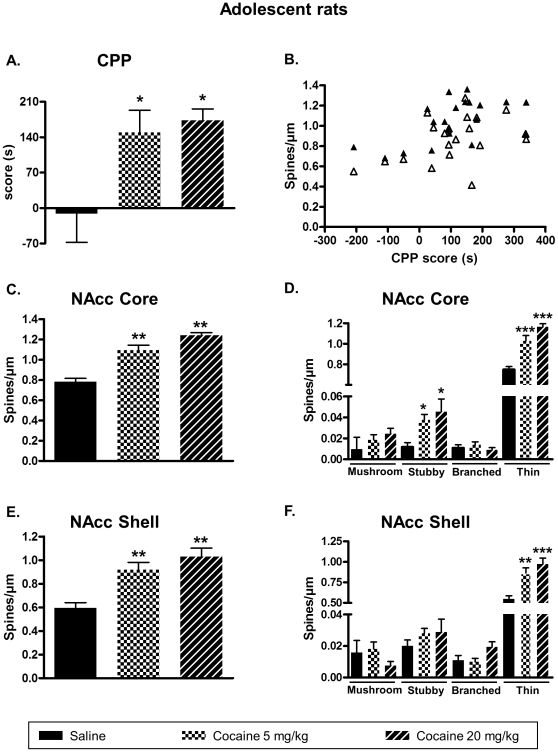
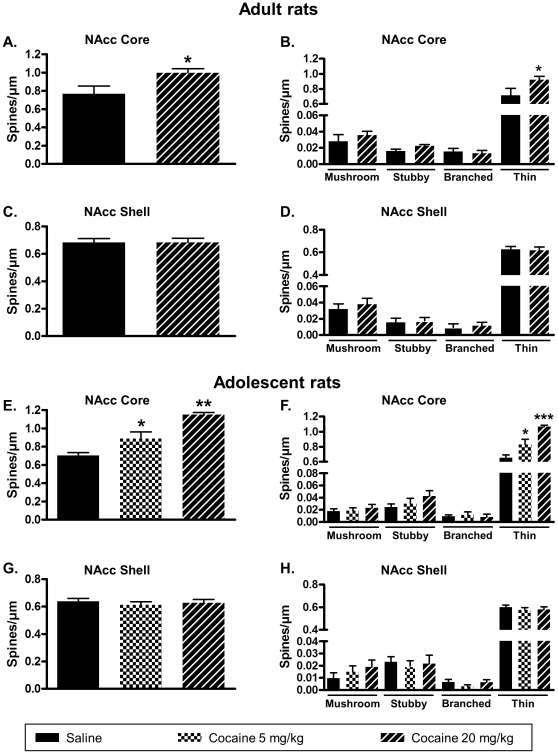
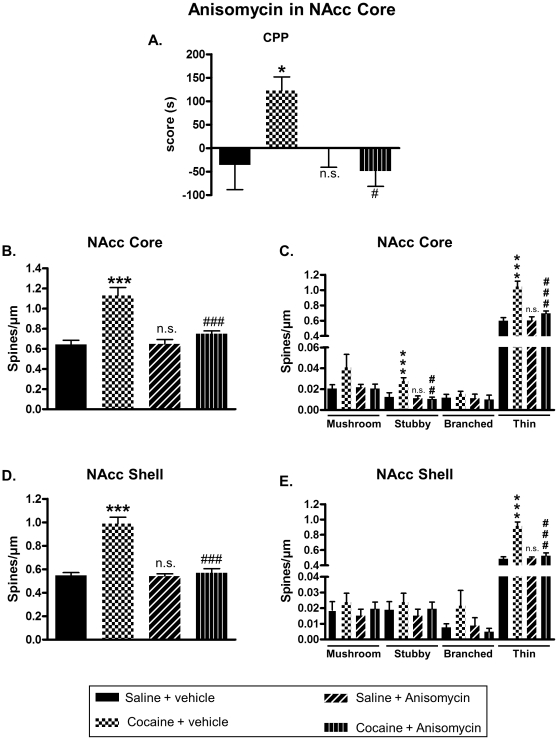
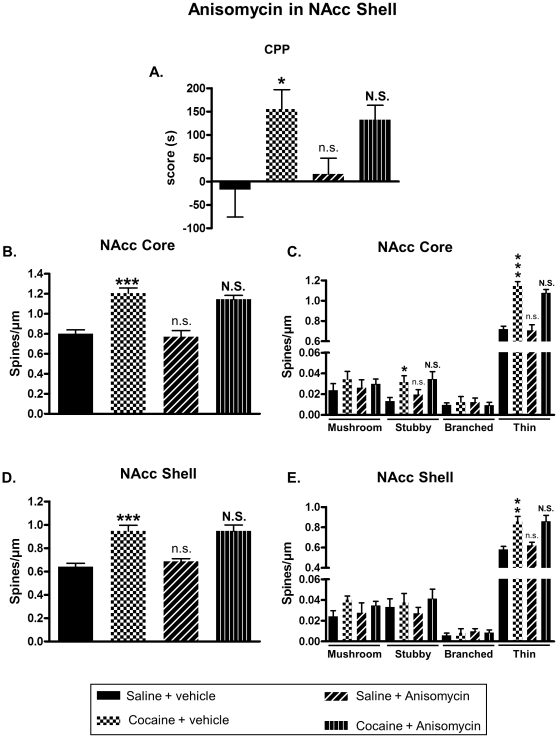
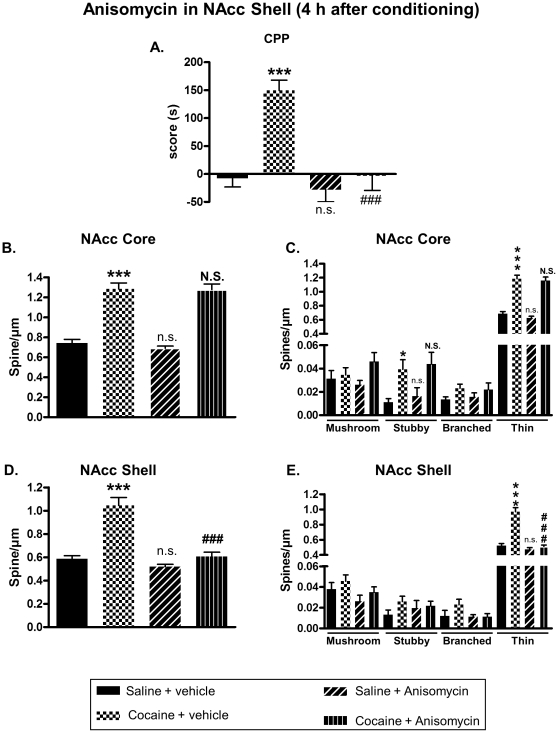
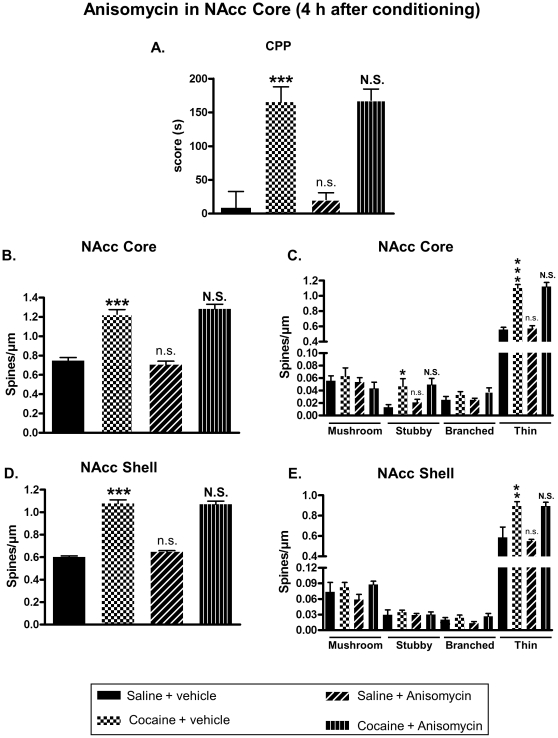
It is well established that cocaine induces an increase of dendritic spines density in some brain regions. However, few studies have addressed the role of this neuroplastic changes in cocaine rewarding effects and have often led to contradictory results. So, we hypothesized that using a rigorous time- and subject-matched protocol would demonstrate the role of this spine increase in cocaine reward. We designed our experiments such as the same animals (rats) were used for spine analysis and behavioral studies. Cocaine rewarding effects were assessed with the conditioned place preference paradigm. Spines densities were measured in the two subdivisions of the nucleus accumbens (NAcc), core and shell. We showed a correlation between the increase of spine density in NAcc core and shell and cocaine rewarding effects. Interestingly, when cocaine was administered in home cages, spine density was increase in NAcc core only. With anisomycin, a protein synthesis inhibitor, injected in the core we blocked spine increase in core and shell and also cocaine rewarding effects. Strikingly, whereas injection of this inhibitor in the shell immediately after conditioning had no effect on neuroplasticity or behavior, its injection 4 hours after conditioning was able to block neuroplasticity in shell only and cocaine-induced place preference. Thus, it clearly appears that the neuronal plasticity in the NAcc core is essential to induce plasticity in the shell, necessary for cocaine reward. Altogether, our data revealed a new mechanism in the NAcc functioning where a neuroplasticity transfer occurred from core to shell.
可卡因可诱导某些脑区树突棘密度增加,这一点已得到充分证实。然而,很少有研究探讨这种神经可塑性变化在可卡因奖赏效应中的作用,而且往往得出相互矛盾的结果。因此,我们假设采用严格的时间和个体匹配方案将证明这种棘突增加在可卡因奖赏中的作用。我们设计实验时,让相同的动物(大鼠)用于棘突分析和行为研究。使用条件性位置偏好范式评估可卡因的奖赏效应。在伏隔核(NAcc)的两个亚区(核心和壳)中测量棘突密度。我们发现 NAcc 核心和壳中的棘突密度增加与可卡因奖赏效应之间存在相关性。有趣的是,当可卡因在家养笼中给药时,只有 NAcc 核心中的棘突密度增加。用放线菌酮,一种蛋白质合成抑制剂,注射到核心中,我们阻止了核心和壳中的棘突增加,也阻止了可卡因的奖赏效应。引人注目的是,尽管该抑制剂在条件作用后立即注射到壳中对神经可塑性或行为没有影响,但在条件作用后 4 小时注射该抑制剂仅能阻止壳中的神经可塑性和可卡因诱导的位置偏好。因此,很明显,NAcc 核心中的神经元可塑性对于诱导壳中的可塑性,对于可卡因奖赏是必不可少的。总之,我们的数据揭示了 NAcc 功能中的一种新机制,其中发生了从核心到壳的神经可塑性转移。