Heinrich-Pette-Institute, Leibniz Institute for Experimental Virology, Hamburg, Germany.
PLoS Pathog. 2012 Jan;8(1):e1002488. doi: 10.1371/journal.ppat.1002488. Epub 2012 Jan 19.
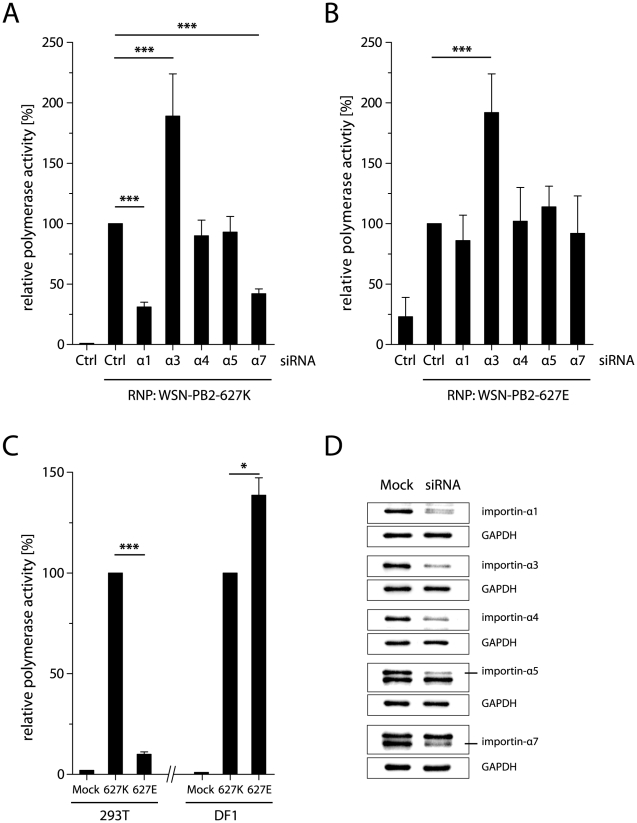
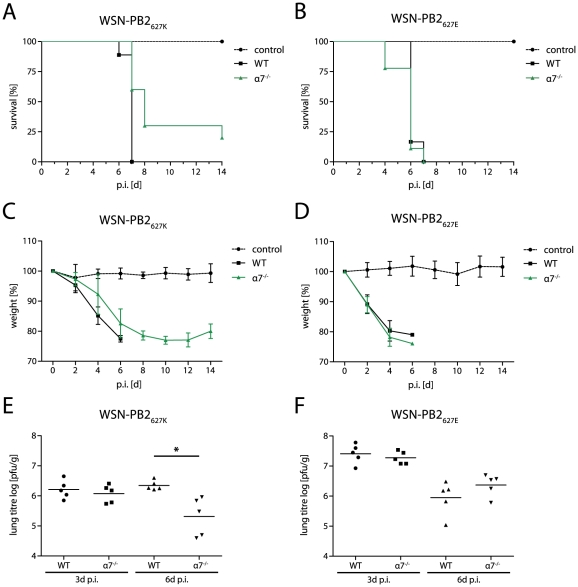
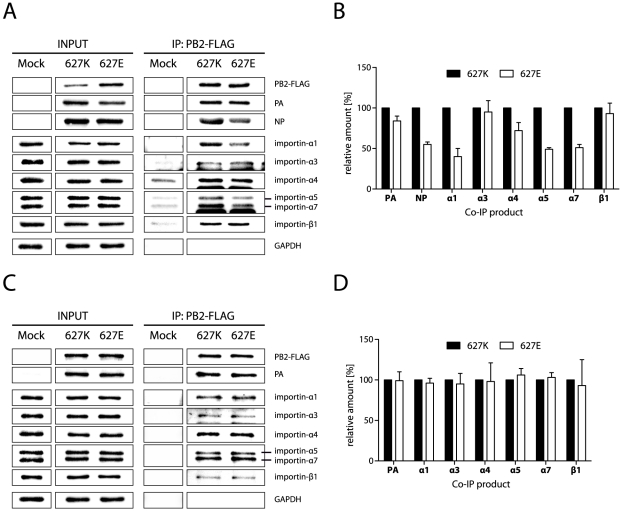
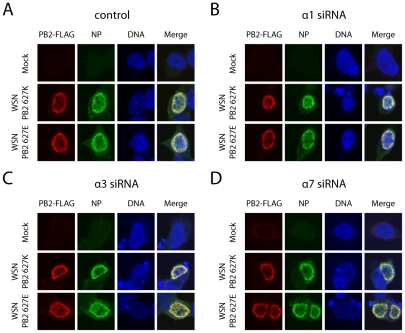
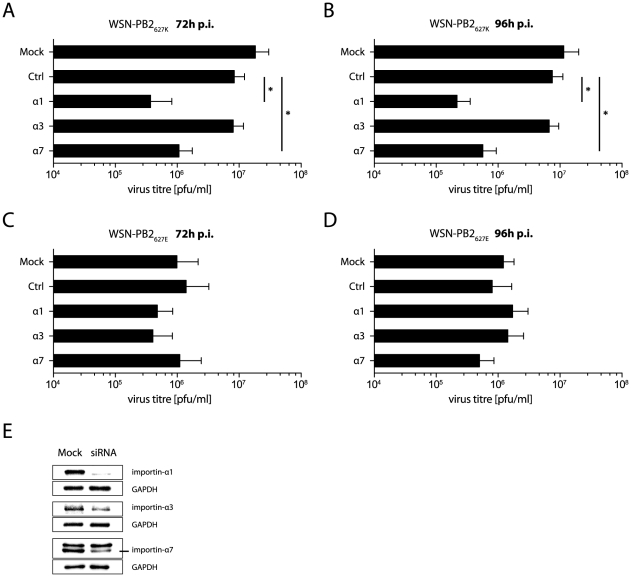
Influenza A viruses may cross species barriers and transmit to humans with the potential to cause pandemics. Interplay of human- (PB2 627K) and avian-like (PB2 627E) influenza polymerase complexes with unknown host factors have been postulated to play a key role in interspecies transmission. Here, we have identified human importin-α isoforms (α1 and α7) as positive regulators of human- but not avian-like polymerase activity. Human-like polymerase activity correlated with efficient recruitment of α1 and α7 to viral ribonucleoprotein complexes (vRNPs) without affecting subcellular localization. We also observed that human-like influenza virus growth was impaired in α1 and α7 downregulated human lung cells. Mice lacking α7 were less susceptible to human- but not avian-like influenza virus infection. Thus, α1 and α7 are positive regulators of human-like polymerase activity and pathogenicity beyond their role in nuclear transport.
甲型流感病毒可能跨越物种屏障传播给人类,并有可能引发大流行。人类(PB2 627K)和类禽流感(PB2 627E)聚合酶复合物与未知宿主因子的相互作用被认为在种间传播中发挥关键作用。在这里,我们已经确定了人类导入蛋白-α 同种型(α1 和 α7)是人类聚合酶而不是类禽流感聚合酶活性的正调节剂。人类聚合酶活性与 α1 和 α7 有效募集到病毒核糖核蛋白复合物(vRNP)相关,而不影响亚细胞定位。我们还观察到,在下调α1 和α7 的人肺细胞中,类人流感病毒的生长受到损害。缺乏α7 的小鼠对人而不是类禽流感病毒感染的敏感性降低。因此,α1 和 α7 是人类聚合酶活性和致病性的正调节剂,超出了其在核运输中的作用。