Warden R
European Association for Cancer Research, University of Nottingham, Nottingham, UK.
Ecancermedicalscience. 2011;5:225. doi: 10.3332/ecancer.2011.225. Epub 2011 Oct 3.
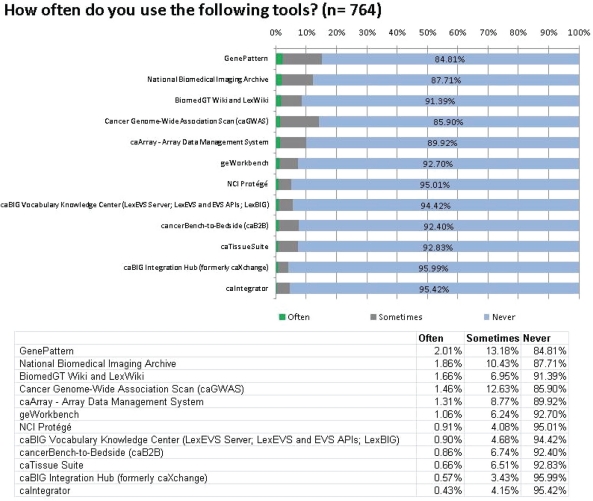
The cancer Biomedical Informatics Grid (caBIG) was launched in 2003 by the US National Cancer Institute with the aim of connecting research teams through the use of shared infrastructure and software to collect, analyse and share data. It was an ambitious project, and the issue it aimed to address was huge and far-reaching. With such developments as the mapping of the human genome and the advancement of new technologies for the analysis of genes and proteins, cancer researchers have never produced so much complex data, nor have they understood so much about cancer on a molecular level. This new 'molecular understanding' of cancer, according to the caBIG 2007 'Pilot Report'[1], leads to molecular or 'personalised' medicine being the way forward in cancer research and treatment, and connects basic research to clinical care in an unprecedented way. But the former 'silo-like' nature of research does not lend itself to this brave new world of molecular medicine-individual labs and institutes working in isolation, "in effect, as cottage industries, each collecting and interpreting data using a unique language of their own"[2] will not advance cancer research as it should be advanced. The solution proposed by the NCI in caBIG was to produce an integrated informatics grid ('caGrid') to incorporate open source, open access tools to collect, analyse and share data, enabling everyone to use the same methods and language for these tasks.caBIG is primarily a US-based endeavour, and though the tools are openly available for users worldwide, it is in US NCI-funded cancer centres that they have been actively introduced and promoted with the eventual hope, according to the pilot report, of being able to do the same worldwide. caBIG also has a collaboration in place with the UK organisation NCRI to exchange technologies and research data. The European Association for Cancer Research, a member association for cancer researchers, conducted an online survey in January 2011 to identify the penetration of the ambitious caBIG project into European laboratories. The survey was sent to 6396 researchers based in Europe, with 764 respondents, a total response rate of 11.94%.
癌症生物医学信息学网格(caBIG)于2003年由美国国立癌症研究所发起,旨在通过使用共享基础设施和软件连接研究团队,以收集、分析和共享数据。这是一个雄心勃勃的项目,其旨在解决的问题既庞大又影响深远。随着人类基因组图谱绘制以及基因和蛋白质分析新技术的发展,癌症研究人员从未产生过如此多的复杂数据,也从未在分子层面上对癌症有过如此深入的了解。根据caBIG 2007年的《试点报告》[1],这种对癌症的新“分子理解”使得分子或“个性化”医学成为癌症研究和治疗的前进方向,并以前所未有的方式将基础研究与临床护理联系起来。但以前研究的“孤岛式”性质并不适合这个分子医学的全新世界——各个独立工作的实验室和机构,“实际上就像家庭作坊一样,每个都用自己独特的语言收集和解释数据”[2],这无法推动癌症研究应有的进展。美国国立癌症研究所在caBIG中提出的解决方案是创建一个集成信息学网格(“caGrid”),纳入开源、开放获取的工具来收集、分析和共享数据,使每个人在这些任务中都能使用相同的方法和语言。caBIG主要是一项基于美国的工作,尽管这些工具对全球用户都是开放可用的,但在美国国立癌症研究所资助的癌症中心,它们已被积极引入和推广,根据试点报告,最终希望能够在全球范围内做到同样的事情。caBIG还与英国组织国家癌症研究机构(NCRI)开展了合作,以交换技术和研究数据。癌症研究人员的成员协会欧洲癌症研究协会在2011年1月进行了一项在线调查,以确定这个雄心勃勃的caBIG项目在欧洲实验室的渗透情况。该调查发送给了欧洲的6396名研究人员,有764人回复,总回复率为11.94%。