Graduate School of Life and Environmental Sciences, University of Tsukuba, Tsukuba Science City, Ibaraki 305-8572, Japan.
BMC Med Genomics. 2012 Jan 27;5:5. doi: 10.1186/1755-8794-5-5.
Liver fibrosis is caused by chemicals or viral infection. The progression of liver fibrosis results in hepatocellular carcinogenesis in later stages. Recent studies have revealed the importance of DNA hypermethylation in the progression of liver fibrosis to hepatocellular carcinoma (HCC). However, the importance of DNA methylation in the early-stage liver fibrosis remains unclear.
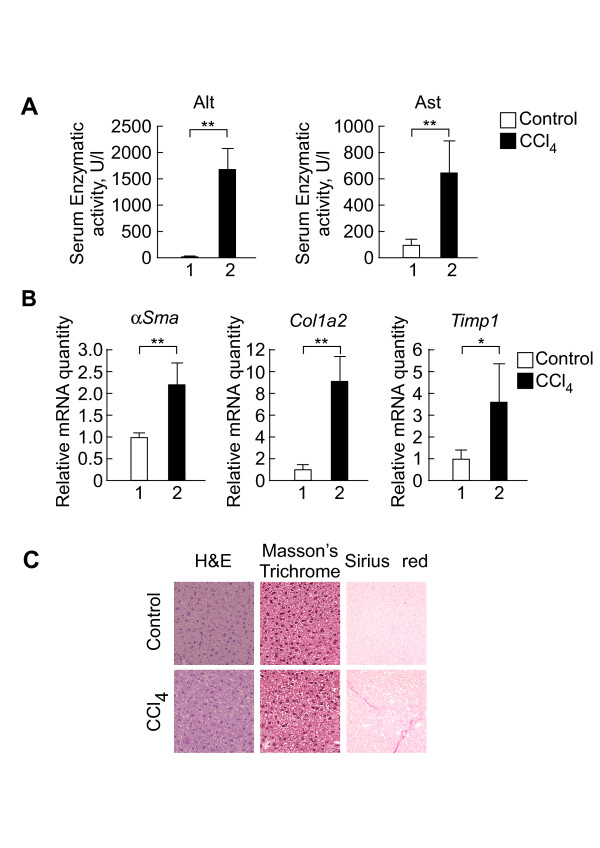
To address this issue, we used a pathological mouse model of early-stage liver fibrosis that was induced by treatment with carbon tetrachloride (CCl4) for 2 weeks and performed a genome-wide analysis of DNA methylation status. This global analysis of DNA methylation was performed using a combination of methyl-binding protein (MBP)-based high throughput sequencing (MBP-seq) and bioinformatic tools, IPA and Oncomine. To confirm functional aspect of MBP-seq data, we complementary used biochemical methods, such as bisulfite modification and in-vitro-methylation assays.
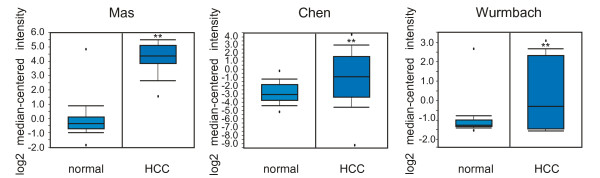
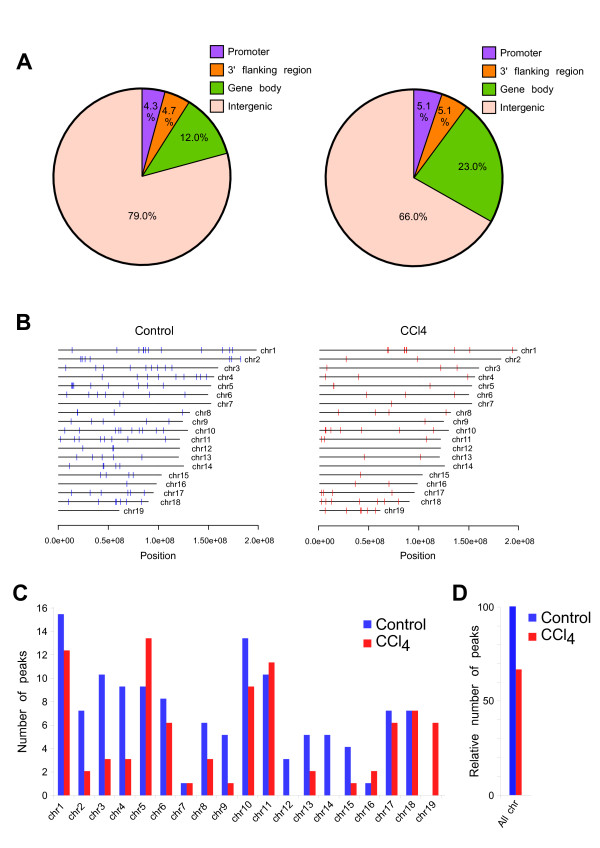
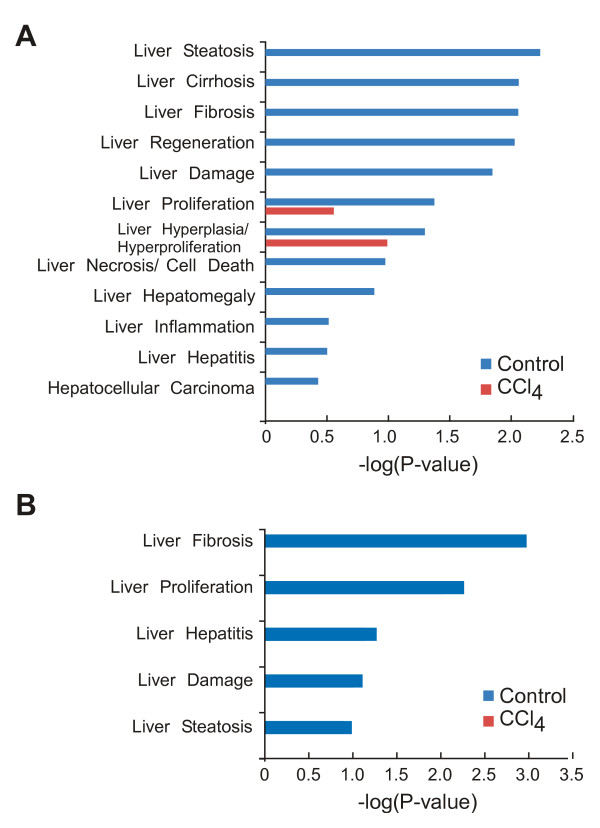
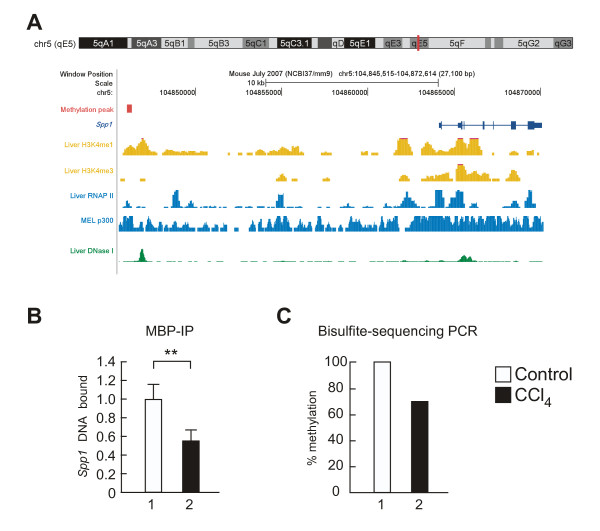
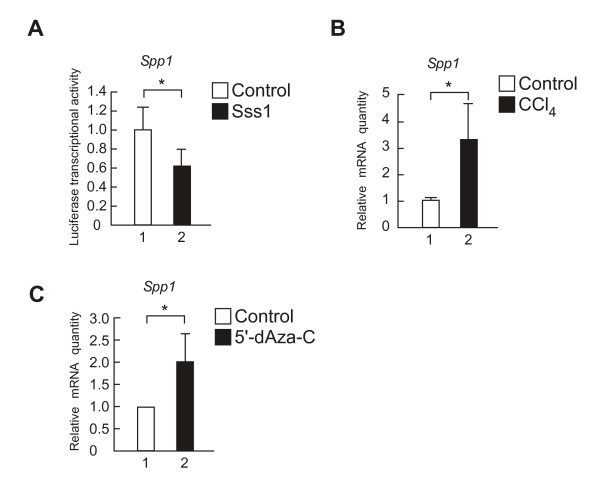
The genome-wide analysis revealed that DNA methylation status was reduced throughout the genome because of CCl4 treatment in the early-stage liver fibrosis. Bioinformatic and biochemical analyses revealed that a gene associated with fibrosis, secreted phosphoprotein 1 (Spp1), which induces inflammation, was hypomethylated and its expression was up-regulated. These results suggest that DNA hypomethylation of the genes responsible for fibrosis may precede the onset of liver fibrosis. Moreover, Spp1 is also known to enhance tumor development. Using the web-based database, we revealed that Spp1 expression is increased in HCC.
Our study suggests that hypomethylation is crucial for the onset of and in the progression of liver fibrosis to HCC. The elucidation of this change in methylation status from the onset of fibrosis and subsequent progression to HCC may lead to a new clinical diagnosis.
肝纤维化是由化学物质或病毒感染引起的。肝纤维化的进展导致在后期发生肝细胞癌发生。最近的研究表明,在肝纤维化向肝细胞癌(HCC)的进展中,DNA 超甲基化的重要性。然而,DNA 甲基化在早期肝纤维化中的重要性尚不清楚。
为了解决这个问题,我们使用了一种病理小鼠模型,该模型通过用四氯化碳(CCl4)处理 2 周来诱导早期肝纤维化,并对 DNA 甲基化状态进行了全基因组分析。使用甲基结合蛋白(MBP)为基础的高通量测序(MBP-seq)和 IPA 和 Oncomine 等生物信息学工具组合进行了全基因组 DNA 甲基化分析。为了确认 MBP-seq 数据的功能方面,我们互补地使用了生化方法,如亚硫酸氢盐修饰和体外甲基化测定。
全基因组分析表明,由于 CCl4 在早期肝纤维化中的处理,整个基因组中的 DNA 甲基化状态降低。生物信息学和生化分析表明,与纤维化相关的基因,分泌磷蛋白 1(Spp1),其诱导炎症,被低甲基化,其表达上调。这些结果表明,纤维化相关基因的 DNA 低甲基化可能先于肝纤维化的发生。此外,Spp1 也已知能增强肿瘤的发展。使用基于网络的数据库,我们发现 Spp1 在 HCC 中的表达增加。
我们的研究表明,低甲基化对于肝纤维化的发生和向 HCC 的进展至关重要。阐明从纤维化开始到 HCC 进展过程中甲基化状态的这种变化可能导致新的临床诊断。