Section of Clinical Magnetic Resonance, The Institute of Cancer Research and Royal Marsden NHS Foundation Trust, Sutton, Surrey SM2 5PT, UK.
Br J Cancer. 2012 Feb 14;106(4):619-28. doi: 10.1038/bjc.2011.579. Epub 2012 Jan 26.
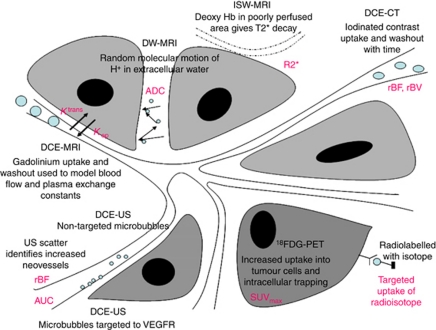
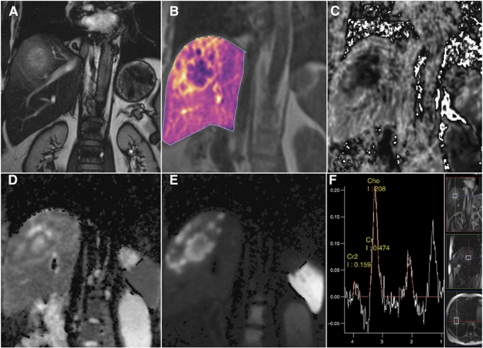
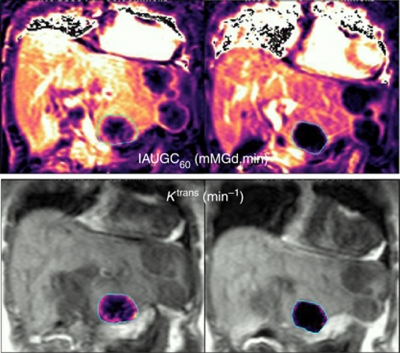
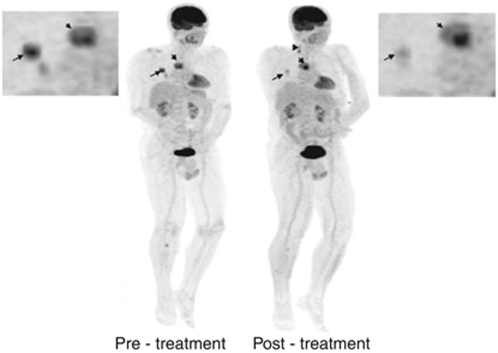
Key issues in early clinical trials of targeted agents include the determination of target inhibition, rational patient selection based on pre-treatment tumour characteristics, and assessment of tumour response in the absence of actual shrinkage. There is accumulating evidence that functional imaging using advanced techniques such as dynamic contrast enhanced (DCE)-magnetic resonance imaging (MRI), DCE-computerised tomography (CT) and DCE-ultrasound, diffusion weighted-MRI, magnetic resonance spectroscopy and positron emission tomography-CT using various labelled radioactive tracers has the potential to address all three. This article reviews this evidence with examples from trials using targeted agents with established clinical efficacy and summarises the clinical utility of the various techniques. We therefore recommend that input from specialist radiologists is sought at the early stages of trial design, in order to ensure that functional imaging is incorporated appropriately for the agent under study. There is an urgent need to strengthen the evidence base for these techniques as they evolve, and to ensure standardisation of the methodology.
早期靶向药物临床试验中的关键问题包括靶标抑制的确定、基于治疗前肿瘤特征的合理患者选择,以及在没有实际收缩的情况下评估肿瘤反应。越来越多的证据表明,使用先进技术的功能成像(如动态对比增强(DCE)-磁共振成像(MRI)、DCE-计算机断层扫描(CT)和 DCE-超声、扩散加权 MRI、磁共振波谱和正电子发射断层扫描-CT 使用各种标记放射性示踪剂)有可能解决所有这三个问题。本文通过使用具有明确临床疗效的靶向药物的试验中的实例来回顾这些证据,并总结了各种技术的临床应用。因此,我们建议在试验设计的早期阶段寻求专业放射科医生的意见,以确保为正在研究的药物适当地纳入功能成像。随着这些技术的发展,迫切需要加强其证据基础,并确保方法的标准化。